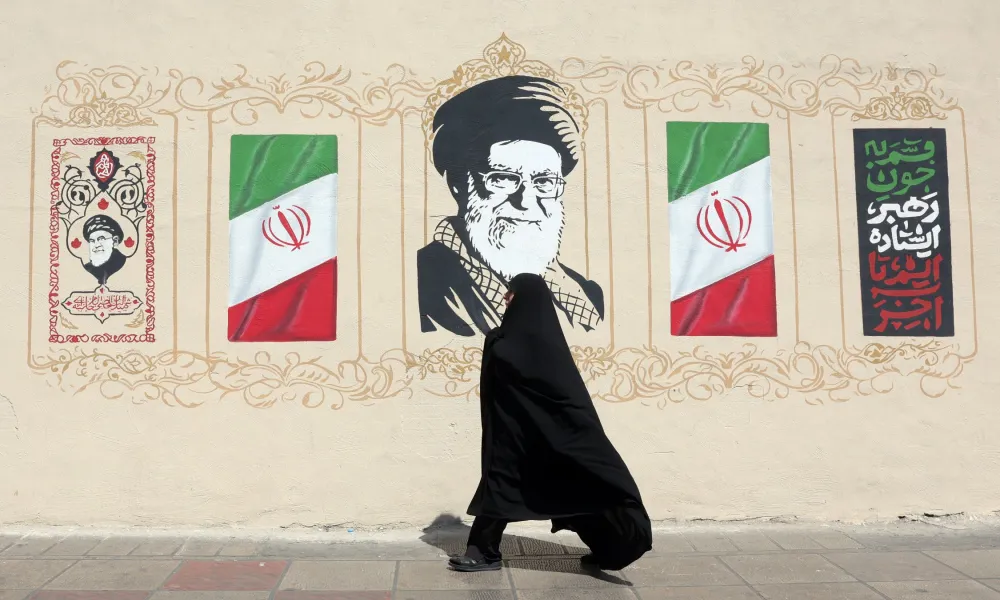

Iran has warned that a new US push to tighten economic pressure on Tehran could ultimately rebound against Washington, after senior American officials signalled plans for a significant expansion of sanctions.
The escalating rhetoric follows announcements by the administration of US President Donald Trump, which has pledged to increase pressure on Iran and target countries and businesses that continue to maintain economic ties with Tehran.
Tehran warns of 'economic war'
Mohammad Bagher Ghalibaf, Speaker of Iran's Parliament, described the proposed US measures as an unprecedented "economic war" and argued that stricter sanctions would eventually act as a "boomerang" against the United States.
Ghalibaf also published an illustration on the social media platform X depicting what he called an "Iran boomerang", reinforcing his criticism of Washington's strategy.
Importing frozen meat to fix meat prices. Okay, that might work.
— محمدباقر قالیباف | MB Ghalibaf (@mb_ghalibaf) August 23, 2026
What’s the plan for bonds, import frozen yields?
Frozen homebuyers for housing?
Frozen paychecks for wages?
A frozen foreign policy delivers a frozen economy.
The only thing still moving? The Iran boomerang. pic.twitter.com/57punhFspI
Iranian officials have maintained that further sanctions will not achieve their intended objectives and have accused the United States of pursuing long-standing economic pressure tactics against the Islamic Republic.
Trump administration signals tougher measures
President Trump announced last Wednesday that his administration intends to significantly increase economic pressure on Tehran.
The US president also warned that countries providing any form of support to the Iranian economy could face consequences, although no detailed measures were outlined at the time.
US Treasury Secretary Scott Bessent is expected to provide further details on the proposed measures, which he has described as "the toughest sanctions in history."
Iran says it has adapted to sanctions
Iranian state media appeared largely unfazed by the latest US threats.
The state-affiliated Tasnim News Agency argued that Washington has spent years attempting to isolate Iran economically by cutting off its links to global markets, but said the country has learned how to circumvent restrictions.
Iranian Foreign Minister Abbas Araghchi said the economic campaign against Tehran has been under way for years and forms part of what he described as US intimidation tactics.
According to Araghchi, Iran has developed ways of managing and responding to such pressure.
Economic pressures continue
Despite efforts to mitigate the impact of sanctions, Iran's economy has faced growing strain in recent years.
Iranian citizens have been affected by sharp increases in inflation in recent months, adding to broader economic challenges facing the country.
Meanwhile, Iran's new National Security Council chief, Mohsen Rezaei, warned oil-exporting countries in the region against participating in what he described as Washington's economic war.
Speaking on state television, Rezaei said any country that joins the US effort would be regarded as an adversary and warned that its oil exports would not be permitted to pass through the Gulf.
Bessent outlines economic campaign
In an opinion article published in the Financial Times, Bessent said the confrontation between the United States and Iran was entering an "endgame."
Referring to President Trump's decision to intensify sanctions, the Treasury Secretary said an "economic D-Day" was approaching for Iran.
An economic D-Day is coming for Iran https://t.co/GwEYx9tZkY
— Financial Times (@FT) August 23, 2026
Bessent described the planned measures as: "The largest economic offensive ever organised against an adversary."
He noted that the administration had previously considered additional secondary sanctions targeting countries and companies that continue to conduct business with Tehran.
According to Bessent, Washington is now prepared to deploy every available tool to increase economic pressure on Iran.
Countries and companies could face penalties
Bessent argued that the Trump administration has established the conditions necessary to activate powers and mechanisms previously considered unlikely to be used.
He said any remaining economic relationship with Tehran could expose countries and organisations to financial isolation, whether those ties are maintained deliberately or through negligence.
The warning effectively extends to the full range of economic connections with Iran, as Washington considers broadening sanctions to include third countries and companies continuing commercial dealings with Tehran.
Goal is full economic isolation
The US Treasury Secretary said the ultimate objective of the campaign is to isolate Iran economically.
"The world should understand that our goal is to cut off every economic lifeline supporting the tyrannical regime until Tehran is left standing alone," Bessent said.