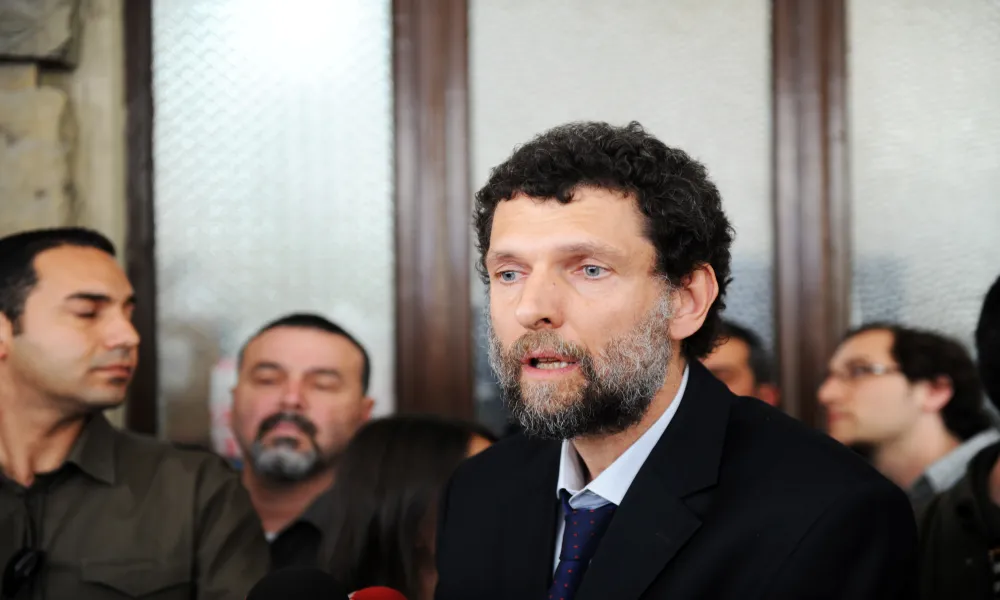



The European Court of Human Rights has ordered Turkey to release philanthropist and publisher Osman Kavala as soon as possible, ruling his life sentence "null and void." The court also ordered Turkey to pay Kavala more than €110,000 and found multiple violations of his fundamental rights.
Kavala, who became a symbol of the pursuit and suppression of civil society in Turkey, was arrested in October 2017 and held in a maximum-security prison in Istanbul.
Years of prosecution
He was initially prosecuted over his support for the 2013 protests against the government of Recep Tayyip Erdogan, who was prime minister at the time. Turkish authorities subsequently built up a wide range of charges against him, all of which he denies.
Following an earlier release request from the European Court of Human Rights, Kavala was acquitted of the charges in 2020, only to be immediately rearrested on new charges and sentenced to life in prison in 2022.
Turkey was found to have violated Kavala's freedom of expression, his freedom of assembly, and his rights to liberty and to a fair trial. Turkey has also previously been found in violation over inhuman and degrading treatment.
Court cites 'severe violations'
The Strasbourg court's ruling, adopted by 15 votes to two, found that Kavala's prosecution, detention and conviction were driven primarily by an unstated aim: to punish him for his role in the Gezi Park protests and his work as a human rights defender, and to silence him.
The court pointed to what it called severe violations in the judicial proceedings against Kavala, concluding that Ankara's refusal to release him despite the court's earlier rulings undermines not only public trust in the rule of law but also the constitutional order itself. It found that the flaws identified in the case amounted to a fundamental shift in the legal framework under which Kavala's case was examined, and that these failings, taken together, struck at the core of his right to a fair trial.
Source: CNA