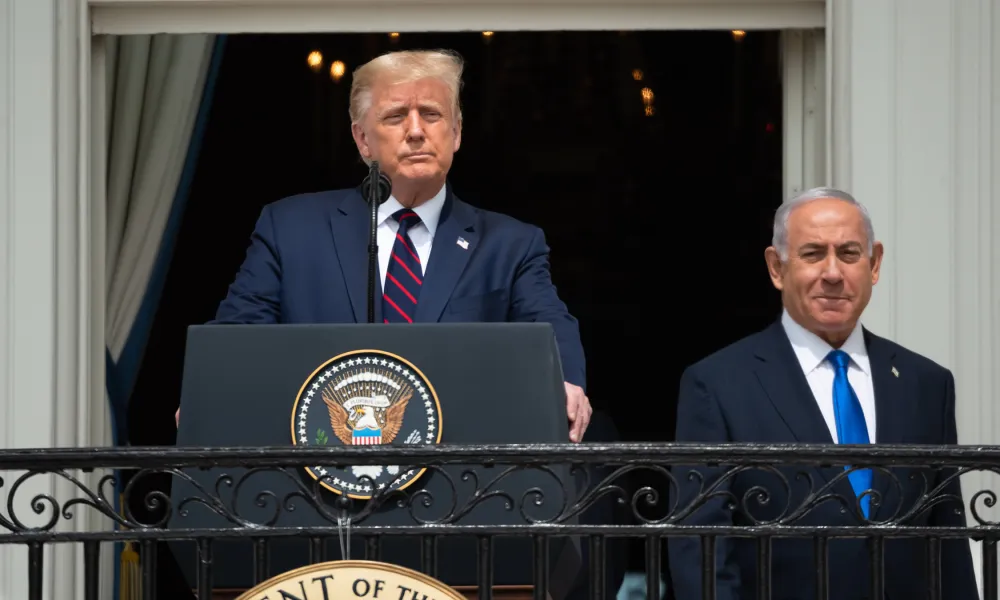

A large-scale Israeli military operation against Iran, potentially capable of triggering a broader regional conflict, was prepared earlier this month before US President Donald Trump voiced opposition to restarting hostilities.
According to an investigation by the Financial Times, Israeli Prime Minister Benjamin Netanyahu instructed the country's armed forces to prepare a new and extensive offensive targeting Iranian military, nuclear and government infrastructure.
Citing three people familiar with the plans, the newspaper reported that the Israeli military was ready to launch a multi-day bombing campaign over the weekend of 10 October.
Targets reportedly included nuclear facilities, sites linked to the Iranian regime and civilian infrastructure such as power-generation facilities.
According to the same sources, the planned operation would have been more intense than the joint US-Israeli strikes launched in February.
The operation was ultimately not carried out after Trump opposed a renewed conflict before the US midterm elections on 3 November.
Trump opposed escalation before elections
Domestic political considerations in the United States reportedly played a decisive role in postponing the operation.
According to the Financial Times, Trump did not want a new military escalation with Iran weeks before the midterm elections, fearing it could draw US forces into another major conflict.
A renewed war could also drive up global energy prices at a time when the administration faces political pressure over fuel costs.
White House deputy press secretary Anna Kelly told the newspaper that the United States would not attack Iran before the elections.
She argued that Iran is facing serious economic and military difficulties and said US efforts to restrict Iranian ports and facilitate oil exports from the Gulf are producing results.
It remains unclear whether Washington was expected to participate directly in the planned operation or whether Israel was prepared to act alone.
Possibility of future strikes remains
Despite the postponement, the military plans do not appear to have been abandoned.
One source cited by the Financial Times said it would not be unreasonable to expect renewed strikes by Israel and the United States in the coming weeks.
According to the source, Washington is seeking to pressure Tehran into accepting an agreement covering its nuclear programme and freedom of navigation through the Strait of Hormuz.
The report also said Israeli officials have compiled an updated target list based on new intelligence assessments.
The list reportedly includes civilian infrastructure that was not targeted during previous military operations.
Another source suggested, however, that preparations for the strike may also have served as leverage in negotiations with Iran, noting that any final decision on a major military campaign ultimately depends on the US president.
Pentagon chief's discreet trip to Israel
The Financial Times also highlighted a visit by US Defense Secretary Pete Hegseth to Israel on 19 October.
According to an Israeli official, Hegseth met Netanyahu and other senior officials during a period of heightened military readiness.
Israeli forces have reportedly remained on alert for several weeks and have taken the unusual step of cancelling military leave until the parliamentary elections on 27 October.
Israel Defence Forces chief Eyal Zamir said the measures were intended to ensure the elections are conducted safely and without disruption.
The Pentagon did not immediately respond to the newspaper's request for comment, while Netanyahu's office declined to answer repeated questions.
Axios reports earlier Trump-Netanyahu discussions
The Financial Times report follows an earlier story by Axios on 13 October, which said Trump and Netanyahu had discussed the possibility of a new military operation against Iran before elections in both countries.
Citing two US officials, one Israeli official and another source familiar with the discussions, Axios reported that Netanyahu had expressed concerns about intelligence suggesting Tehran was attempting to rebuild elements of its nuclear programme.
According to that report, Trump initially appeared more open to considering new strikes but later became more cautious.
A White House official disputed claims that the two leaders had discussed restarting the war, while Netanyahu's office declined to comment on the substance of their conversations.
Election backdrop raises concerns
The revelations carry particular political significance because Netanyahu faces parliamentary elections on 27 October, while Trump heads into US midterm elections a week later.
According to the Financial Times, current and former Israeli security officials have expressed concern that a military operation launched so close to an election could significantly affect the democratic process.
The report notes that even after the election Netanyahu could remain caretaker prime minister for several weeks, retaining the authority to make decisions on military operations.
Despite Trump's opposition to strikes before the US elections, both leaders have continued using tough rhetoric towards Tehran.
On Monday, Netanyahu released video footage from an Israeli airbase showing him speaking by telephone with Trump, with both leaders referring to the need to complete operations against Iran.
Combined with reports of newly identified targets, the developments leave open the possibility of renewed conflict after the elections, although no decision on a fresh attack has been confirmed.