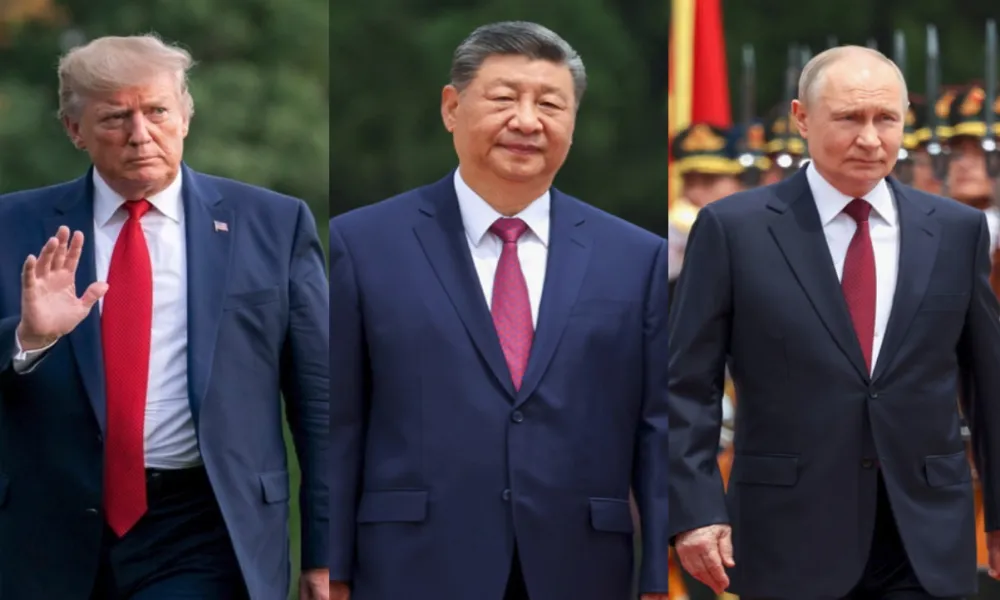

Presidents Donald Trump, Vladimir Putin and Xi Jinping are due to meet for the first time in a trilateral format on November 19 in Shenzhen, on the sidelines of the APEC summit, in a gathering that has sparked debate over its potential impact on the global balance of power.
The meeting has been confirmed by all three governments and is expected to focus on issues including nuclear arms control, Ukraine, Iran, trade and international security.
Talk of a 'new Yalta'
Recent international media coverage has drawn comparisons with the 1945 Yalta Conference, when the leaders of the Soviet Union, the United States and Britain helped shape the post-war order in Europe.
According to a Reuters analysis, some governments fear the talks could signal an attempt by major powers to redefine spheres of influence, although expectations for a sweeping agreement remain limited given the differing priorities of the three countries.
China calls meeting historic
China has described the summit as an event of major importance for global peace and strategic stability.
Foreign Ministry spokesperson Mao Ning said the three leaders would hold in-depth discussions on maintaining international peace and managing relations among major powers.
Beijing has not outlined a detailed agenda, despite reports that discussions may include nuclear disarmament, Ukraine and Iran.
Kremlin rejects Yalta comparisons
The Kremlin has sought to distance the meeting from suggestions of a geopolitical carve-up.
Spokesman Dmitry Peskov dismissed comparisons with Yalta as "political science exercises" and said Russia and China support a multipolar international order rather than deciding the future of other countries.
At the same time, Moscow has described the meeting as unprecedented and highly significant.
Russian presidential aide Yuri Ushakov said the discussions would be conducted in the spirit of cooperation that existed among the wartime allies during World War II and their role in creating the United Nations.
Ukraine now expected on the agenda
A notable development came from the US side after Trump indicated that Ukraine would be among the issues discussed.
According to The Guardian, Trump said the talks would address nuclear disarmament, the war involving Iran, trade, the economy and Ukraine, which he described as a subject of particular interest.
His comments appear to go beyond earlier indications from US officials that Ukraine would not feature prominently in the discussions.
Different priorities for each leader
Analysts note that each participant has distinct objectives.
For Putin, the meeting offers an opportunity to advance Russia's position on ending the war in Ukraine while reinforcing Moscow's status as a global power.
For Trump, nuclear arms control remains a key priority, especially efforts to involve China in future arms-limitation discussions.
Beijing, however, has shown little enthusiasm for arrangements that could place its considerably smaller nuclear arsenal under the same framework as those of the United States and Russia.
Reports also suggest China resisted efforts to make Ukraine a central topic of the summit.
Europe watching closely
European governments are closely monitoring the meeting amid concerns that major decisions affecting the continent's security could be discussed without direct European participation.
The prospect of closer coordination between Washington, Moscow and Beijing has revived questions about Europe's influence over issues such as Ukraine, sanctions and regional security.
While the symbolism of the meeting is considerable, analysts remain cautious about the prospects for a breakthrough agreement.
Reuters noted that the chances of a comprehensive deal remain limited, while US officials have already indicated that no major nuclear agreement is expected.
For now, attention is focused not only on what Trump, Putin and Xi discuss in Shenzhen, but whether their first joint meeting could mark the beginning of a broader process of dialogue among the world's three most powerful states.