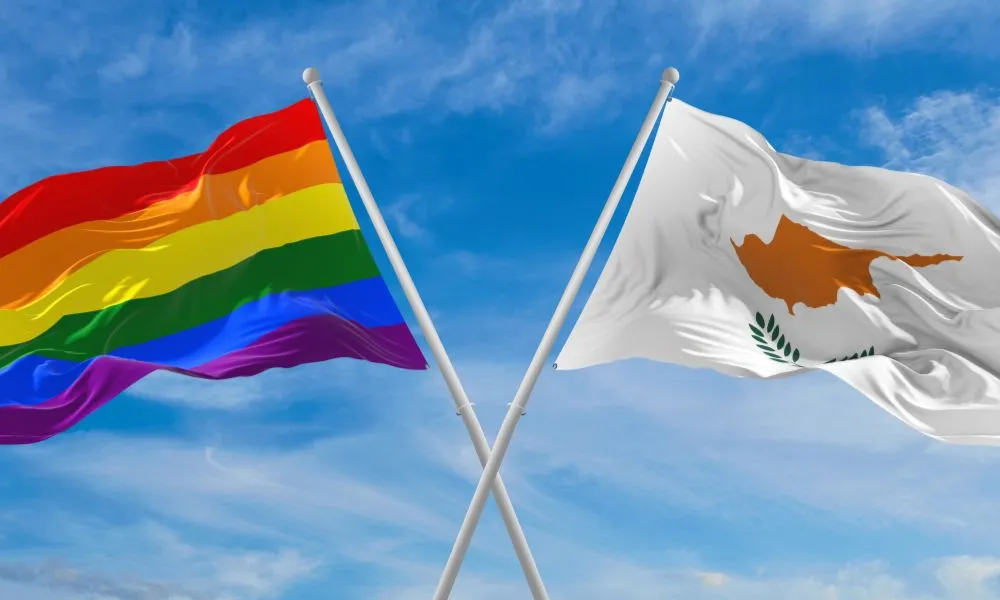

Every June, Cyprus repeats the same choreography. Pride approaches, queer bodies step into colour and visibility, and the comment sections ignite. “Perversion.” “Shame.” “Against our traditions.” The language is predictable, almost ritualistic. But what we are witnessing is not simply prejudice. It is something older, more embedded. An emotional inheritance that has been shaping Cypriot identity for decades quietly coming to the surface.
We are a society raised on silence. The kind that forms after war, displacement, division. The kind that teaches children that safety lies in not disturbing the emotional ecosystem of the family. We inherit silence before we inherit language. We learn early that certain truths must be swallowed, certain desires hidden, certain wounds left untouched.
From this silence grows shame. Cyprus is a shame‑based society, where the central fear is not wrongdoing but exposure. “Ti tha pei o kosmos” (what will people say?) is not a phrase; it is a nervous system. Shame becomes the architecture of belonging. It shapes how families function, how children behave, how adults make decisions. And when shame governs a society, difference becomes a threat. Queerness becomes a mirror people cannot bear to look into.
Inside this landscape, the Cypriot family becomes a micro‑state. It manages reputation, continuity, gender roles, and emotional expression. It is the first place where identity is policed. Queerness destabilises this architecture. It challenges the myth of the “normal” family, disrupts patriarchal lineage, threatens the carefully curated public image that families rely on for social survival.
Layered onto this is the island’s unprocessed trauma from '74. It is the quiet inheritance of war, displacement and division, carried differently across both communities but rarely spoken through. Cyprus never truly paused to grieve itself. There was no emotional reckoning. Trauma that is not metabolised becomes rigidity in identity, in gender roles, in belonging. It becomes a clinging to 'tradition' not out of conviction, but out of fear. Within families, this trauma often expresses itself through blurred boundaries, emotional over‑involvement, guilt mistaken for care. In such systems, individuality is interpreted as betrayal. A queer child is not simply “different;” they are a rupture in the emotional contract of the family.
This is why Pride feels so disruptive. Pride is not just a parade. It is a corrective emotional experience for a country built on quietness. It is the embodiment of everything Cyprus has been taught to fear: visibility, autonomy, joy, difference, the unapologetic body.
So when the comments on social media erupt, what we are seeing is not simply bigotry. We are seeing the island’s emotional inheritance being activated. We are seeing people confronted with a mirror they were never taught to look into. Pride is not the problem. Pride is the mirror. And perhaps the question should be whether Cyprus is ready to face its own reflection.