The latest round of contacts by the UN Secretary-General’s envoy on Cyprus suggests a shift in approach, with the new initiative moving beyond maintaining momentum to pushing both sides towards a more substantive and focused dialogue.
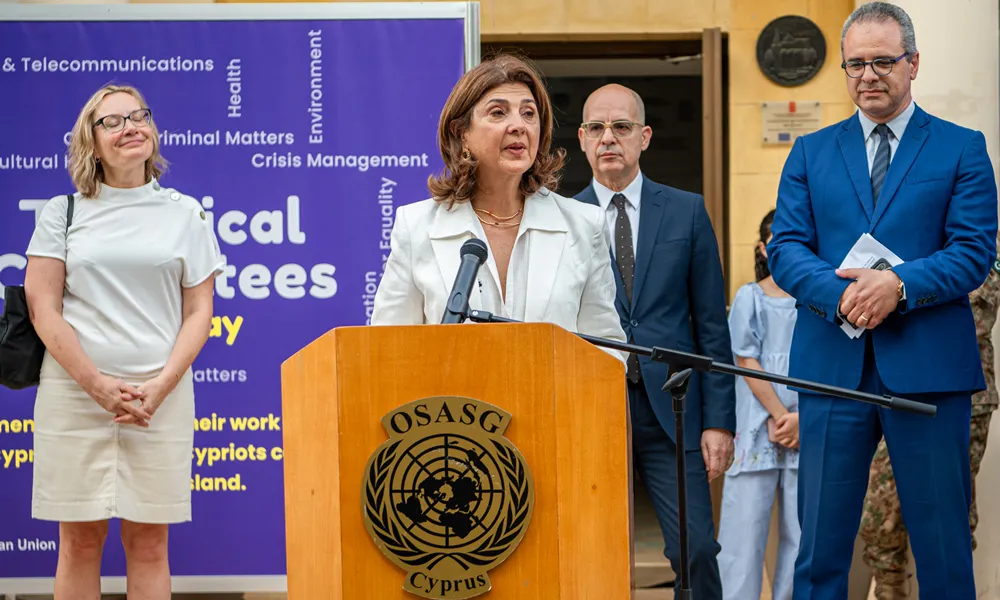
The presence of the Secretary-General’s personal envoy, Maria Angela Holguín, in Cyprus, followed by meetings in Turkey and Greece in the coming days, forms part of a careful effort to prepare the ground for a new informal expanded 5+1 meeting that could take place during the summer.
What stands out in the approach of Antonio Guterres and his team is a clear determination to move the discussion away from general declarations and towards substance. Both sides are being asked not only to outline their positions in principle but also to explain how they envisage, in practical terms, the continuation of a process that could eventually lead to a settlement.
The Greek Cypriot side will need to clarify issues linked to already recorded convergences, including matters relating to political equality, within the agreed framework for a solution. At the same time, Ankara and the Turkish Cypriot leader are expected to set out clear positions on issues of concern to the Greek Cypriot side, such as security, guarantees and the functionality of any future arrangement.
Despite the positive climate the UN envoy is seeking to foster, significant differences remain. The preconditions set by the Turkish Cypriot side do not concern only the resumption of talks, but also what would follow in the event of another failure. The experience of the referendum and the collapse of talks at Crans-Montana continues to shape the approach of Ankara and the Turkish Cypriot leadership.
Their central question is whether the current status quo could continue if the Turkish side is not held responsible for a potential new deadlock.
This is precisely where the greatest challenge of the current process lies. Maria Angela Holguín must strike a balance between the need to restart meaningful negotiations and the demands of both sides for political assurances that would make a new effort different from previous ones.
The success of her mission will not be judged solely by whether a new conference is convened, but by whether she can create the conditions for a process with clear direction, mutual understanding and a genuine prospect of reaching an outcome.
This remains the critical test for the current UN initiative.