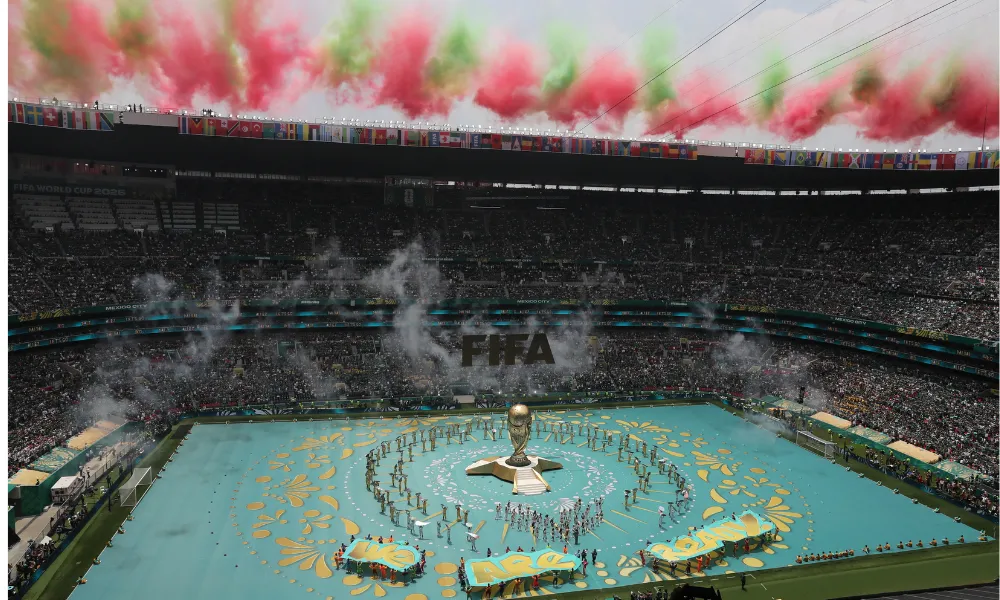

The World Cup returned with all the noise, colour and theatre expected of football’s biggest stage, as Mexico City hosted the opening of a tournament unlike any before it.
For the first time, 48 teams will compete across three countries, with Mexico, the United States and Canada sharing a competition designed to be larger, longer and more global than previous editions. The opening night placed the focus firmly on spectacle, with a packed stadium, music, ceremony and the first match of a tournament that will dominate the summer.
Mexico’s role as opening host gave the occasion added historical weight. Already one of football’s great World Cup nations in cultural terms, the country again provided the setting for the tournament’s first act, turning the start of the competition into a celebration of both football tradition and the expanded future FIFA has built around 2026.
Video: FIFA opening ceremony from Mexico City
Shakira returned to familiar World Cup territory with “Dai Dai,” the new official song of the 2026 tournament, performed alongside Burna Boy during the Mexico City ceremony. Her appearance carried its own football joke online: the Colombian star has now appeared at more World Cups in the past two decades than Italy, whose absence from recent editions has become one of the sport’s strangest modern subplots.
Moment Burna Boy joined Shakira live on stage in Mexico 🇲🇽 as they performed “Dai Dai” together for the first time at the opening ceremony of the 2026 FIFA World Cup. ⚽️🔥
— ThatOjoBoy (@ThatOjoBoy) June 11, 2026
The duo delivered the official World Cup song, kicking off football’s biggest tournament. pic.twitter.com/LOBYgy0PDb
A tournament on a new scale
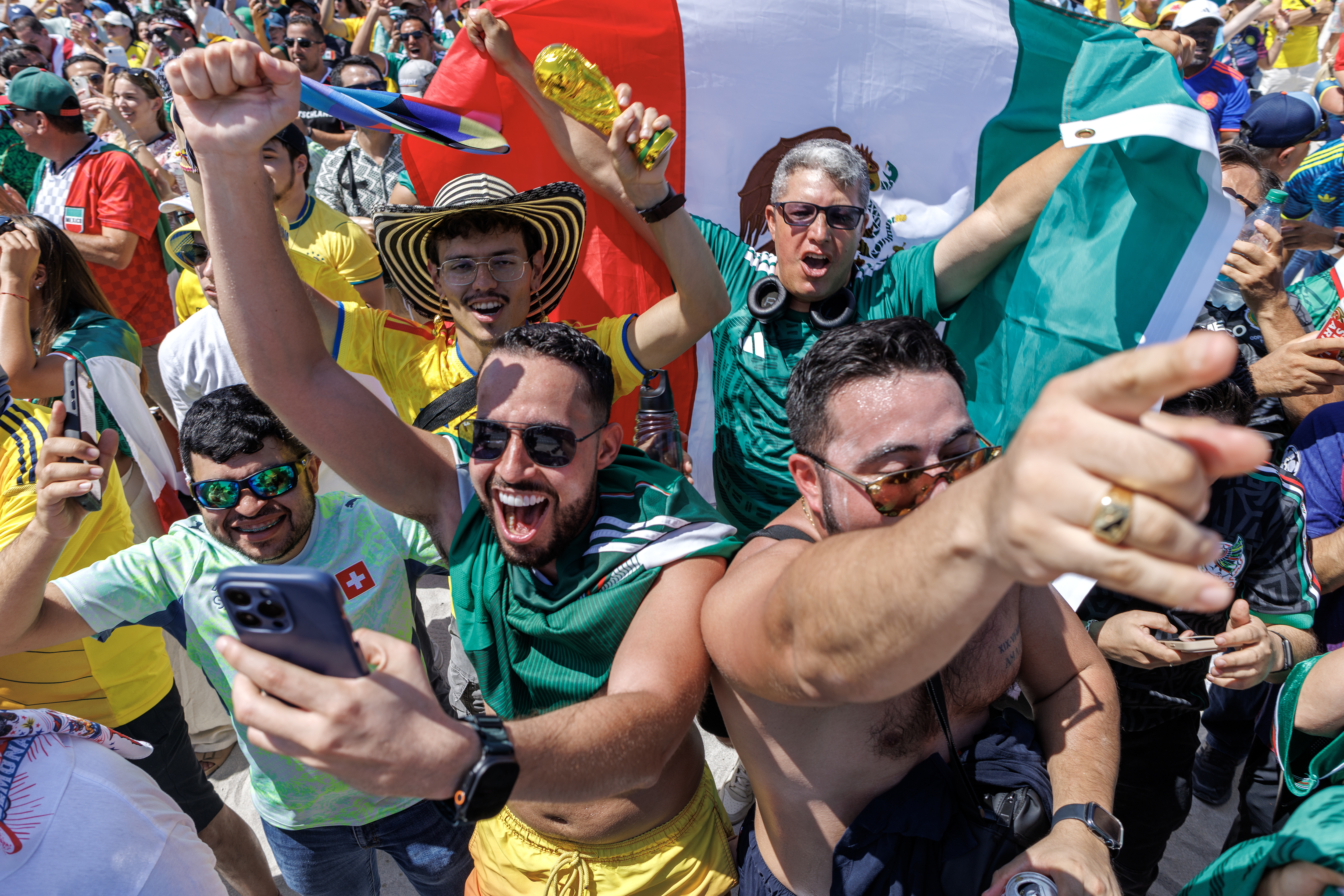
This year’s World Cup is the first to feature 48 teams, expanding the competition beyond its previous 32-team format and spreading matches across North America. The change has reshaped the tournament, bringing in more nations, more fixtures and a broader map of host cities.
FIFA has presented the 2026 edition as the most inclusive World Cup yet, with the tournament stretching from Mexico to the United States and Canada. That scale is part of the attraction, but it also brings a more complex event, with different venues, travel demands, security arrangements and political backdrops shaping the experience around the football.
Questions beyond the pitch
The tournament has also opened against a more complicated political backdrop, with protests, visa problems, travel restrictions and airport checks already becoming part of the early World Cup story.
That tension was visible even inside the stadium. During the opening ceremony in Mexico City, sections of the crowd appeared to boo as the United States flag was shown, a striking moment for a tournament co-hosted by Mexico, the US and Canada. It briefly cut through the celebratory tone of the night and hinted at the political undercurrents surrounding an event staged partly on American soil.
🇺🇸 The U.S. flag was booed during the World Cup opening ceremony in Mexico City, becoming one of the first major talking points of #WorldCup2026.#FIFAWorldCup #Mexico #USA #Canada pic.twitter.com/FqvzrL5sRV
— Fifa World © 2026 (@Waleedahmdd) June 12, 2026
Beyond the ceremony, questions over access have also followed the tournament into its opening days. Iran’s players were eventually granted visas, but several members of the country’s support staff were denied entry, while doubts remain over how easily Iranian fans will be able to attend matches in the United States. Somali referee Omar Artan, one of Africa’s leading officials, was denied entry despite being selected for the tournament, and Iraq striker Aymen Hussein was questioned for several hours on arrival in Chicago. Iraq’s team photographer, Talal Salah, was ultimately denied entry after also being held for hours.
Even cases that were later resolved have added to the sense of uncertainty. Switzerland forward Breel Embolo was delayed by a visa issue before being cleared to join his squad in the United States. Taken together, the incidents have raised wider questions about whether a World Cup spread across three countries can fully deliver on FIFA’s promise of a global, open tournament when access to one of the host nations remains politically and administratively difficult.
⚽️ 2026 FIFA World Cup mired in controversy over US entry restrictions despite tournament slogan, ‘Everyone Welcome’
— Anadolu English (@anadoluagency) June 11, 2026
🔴 Somali referee Omar Artan, along with Moroccan, Haitian, Senegalese and Ivorian fans, and members of Iran’s support staff, face visa denials or entry… pic.twitter.com/7JPwWfnd81
That wider backdrop gave added weight to the videos of Senegal and Uzbekistan that spread online in the opening days. Footage of the two squads facing strict security procedures was placed side by side with Spain’s more celebratory welcome, turning separate arrival scenes into a broader discussion about access, perception and the uneven experience of teams at the tournament.
⚽️ 2026 FIFA World Cup mired in controversy over US entry restrictions despite tournament slogan, ‘Everyone Welcome’
— Anadolu English (@anadoluagency) June 11, 2026
🔴 Somali referee Omar Artan, along with Moroccan, Haitian, Senegalese and Ivorian fans, and members of Iran’s support staff, face visa denials or entry… pic.twitter.com/7JPwWfnd81
Senegal’s football federation later said the checks involving its squad were part of standard airport procedures and a logistical arrangement intended to speed up travel. But by then the images had already travelled far beyond their original context, feeding a debate that sits uneasily beside FIFA’s message of unity, inclusion and global celebration.
It is a reminder of the contradiction at the heart of this World Cup. On the pitch, the expanded format gives more countries than ever the chance to take part in football’s biggest event. Off it, the realities of borders, visas, security and politics are already shaping how that global promise is experienced.
For now, the tournament has begun with the familiar ingredients of a World Cup: packed stands, ceremony, noise, stars and the first rush of football. But the opening days have also shown that this edition will be watched through more than one lens. The football will carry the competition, but the stories around it have already started too.
Back to the football
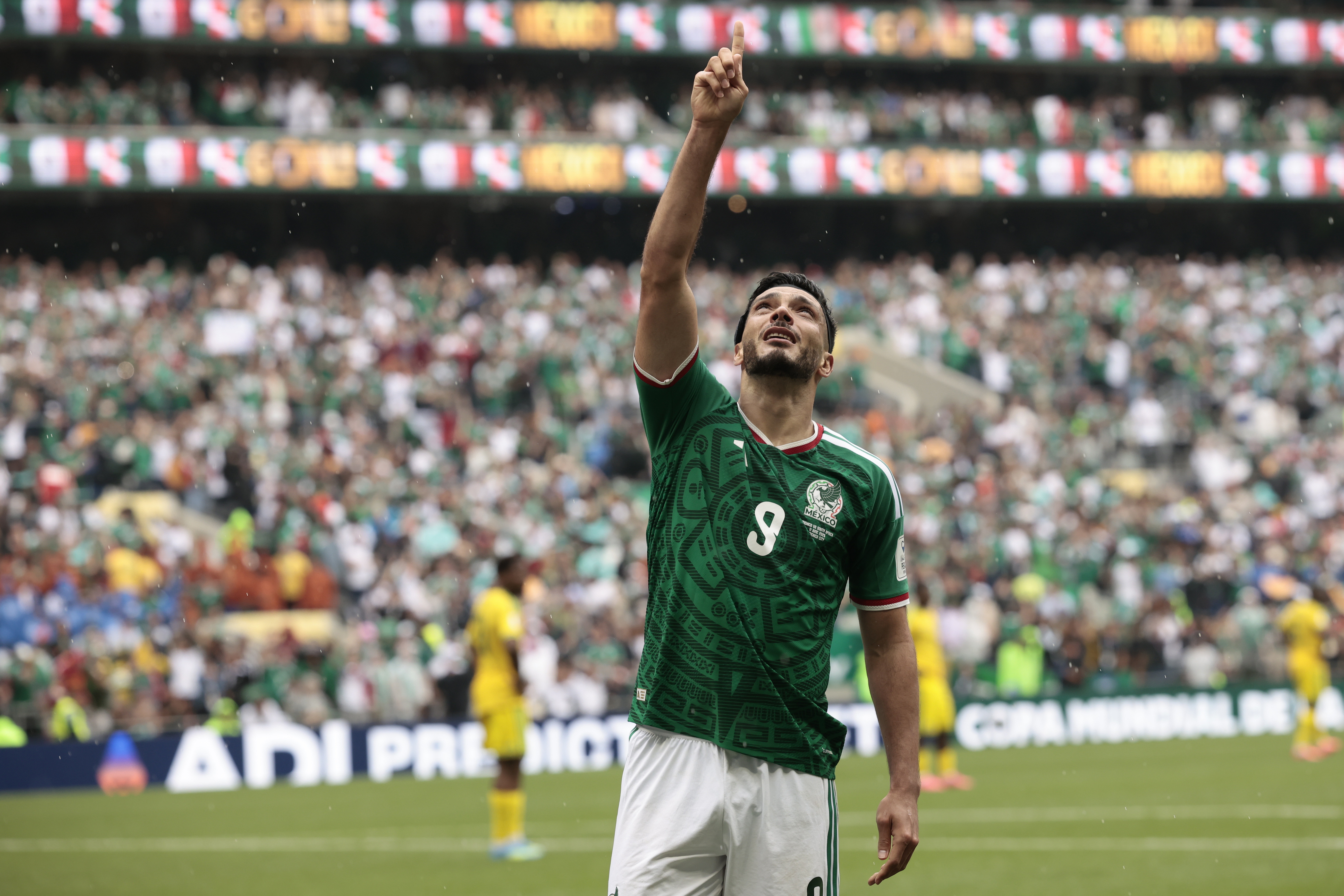
For all the noise around the tournament’s opening days, the World Cup still began where it was always meant to: on the pitch. Mexico gave the home crowd its first release of the summer with a 2-0 win over South Africa, as Julian Quinones struck early before Raul Jimenez added a second-half header.
The match gave the opening night the result the hosts wanted, even if it also carried some of the drama of a World Cup first act. South Africa finished with nine men, while Mexico also ended the game with 10 after captain Cesar Montes was sent off late on.
That is where FIFA will want the focus to remain in the weeks ahead. With 48 teams, three host countries and a longer route to the final, the 2026 World Cup has been built as the largest version of the tournament yet. Its opening night delivered the spectacle, and Mexico delivered the first football statement.