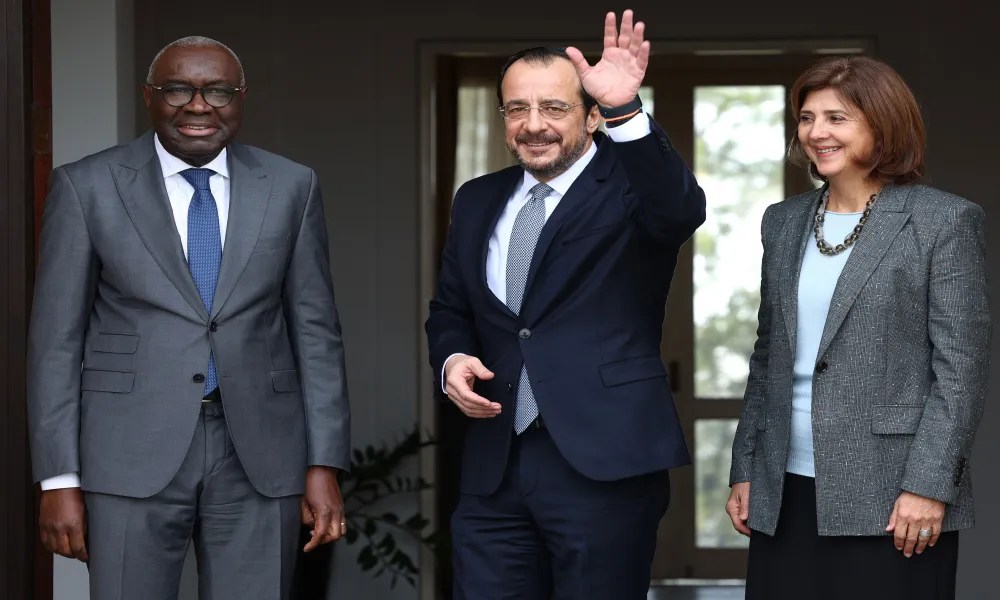
Every time a new window opens for discussion on the Cyprus problem, public debate tends to circle around the same questions. Is there political will? Are the two sides ready to return to the negotiating table? Could a new five-party conference produce real progress? These are reasonable questions, but they probably don't get to the heart of the problem. The real question today is not whether ideas for a solution exist, or whether international mediators are willing to help. It is whether either side has sufficient incentive to actually want to change the current situation.
Disincentives
For Greek Cypriots, the Republic of Cyprus enjoys international recognition, full EU membership, economic growth, and functions as a normal state within the international system. Despite the Cyprus problem remaining unresolved, Greek Cypriots do not experience daily life as an urgent crisis demanding immediate decisions.
For a significant part of society, in fact, a solution is associated more with risk than benefit. Many ask why they should share power, resources and sovereign rights with a community that remains under the strong influence of Turkey. The implementation of any settlement, and the concern that Ankara would continue to play a decisive role even after an agreement, remains perhaps the biggest psychological obstacle.
Turkish Cypriots, on the other hand, still in theory have more to gain from a solution: international recognition, a European perspective, economic development and an end to international isolation. Yet even there, the momentum that existed in earlier periods is no longer visible.
The gradual economic and administrative integration of the north into Turkey has created a new reality. Dependence on Ankara continues to grow, while the prospect of a federal solution no longer mobilises large parts of Turkish Cypriot society the way it did two decades ago. Fatigue from repeated failed efforts, combined with a sense that the international community cannot force progress, has produced a wait and see attitude on both sides.
The status quo
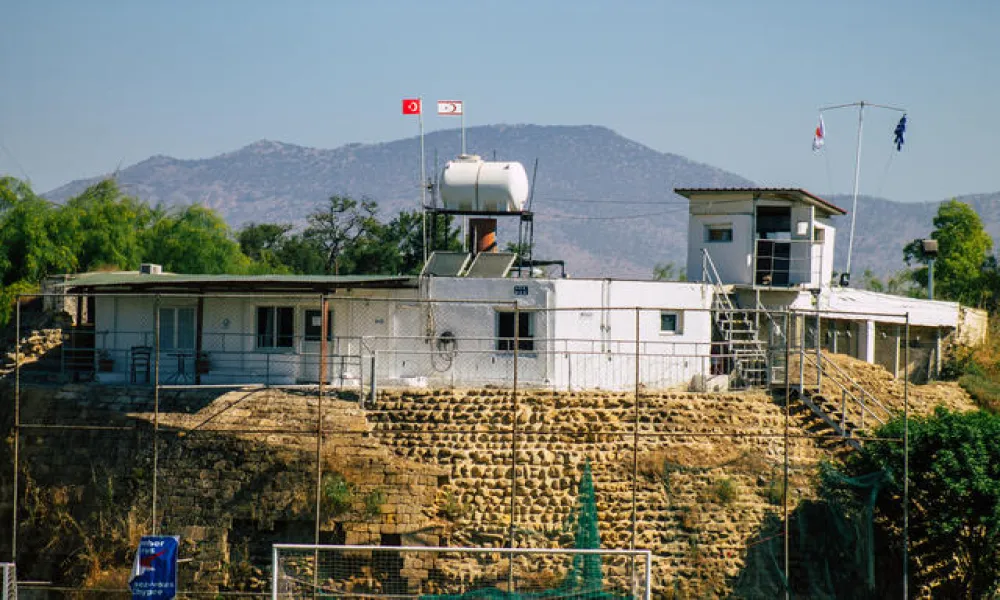
Under these conditions, the reality is a harsh one. Both communities appear to have learned to live with the status quo.
This does not mean either side considers it ideal. It means that, in the eyes of many, the cost of change looks greater than the cost of maintaining the current situation. If that is true, then the key does not lie so much in negotiating formulas as in creating new incentives. The question is what those incentives could look like in today's difficult geopolitical environment. Let's try to identify what could actually move Greek Cypriots and Turkish Cypriots towards a solution.
Incentives
The first answer relates to energy. The Eastern Mediterranean holds significant natural gas reserves, but their development remains limited due to political and geopolitical obstacles. A settlement of the Cyprus problem could turn Cyprus into a bridge for cooperation between the European Union, Turkey and countries in the region, generating significant economic benefits for everyone involved.
The second relates to EU Turkey relations. Ankara has for years sought an upgrade of the customs union, easier visa access and closer economic cooperation with Europe. If the EU were to tie specific benefits to substantive progress on the Cyprus problem, this could create a much stronger framework of incentives than currently exists.
The third dimension is security. The war in Ukraine, instability in the Middle East and broader shifts across the region all highlight the strategic importance of the Eastern Mediterranean for the West. A reunified Cyprus could act as a stabilising factor in a particularly sensitive geographic zone, adding strategic value to any agreement.
There is, however, a fourth factor, less discussed but perhaps more decisive: time. With each passing year, the division becomes more entrenched. Economies diverge, populations change, new generations grow up with no experience of living together, and what was once a temporary state of affairs gradually becomes normal. The cost of any future reunification rises, while the political and social base for a solution weakens. Perhaps, then, the biggest incentive for a solution is not an economic package or a diplomatic initiative. Perhaps it is simply the realisation that the window of opportunity will not stay open indefinitely.
This is the paradox of the Cyprus problem today. Everyone says they want a solution. Few, however, seem to feel they actually need one. And until that equation changes, no conference, however well prepared, will be able on its own to bridge the gap between the two sides.
Why doesn't regional instability act as an incentive?
Growing instability across the Eastern Mediterranean and Middle East, from the wars in Gaza and Ukraine to the broader realignment of regional power, could in theory act as an incentive for greater cooperation between Greek Cypriots and Turkish Cypriots.
In practice, it often produces the opposite effect. Both communities experience a heightened sense of insecurity. Greek Cypriots tend to seek further support from Greece, the European Union and new strategic alliances such as the one with Israel, while Turkish Cypriots, given their political and economic dependence, turn even more towards Turkey. Regional instability, then, does not function as a shared threat that brings the two sides together, but as a factor that deepens the existing lines of division.
The result is that the security debate remains trapped within competing national narratives tied to each community's "motherland," and within fears rooted in the past. By contrast, a shared Cypriot security framework within the EU or Nato for the future would very likely also help bring Greece and Turkey closer together.
In this sense, today's geopolitical instability does not necessarily bring a solution to the Cyprus problem any closer. On the contrary, it risks making both communities even more dependent on geopolitical rivalry and on the strategic interests of the powers seeking a role in the Eastern Mediterranean.
Perhaps the greatest paradox of this period is that the wars raging around Cyprus demonstrate, almost daily, the cost of division and instability, yet the two communities continue to view them through different lenses, drawing different conclusions about where their security actually lies. That, perhaps, is where the deeper political challenge for the Cyprus problem will lie in the years ahead.
What kind of solution could actually work?
After nearly half a century of division, the two communities have developed different political, economic and social realities, and mutual distrust remains strong. This does not mean a solution is impossible. It does mean, however, that a realistic approach may not lie in attempting a single comprehensive agreement that resolves every chapter at once. A more gradual model seems more likely, one in which the two sides first build shared interests and trust before attempting the final step.
Such a process could include measures that improve daily life for citizens on both sides, strengthen economic cooperation, facilitate trade, allow joint use of infrastructure, and promote energy and environmental cooperation. Building mutual benefit may prove more effective than the endless debate over constitutional arrangements.
At the political level, the most realistic prospect remains a bizonal, bicommunal federation, since it is the only model with international legitimacy and forms the basis of all relevant United Nations resolutions. However, for it to become workable, it will require far stronger security guarantees, effective implementation mechanisms, and a framework that reassures Greek Cypriots about Turkey's role while also offering Turkish Cypriots genuine political equality and a sense of security.
Perhaps, in the end, the realistic solution to the Cyprus problem will not be the one that emerges from some historic conference, but the one that gradually convinces both sides that reunification offers more than the indefinite continuation of the status quo.