Investigators deadlock
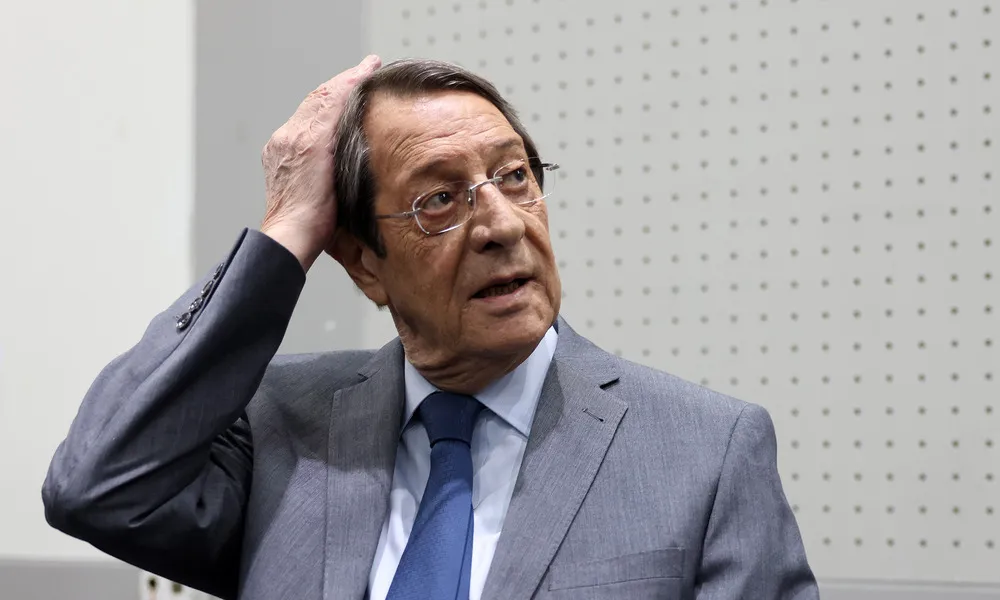
President Nikos Christodoulides is facing difficulties in appointing investigators to examine the findings of the Anti-Corruption Authority’s report. As of last Thursday, most of the responses were negative.
After the report was published, the president and his aides drew up a list of capable lawyers and technocrats to take on the case. All but one of those approached declined.
Why? Three categories emerge. First, the “reluctant”, who heard about 3,000 pages and 750 box files and wondered who would read all that in the middle of a heatwave. Second, those unwilling to get involved in a complex case that is not purely legal but heavily political, with a former president, ex-ministers, lawyers and journalists implicated.
Third, those with conflicts of interest. There are around 15 apparent suspects for criminal offences and, in a small country, many have professional, social or family links.
There is a growing sense that the president may have to look abroad for investigators, although many Greek candidates have already declined. British candidates are viewed with suspicion because of perceived agendas, leaving possible options such as Canada, New Zealand or India, where the legal framework is broadly compatible.
Cyprus talks reaction
Some were unsettled by last Sunday’s article by the Politis director on the Cyprus issue. One might have expected a stronger reaction from the Greek Cypriot side, as the report touched on taboo issues such as a return to a presidential council model reminiscent of 2004 and a non-elected federal parliament.
However, the strongest reaction came mainly from Turkish Cypriots – including some who supported a settlement in 2004 and 2017.
The concern centres on territory: will Morphou be returned? Will large parts of the Mesaoria be handed back? Will communities be displaced again?
Tufan Erhürman felt compelled to intervene, warning of “attempts to manipulate public debate and provoke the Turkish Cypriot side”.
The underlying question remains: can a solution realistically be achieved without substantial territorial adjustments?
DISY and Anastasiades
It is widely understood that most Democratic Rally (DISY) members would prefer to distance themselves from former president Nicos Anastasiades, although few say so publicly.
Nicosia MP Demetris Demetriou has stood out by voicing concerns, effectively preserving the party’s seriousness. He was prompted to speak out after hearing colleagues – particularly from Limassol – publicly declaring Anastasiades innocent following his press conference and suggesting he is being targeted by the establishment.
In political terms, the issue goes beyond legal innocence. Critics ask whether it is acceptable for a sitting president to travel on oligarchs’ private jets or take family trips to the Seychelles hosted by foreign figures.
Supporters, including Efthymios Diplaros, Fotini Tsiridou and Harris Georgiades, appear to dismiss these concerns, focusing strictly on legal arguments rather than political accountability.
Armenian honour
President Christodoulides was awarded the “Prince of Cilicia” decoration by Archbishop Aram, the highest honour of the Armenian Catholicosate of the Great House of Cilicia, based in Lebanon.
The award is granted to individuals who have made significant contributions to the Armenian people and diaspora. In this case, it reflects Cyprus’ support for the Armenian community and its role as a regional bridge.
Cilicia, in south-eastern Asia Minor, holds historical significance for Armenians as the centre of a medieval Armenian kingdom. The title evokes figures such as Levon II, a prince who later became king and established the Armenian Kingdom of Cilicia in the late 12th century.
Auditor dispute
Former auditor-general Odysseas Michaelides continues to display strong grievances following his removal by the Constitutional Court.
As a member of the House audit committee, he recently requested the submission of internal minutes from the Auditor General’s Office regarding how audits are planned and conducted.
Current auditor-general Andreas Papaconstantinou refused, citing institutional independence under the Constitution. Michaelides insisted the committee has the authority to request any information, arguing that parliament effectively oversees the audit service.
Ironically, such arguments were once dismissed outright during Michaelides’s tenure. Observers note tension between his expectations and the autonomy of his successor.
Book publication
Veteran journalist Panos Ignatiou has released a new book titled “The Legacy of Bloody Shadows”.
The book is dedicated to EOKA fighters Neoklis Panayiotou and Evripides Nouris, who were killed on 16 August 1961 near the village of Moni.
Spanning 475 pages, the work names those responsible and outlines their motives, drawing on extensive archival material and documentation from the period.
Anti-corruption authority powers
The proposal to grant criminal jurisdiction to the Anti-Corruption Authority has been widely debated but appears constitutionally unfeasible.
Under the current constitution, two bodies cannot exercise the same prosecutorial powers. Some have suggested Authority investigators could act as independent criminal investigators in the same case.
However, this raises issues of impartiality, as they have already been involved in examining and forming conclusions on the matter.
In essence, they would lack the necessary objectivity to review the case afresh.