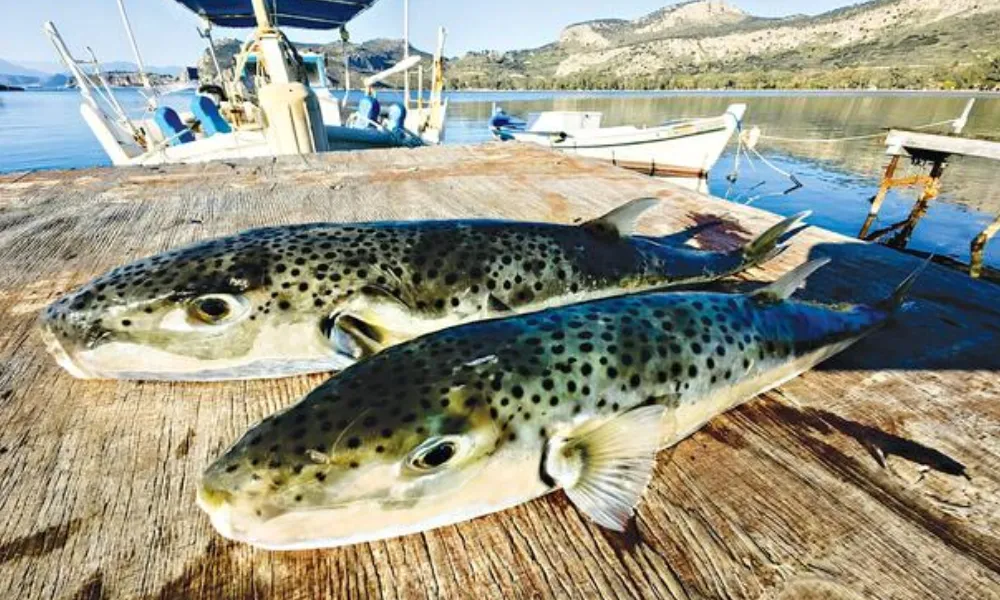

The pufferfish has been at the centre of attention in recent days. This was prompted by sightings on beaches in Greece, as well as a flood of videos and posts on social media, where the toxic fish’s distinctive sharp teeth – appearing almost ready to devour – feature prominently.
In many cases, however, the noise has been greater than the reality, creating the impression that the pufferfish is a new threat that has only just appeared in the eastern Mediterranean.
In fact, the pufferfish is anything but new. It has been present in Cypriot waters for two decades and, according to the Department of Fisheries and Marine Research, not a single case of injury to swimmers has been recorded during that time.
The department’s message is reassuring. There is no reason for concern, provided the fish is not consumed. The species contains the extremely potent neurotoxin tetrodotoxin, which can cause serious food poisoning.
As for its level of danger, authorities simply recommend avoiding contact with the fish and not attempting to feed or disturb it.
This does not mean its presence is without consequences. The problem lies elsewhere.
Those most affected are the people closest to the sea – professional fishers – who see their nets damaged, their catch lost and the cost of their work increasing.
Cyprus subsidy scheme
Cyprus is currently the only country implementing an organised subsidy scheme for the targeted fishing of pufferfish.
The existing programme, in place until the end of 2029, provides compensation of €4.73 per kilogram of pufferfish delivered. According to the Department of Fisheries, “this amount was determined based on data provided by professional fishers themselves and is considered sufficient to incentivise participation in the programme.”
In Greece, discussions are under way about introducing a similar scheme, with reports suggesting that compensation may be higher. However, the Department of Fisheries clarified to Politis that there are no plans to revise the Cypriot scheme, as “the current level of subsidy serves its purpose.”
428 tonnes caught in last decade
According to official figures, eleven collective groups participate in the scheme, involving around 150 professional fishers.
From June 2024 to date, approximately 103 tonnes of pufferfish have been caught in Cypriot coastal waters.
Over the past 10 years, total subsidies have reached €1.5 million, with a total of 428 tonnes of fish removed.
Compared to the number of fishers involved, this suggests the subsidy functions more as a supplementary income rather than a primary source of revenue for the sector.
These figures do not mean that the pufferfish can be eliminated.
As the Department of Fisheries points out, the aim of the programme is not eradication but mitigation of its impacts.
Targeted fishing focuses mainly on larger reproductive individuals, while data is also collected on the species’ biology and spread.
To date, however, there is no scientific estimate of the total size of the pufferfish population in Cypriot waters.
Damage to sector
This picture is confirmed by professional fishers themselves.
Christodoulos Charalambous, head of the Cyprus Association of Professional Fishers, told Politis that the €4.73 per kilo subsidy is satisfactory and not the sector’s main concern.
The bigger issue, he said, is the continuously rising cost of the profession. Damage caused by pufferfish to nets and other gear significantly burdens fishers, while dolphins also cause substantial losses.
For this reason, he argues, the association’s request to reduce VAT on fishing equipment should be brought forward, as such a measure would provide more meaningful support.
Lionfish more dangerous
Unlike pufferfish, cases of injury from lionfish have been recorded in Cyprus.
The species has venomous spines, which it uses for defence and which can cause a painful sting. In the event of injury, immediate immersion of the affected area in hot water for 30 to 90 minutes is recommended, followed by medical attention if necessary.
Despite its venomous spines, however, lionfish is perfectly safe to eat. The Department of Fisheries continues to encourage consumers to choose it, thereby supporting coastal fishing and helping curb the spread of another invasive species.
Botox from pufferfish?
In an interview with Politis published last March, European Commissioner for Fisheries and Oceans Costas Kadis referred to ongoing research into possible uses of the pufferfish.
“There is a need for research to identify safe ways of exploiting it,” he said.
Regarding the species, he added: “I recently visited Croatia, where I observed that it has reached the southernmost point of the country. Research is already under way in two directions: how the toxin can be safely neutralised to make the fish edible, and how it can be used in cosmetic applications, even as Botox. We must find ways to turn threats into opportunities.”
A ‘sweet’ version
While the pufferfish has dominated headlines in Greece and Cyprus, with social media posts fuelling concern, a very different creation also went viral.
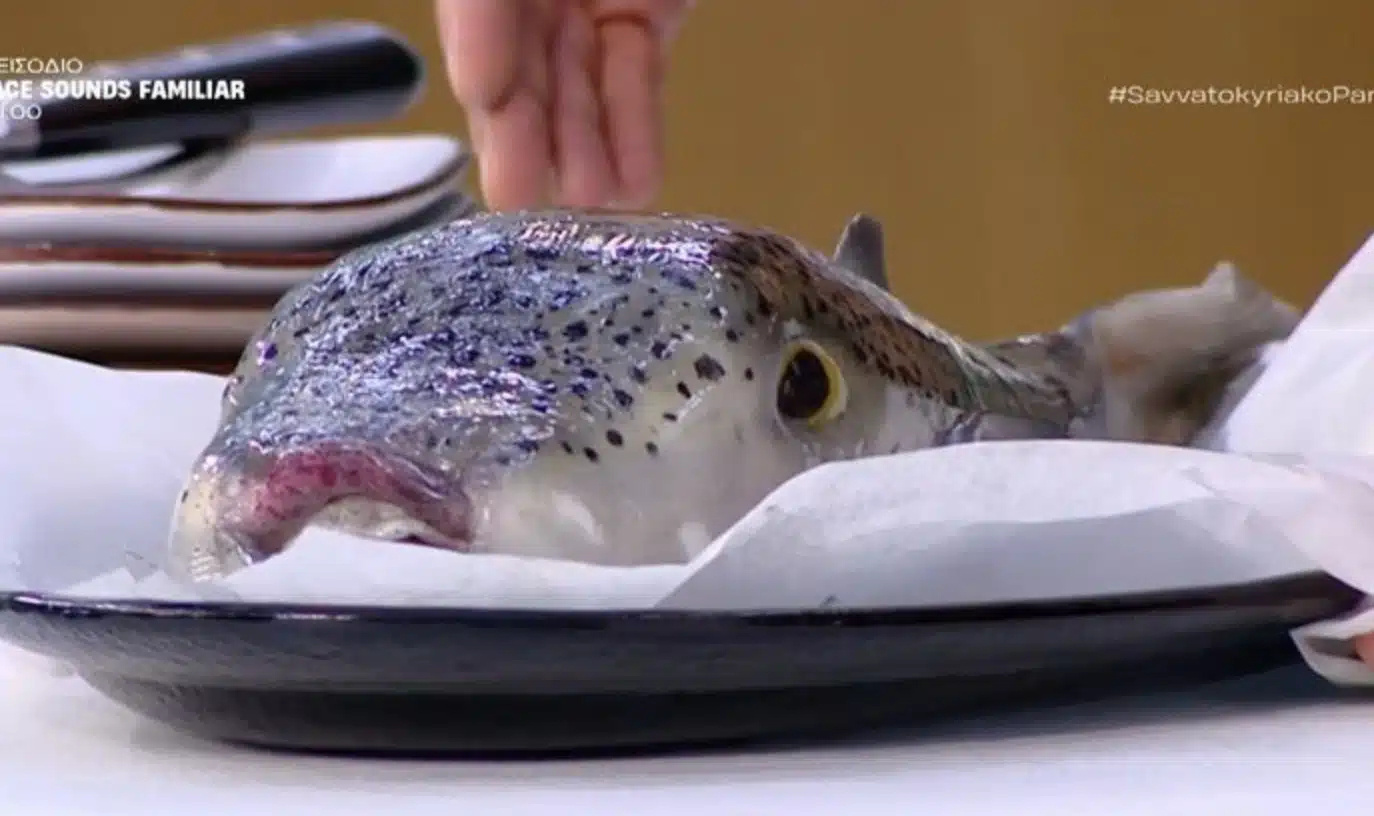
Greek pastry chef Eirini Polyviou, owner of Miranta’s Cakes and Pretty Little Ideas, created a strikingly realistic cake in the shape of a pufferfish.
Its realism was so convincing that many initially believed it to be an actual fish.