
By Michalis Stavrou
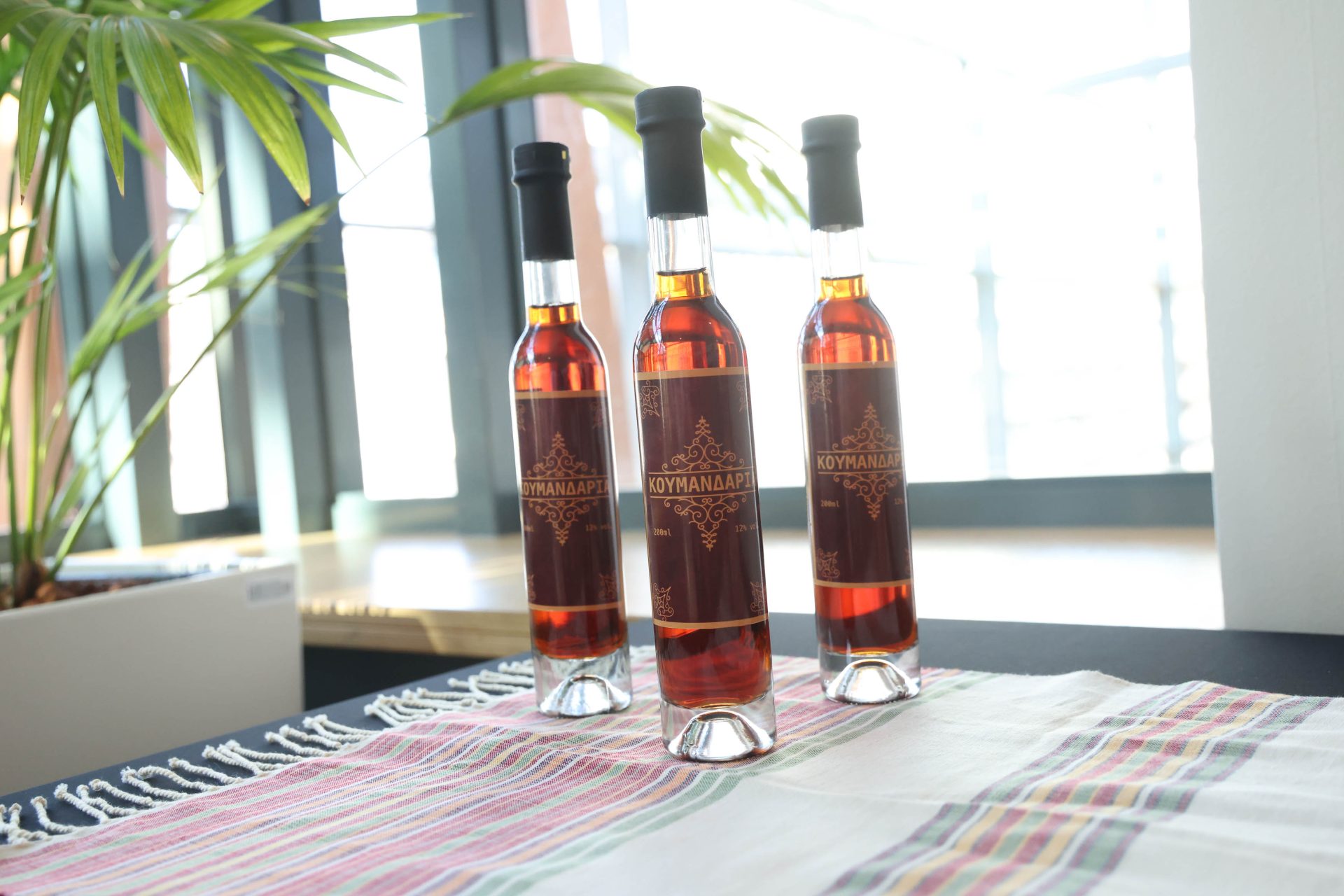
Commandaria is not merely a wine but a story spanning centuries, shaped under the Cypriot sun and matured through time. From antiquity to today, it carries memories of people, labour, celebration and tradition, forming an integral part of Cyprus’s cultural identity. It represents a Cyprus that honours its past, preserves its roots and projects its cultural heritage into the modern era.
Through generations of vine growers who cultivated and safeguarded it, a tradition endures that is not merely technical but deeply cultural and experiential. Every drop reflects the toil of the land, the wisdom of ancestors and the enduring relationship between people and nature. With its amber colour and rich taste, it symbolises continuity and authenticity, bridging past and present while carrying the soul of Cyprus beyond its borders.
It recently travelled beyond those borders thanks to the Press and Information Office (PIO), as the long history and enduring cultural and winemaking value of Commandaria took centre stage at the opening of the exhibition “Cypriot Nama: Commandaria”, held on Wednesday, 17 June 2026 at the European Economic and Social Committee (EESC) in Brussels.
The event
The event was the result of cooperation between the PIO, the EESC and the Permanent Representation of the Republic of Cyprus to the EU. It was presented before the EESC plenary and distinguished guests as part of a Cypriot evening attended by more than 500 people.
The EESC, it should be noted, comprises representatives of employers, workers and other interest groups, and provides opinions on EU matters to the European Commission, the Council of the EU and the European Parliament, acting as a bridge between EU decision-making bodies and citizens.
“The exhibition ‘Cypriot Nama: Commandaria’ celebrates something far more than a wine. It celebrates a remarkable cultural journey spanning thousands of years. A living heritage. A heritage that has survived the rise and fall of kingdoms, the succession of empires and the changes of history,” PIO director Aliki Stylianou said in her address.
A history of centuries
Stylianou highlighted the cultural value of Commandaria, noting that in the sun-drenched vineyards on the foothills of the Troodos mountains, using methods passed down through generations, it is considered the world’s oldest named wine still in production.
“Renowned for its exceptional quality and unique character, it won what is often described as the first recorded wine competition in the world, immortalised in the medieval poem La Bataille des Vins by troubadour Henri d’Andeli in 1224, earning the title ‘Apostle of Wines’ and establishing its place as the ‘Wine of Kings’,” she said.
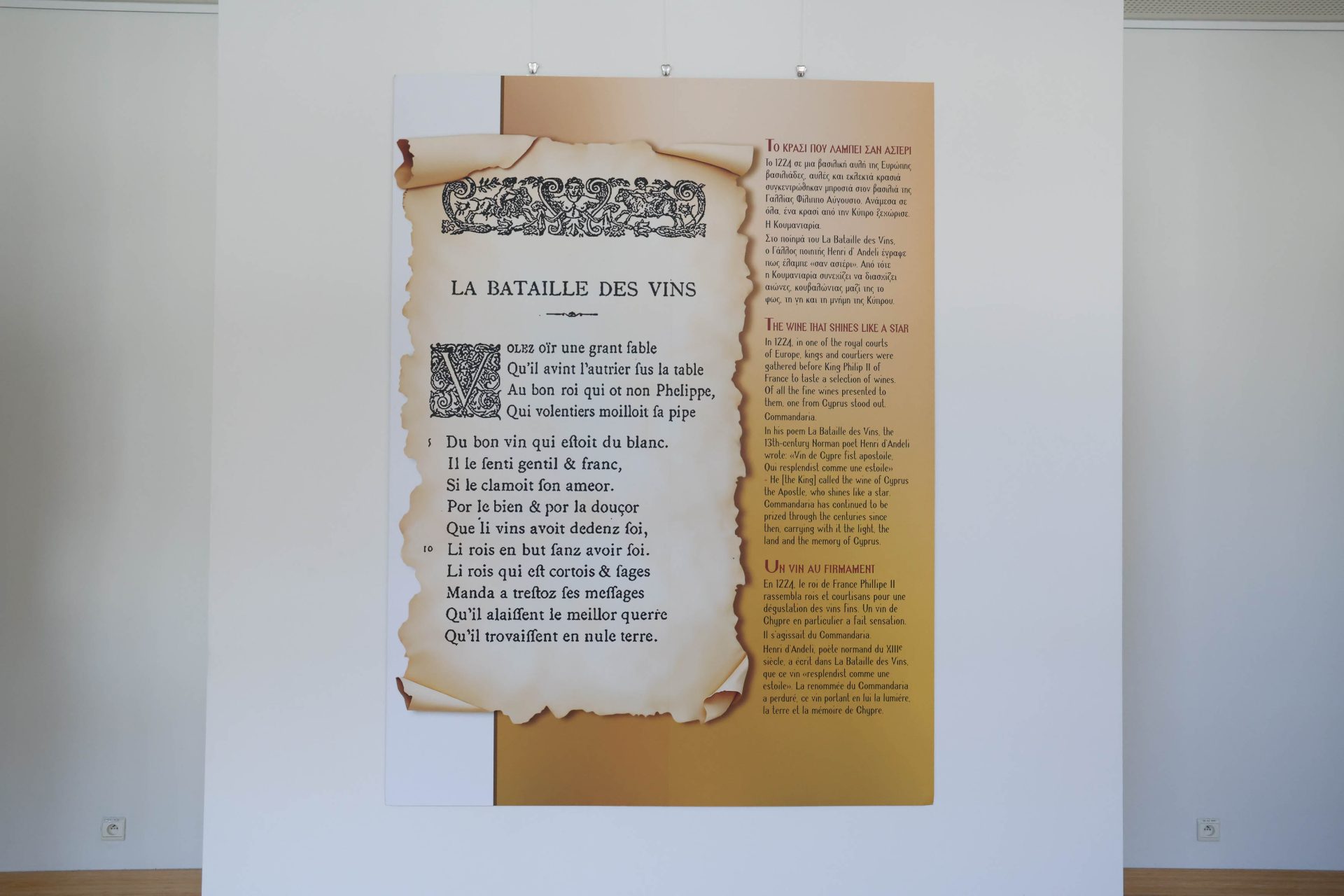
She evoked a scene from a medieval European royal court, where kings, nobles and the finest wines gathered before King Philip II Augustus of France. Among them, she said, a wine from Cyprus stood out: Commandaria.
From Nama to Commandaria
The exhibition in Brussels offered a multi-layered introduction to Commandaria, tracing its journey through the centuries and its place in Cypriot tradition.
Welcoming guests, EESC vice-president Alena Mastantuono expressed her pleasure at hosting the exhibition, noting that it was the first large-scale cultural exhibition to be held at the committee’s premises in Brussels, within the framework of Cyprus’s presidency of the Council of the EU.
She emphasised the importance of the initiative, underlining that Commandaria, with a history of more than 3,000 years, is regarded as the oldest named wine in the world and is closely linked to medieval European tradition.
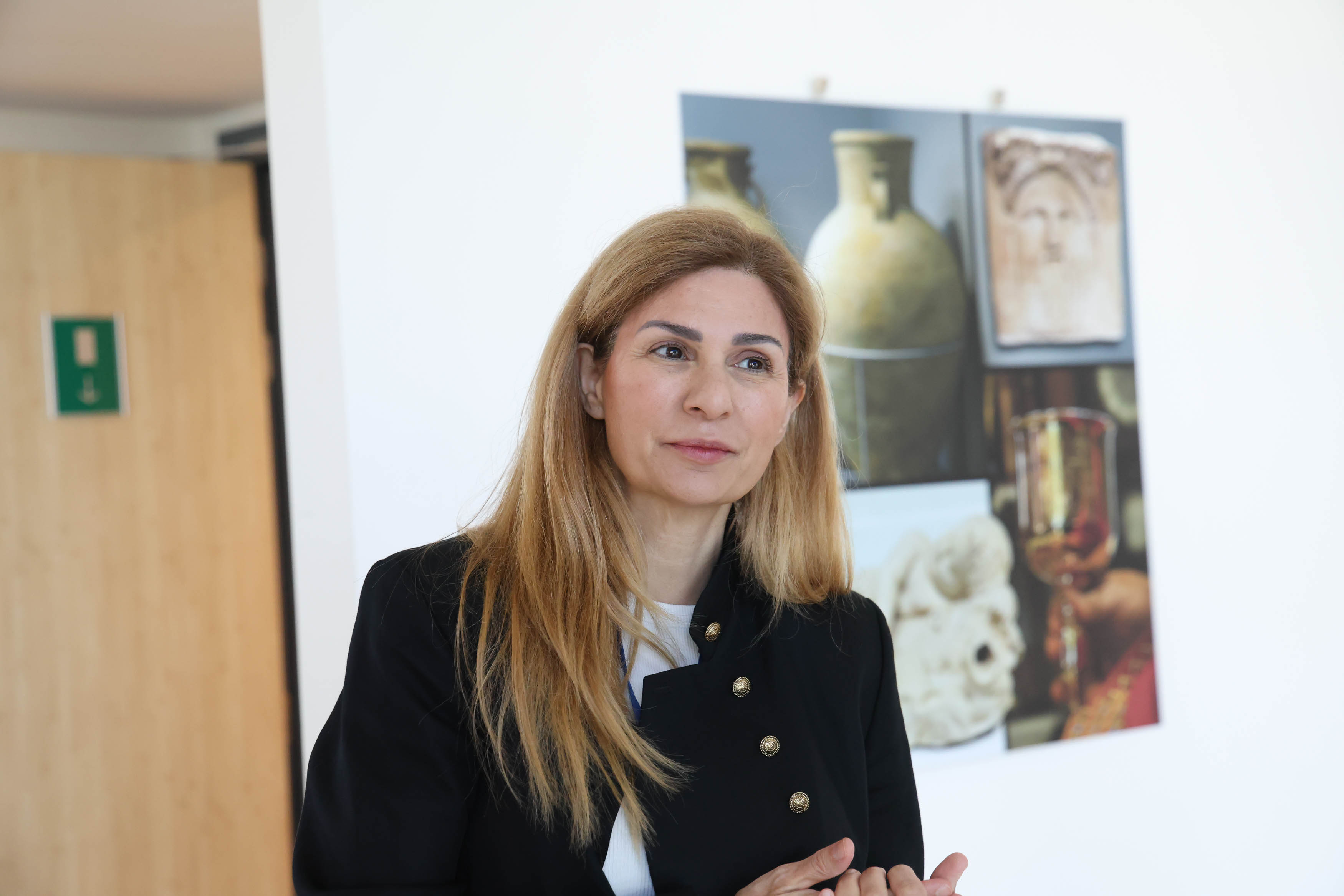
The audience was taken on a journey through its history through excerpts from the PIO production “Cypriot Nama: The Story of Commandaria”, directed by Stavros Pamballis, along with photographic material by PIO photographer Andreas Loukaides.
Referring to its deep historical roots, Stylianou noted that long before it became known as Commandaria, this sweet wine was referred to as “Nama”. The ancient Greek poet Hesiod mentioned it as early as 700 BC in Works and Days, describing a production method strikingly similar to the one used today.
Its fame spread to royal courts and noble households – in crusader castles, at royal banquets and at the famous Feast of the Five Kings in London – becoming synonymous with quality, prestige and excellence.
Even in 1191, Richard the Lionheart famously toasted his wedding with Commandaria. As Stylianou noted, its history is not solely one of kings and knights: “It is also the story of generations of Cypriot vine growers cultivating vineyards on the slopes of the Troodos mountains, preserving ancient traditions through the centuries.”
Cultural heritage
Today, Commandaria is produced exclusively in 14 villages of the Commandaria region, using the indigenous grape varieties Xynisteri (white) and Mavro (red). Its continued production remains strong, which is why it is recognised as a Protected Designation of Origin product of the European Union and has been inscribed on UNESCO’s Representative List of Intangible Cultural Heritage.
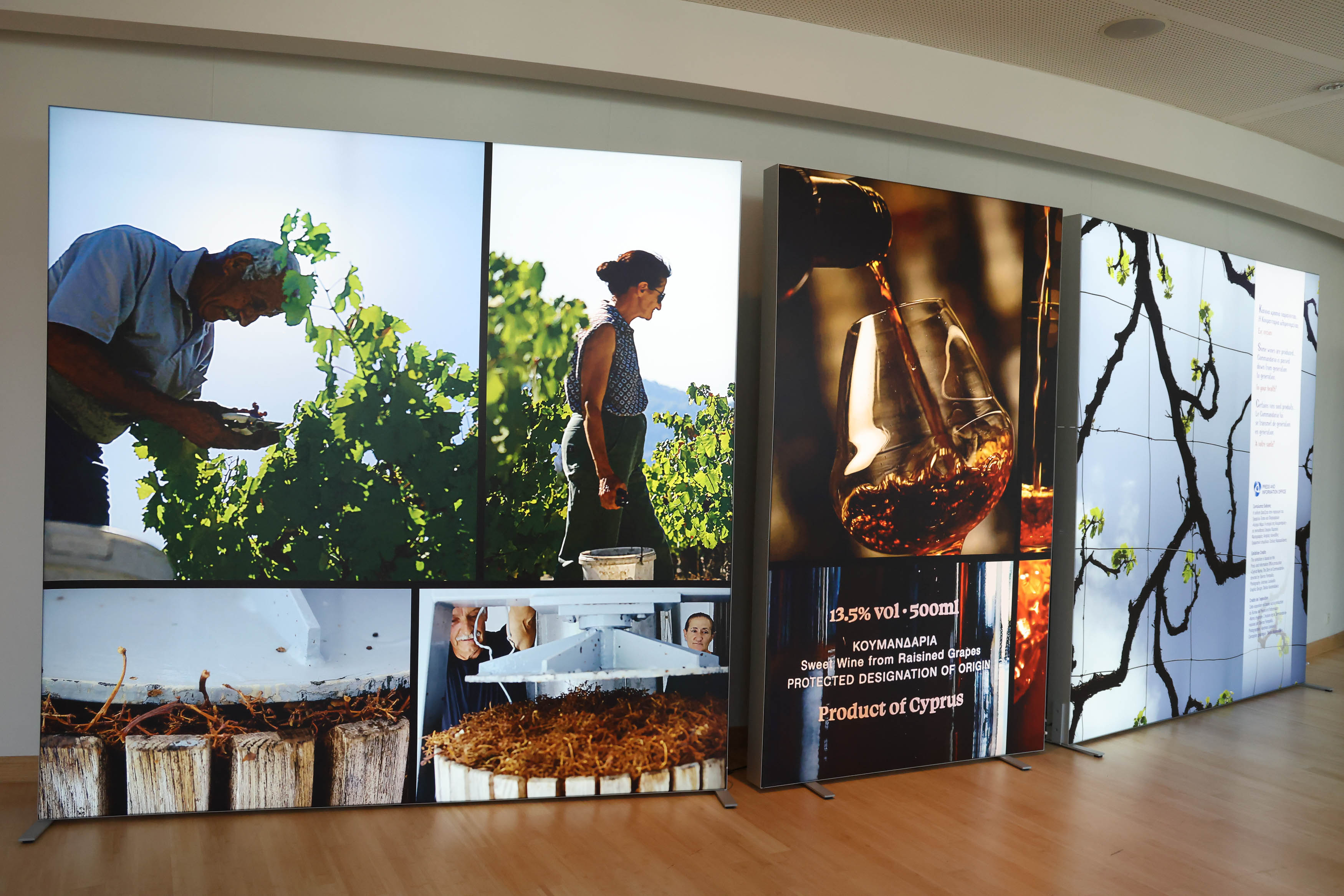
For this reason, Mastantuono stressed that culture and cultural heritage play a decisive role in understanding Europe’s shared history and strengthening the EU’s broader message. Wine, as a product deeply embedded in European social and cultural life, helps connect peoples and traditions, bringing them closer together. In this spirit, she underlined that the EESC is an especially fitting and symbolic venue for hosting such an exhibition.
The exhibition
Speaking about the exhibition, the PIO director noted that selected scenes from the film “Cypriot Nama: The Story of Commandaria”, combined with Andreas Loukaides’s photography, create a visual and narrative portrayal of the Cypriot countryside and the traditions surrounding Commandaria.
George Ioannides, deputy permanent representative of the Republic of Cyprus to the EU, thanked the EESC for hosting the exhibition and the PIO for organising it.
The artistic programme featured live music by the Michalis Kouloumis Quintet and culinary creations inspired by Commandaria, offering attendees a rich, immersive experience connecting Cyprus’s history, culture and gastronomy.
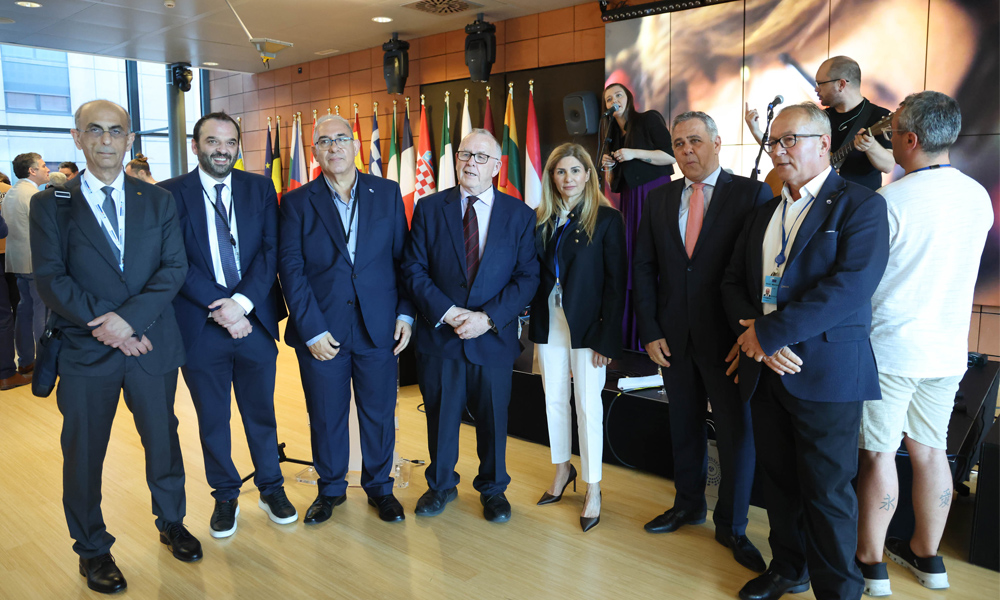
Throughout the event, excerpts from PIO productions “Art in the City” and “Penna” were also screened. During the Cypriot evening that followed, EESC president Séamus Boland and Cypriot EESC member Manthos Mavrommatis, in his capacity as co-chair of the bicommunal UN Technical Committee on Economic and Commercial Matters, delivered remarks. EESC secretary-general Isabelle Le Galo Flores was also present.
Also in attendance were Michalis Antoniou, director-general of the Cyprus Employers and Industrialists Federation (OEB), Panikos Hambas, secretary-general of the Cyprus Farmers Union (EKA), and Andreas Matsas, secretary-general of the Cyprus Workers’ Confederation (SEK), all members of the EESC from Cyprus.
It is noted that the Ministry of Agriculture, Rural Development and Environment provided experimental Commandaria, which was offered by the PIO to the large number of distinguished guests.