
By Kritonas Kapsalis
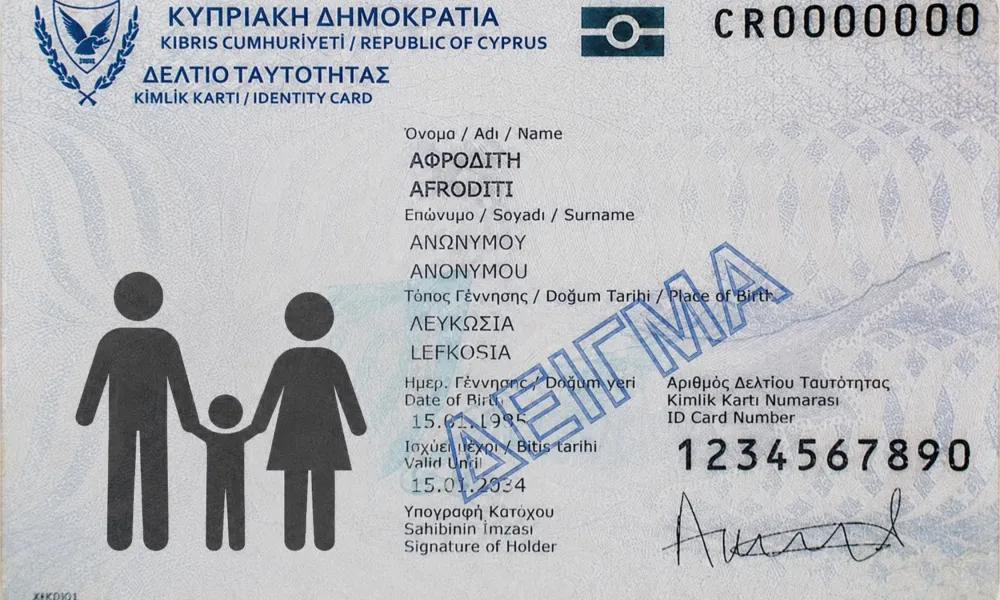
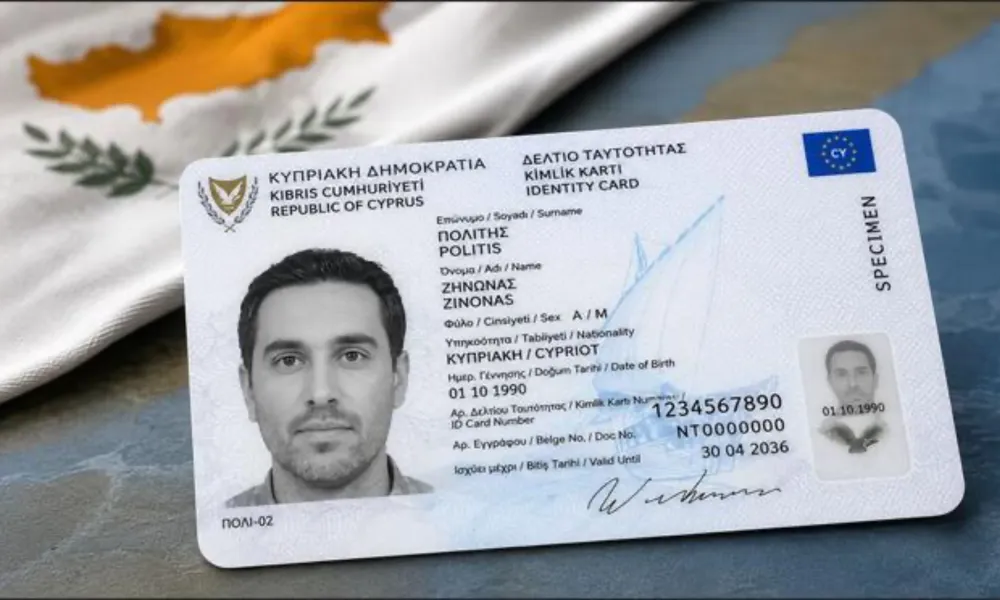
The question of whether the names of parents should be included on the identity cards of minor children has sparked intense debate.
At first glance, the issue may appear to be purely administrative. In reality, however, it touches on broader questions, including the protection of the family, child safety, the handling of personal data and the equal treatment of different family structures.
Supporters of including parents' names argue that such information forms part of a child's identity and family heritage. Those who disagree contend that the information is not necessary for identifying the holder of the identity card and may lead to the unnecessary disclosure of personal information.
At the centre of the discussion lies the question of whether the state should maintain an established practice or reduce the information displayed on a public document to what is strictly necessary.
Family identity and tradition
One of the main arguments in favour of including parents' names is that they form part of a child's family identity. Reference to the father and mother is viewed by some as a natural continuation of the civil registry documents in which the child's relationship to their parents is officially recorded.
It is also argued that the practice is linked to tradition and to the importance society places on the institution of the family. For those who support this approach, removing the names of parents could be interpreted as weakening the family relationship or diminishing the role of the mother and father.
A second argument relates to practical usefulness. In certain procedures, the inclusion of parents' names may facilitate the rapid establishment of a connection between a minor and their family, particularly where the child's surname differs from that of the parent accompanying them.
This issue may arise during travel, in healthcare services, in school procedures or during emergencies. Supporters of including the information argue that its immediate presence on the identity card may reduce bureaucracy and help the relevant authorities act more quickly.
At the same time, the argument is made that the practice can provide protection against unlawful movement of children or attempts to conceal the true relationship between an adult and a child. According to this view, the inclusion of parents' names may act as an additional means of verification, without, of course, replacing birth certificates, custody orders or other official documents.
Different family realities
The opposing side points out that modern society includes many different family realities. There are children raised by a single parent, children of unknown paternity, children who have lost one or both parents, adopted children and children whose care has been entrusted to other individuals.
In these situations, the inclusion of parents' names may reveal information about a child's family circumstances every time the identity card is presented. Such disclosure may lead to awkwardness, questions or unwanted comments, even where there is no intention to discriminate.
Those opposed to the practice argue that an identity card should serve a clear and limited purpose: to verify the identity of the person who holds it. In their view, a name, photograph, date of birth and identity card number constitute sufficient information to identify a child.
Family circumstances, according to this position, do not need to appear in every transaction. In cases where proof of kinship is required, specific documents can be used or the information can be retrieved through the state's civil registry records.
Personal data and the risk of stigma
An important aspect of the debate concerns the protection of personal data. Listing parents on an identity card means their details become known to any private individual or official who requests to see the document, even when there is no genuine reason for them to know who the child's parents are.
Critics of the practice invoke the principle of data minimisation, under which only information strictly necessary for a specific purpose should be collected and displayed. Since parents' names are already recorded in civil registry records and can be retrieved by the competent authorities, they argue there is no need for them to be visible on the identity card itself.
There are also concerns about the possibility of direct or indirect discrimination. A blank field for a father or mother may make a sensitive family circumstance visible and distinguish a child from their peers.
Even where there is no malicious intention, the different presentation of information can function as a form of stigma. For a child, repeatedly having to explain why a name is missing or why different details appear on the document may create emotional pressure.
The best interests of the child
The discussion also draws in provisions of the United Nations Convention on the Rights of the Child. Those opposed to the mandatory inclusion of parents' names refer to the prohibition of discrimination based on the status of a child's parents, the obligation to place the child's best interests first and the protection of the child's personal identity.
At the same time, invoking the Convention does not automatically mean that every inclusion of parental information violates children's rights. Supporters of the practice could counter that recording parentage also forms part of a child's identity and may, under certain circumstances, contribute to their protection.
The key question is whether displaying such information on an identity card is necessary and proportionate, or whether the same objective can be achieved through less intrusive means.
Searching for a balanced solution
One possible compromise approach would be for parental details to remain recorded in state records without being displayed as a mandatory feature on the face of the identity card. The relevant authorities could access the information when required by law or where issues concerning the protection of the child arise.
It could also be examined whether the inclusion of parental information should be optional or restricted to specific documents used for travel or for proving family relationships. Such an option, however, would need to be designed carefully so that it does not result in the creation of two categories of children or generate new problems.
The discussion cannot be reduced to a confrontation between tradition and progress. The family is not strengthened solely through information displayed on a document, but mainly through policies that protect children and support the people who care for them.
At the same time, the protection of personal data should not prevent authorities from accessing information that is genuinely necessary for the safety of a minor.
The final decision should therefore be based on specific needs rather than on symbolism alone. The aim is to ensure that an identity card serves its purpose effectively, without unnecessarily exposing a child's family circumstances and without creating conditions for unequal treatment.