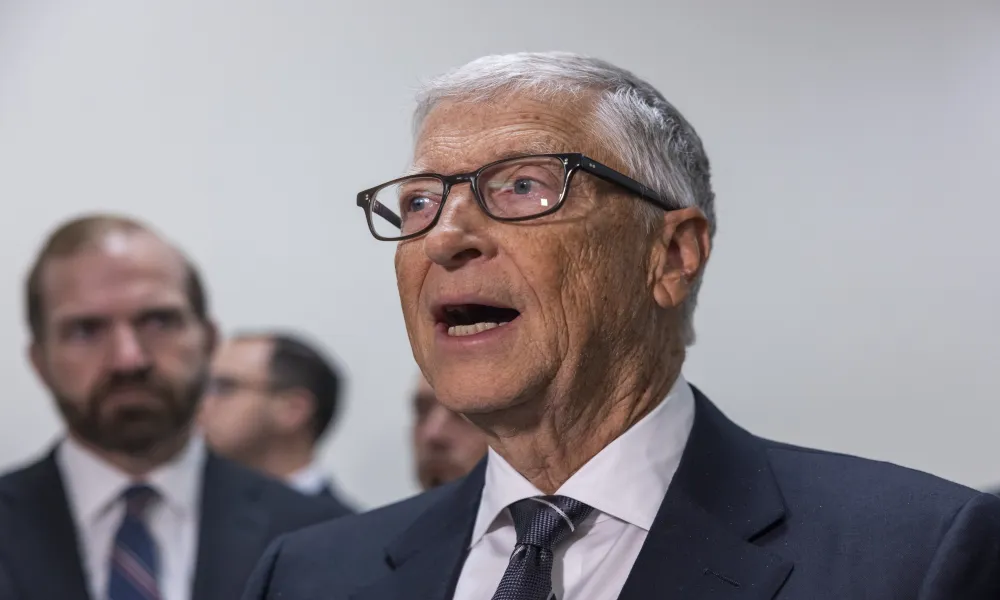

The warnings issued by Bill Gates about artificial intelligence deserve attention, not because they come from one of the world's wealthiest individuals, but because they come from someone who has stood at the centre of three technological revolutions. When one of the architects of the digital age says humanity is not prepared for what lies ahead, the least we can do is start a serious public discussion.
As reported elsewhere in today's edition, Gates argues that artificial intelligence is more dangerous than major technology companies publicly acknowledge and that governments are not ready for the "turbulent times" it could bring. He is calling for international coordination and new rules governing the economy and labour markets.
Artificial intelligence is advancing at a pace that exceeds even the predictions of many of its creators. It was widely seen as a tool that would improve productivity, make work easier and create new opportunities. Today, the picture is more complex. As AI systems become increasingly capable of performing tasks ranging from writing and data analysis to programming and decision-making, legitimate concerns are emerging about the future of millions of jobs.
History teaches us that every technological revolution has eliminated some professions while creating others. Gates argues, however, that this time may be different. If he is even partly correct, then we are not simply looking at another labour-market adjustment, but at a potential challenge to the social contract on which modern economies have been built.
The issue is highly relevant to Cyprus. We may be a small country, but we are not isolated from global technological developments. Businesses will adopt AI tools to reduce costs and increase efficiency. The question is whether the state, universities and social partners are preparing for the changes ahead. Is there a plan to retrain workers? Is there a public debate about which professions will be most affected? Is there a strategy for the ethical use of the technology?
The concerns extend beyond employment. The use of AI in areas such as security, disinformation and even the development of biological threats raises issues that no country can address alone. Corporate self-regulation is not enough. International rules, transparency and democratic oversight are required.
The response to these challenges must be developed now, before events move faster than our ability to manage them.