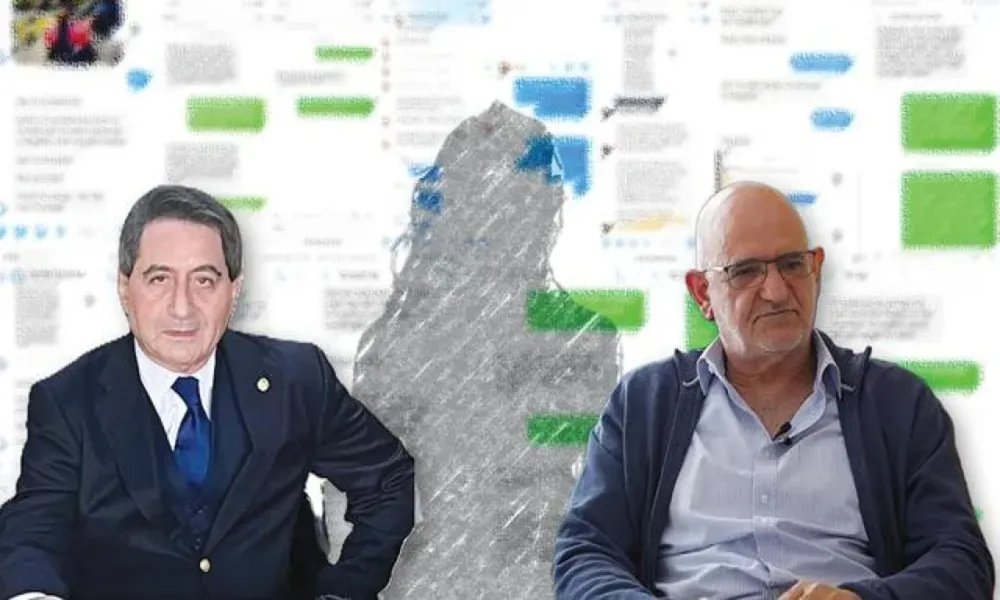
New questions have emerged in the public debate surrounding the "Sandy" case after lawyer Nicos Clerides challenged the account recently presented by the woman behind the pseudonym regarding how she came to adopt that identity.
Speaking to Politis, Clerides said the woman had already developed the "Sandy" persona before approaching him and rejected suggestions that his questions or interactions contributed to the creation or development of the narrative.
His comments contrast with statements made by the woman in a letter published by Cyprus Times, in which she linked the beginning of her involvement in the case to discussions with Clerides.
"At first it was a conversation. Then came the questions. The answers brought new questions and, at some point, I began to step into a role. The role of 'Sandy'," she wrote.
Clerides disputed that description and pointed to their written communications as evidence of how the relationship evolved.
"I did not ask her questions or anything of the sort. The messages are there and it is clear whether I was asking questions or not," he told Politis.
"I met her twice"
Clerides also downplayed the extent of their direct contact, saying they met in person only twice and only briefly, with most communication taking place through messages.
"I saw her twice, and only for a very short time because she feared for her life. Nothing more. She used to send me messages," he said.
He described references to questioning as "an after-the-fact construction" and suggested that her current version of events may have been influenced by third parties.
However, he did not identify any individuals or provide evidence to support that claim.
Focus returns to disputed messages
The dispute has also renewed focus on the origin and authenticity of the messages at the centre of the case.
In her letter, the woman called on journalist Makarios Drousiotis to permit an independent technical examination of available data on his devices and accounts in order to trace the route of specific messages.
Drousiotis responded that the messages did not reach him electronically but were instead "given to me on a USB drive and in printed form".
In a social media post, he argued that the key issue extends beyond how the messages came into his possession and concerns "the authenticity, the original source and the verification of the contents of the messages".
References to possible third-party influence
A common element in the recent statements by both Clerides and Drousiotis is the suggestion that third parties may have influenced the woman's current public position.
Clerides said the account she now presents appears to have been affected by unnamed individuals.
Drousiotis, commenting on publication of the letter, said he would respond once it was clear that the statements "truly come from her and not from a third person acting on her behalf".
With the accounts of those involved differing on key points, written communications and digital material cited by each side are likely to assume increasing importance, as they may help clarify both the sequence of events and the origin of the disputed messages.