
By Kyriakos Pierides
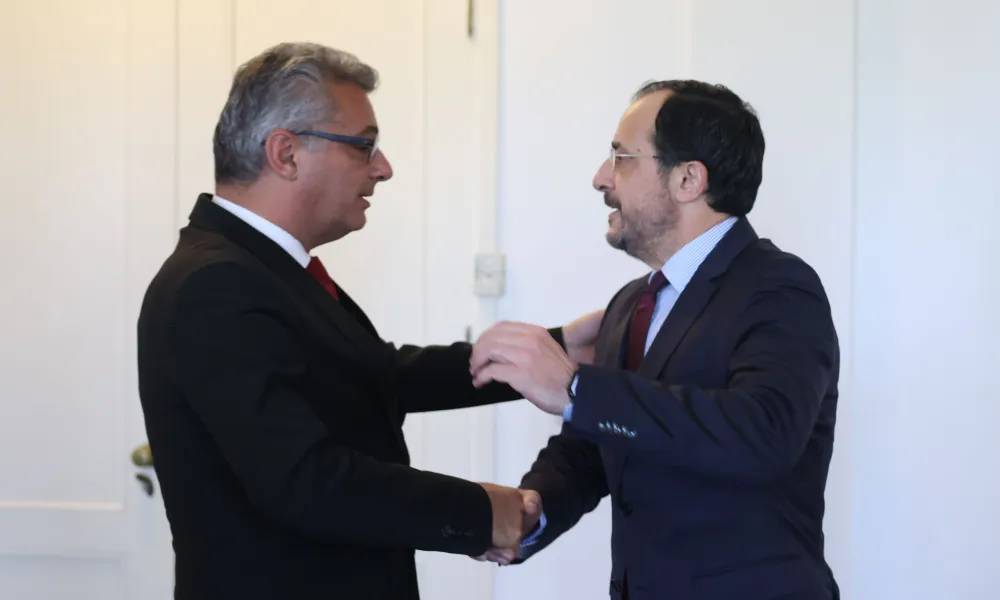
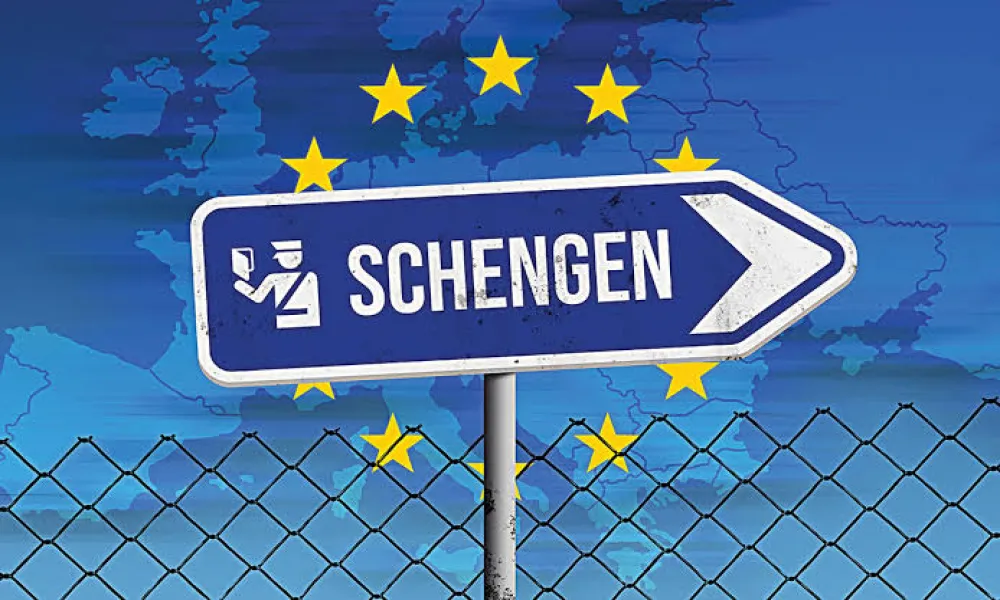
President Nikos Christodoulides has placed Cyprus' accession to the Schengen Area high on the political agenda. He is seeking an early discussion at EU level in December in an effort to build momentum towards a political decision.
Securing a specific reference to a timetable for Schengen accession within his presidential term is of particular importance to him.
“Technical preparations have already been completed and we hope the issue will be discussed in the competent council in December so that the final political decisions can be taken,” Christodoulides said ahead of Thursday's European Council meeting.
The president appears concerned that momentum could be lost amid reservations expressed by some European partners regarding the crossing points on the Green Line. He wants the issue placed before the Justice and Home Affairs Council on 3 December, potentially allowing him to secure a political gain before the European Council meeting.
He may also be looking to broader political trade-offs between leaders as negotiations continue over billions of euros in the EU's next long-term budget.
Green Line issues remain unresolved
Behind-the-scenes consultations on Cyprus' Schengen file have yet to produce agreement on the legal formula for applying the Schengen code along the Green Line.
The possibility of amending a relevant article of the Green Line Regulation is considered undesirable by the Cypriot government, as it could open the door to additional demands from European partners regarding the wider implementation of the regulation.
There is also no agreement on access to Schengen data sought by the United Kingdom government for checks it conducts at two Green Line crossing points located within the British Sovereign Base Areas.
Schengen accession has been one of Christodoulides' priorities since taking office.
Cyprus first signalled readiness to join the Schengen Area in 2019 during the presidency of Nicos Anastasiades, when Christodoulides served as foreign minister, but he gave fresh momentum to the process after 2023.
So far, he has faced little political opposition over potentially contentious issues, including concerns that the Green Line could evolve into a de facto hard border.
His position remains that the Green Line is not a border and that any arrangements required for Schengen accession will be fully aligned with Cyprus' EU Accession Treaty.
As the process advanced, Christodoulides somewhat prematurely identified 2026 as the year of accession.
However, in September the effort appeared to lose momentum. In Brussels it emerged that the issue had not been included on the agenda of the 1 October Justice and Home Affairs Council, despite a positive technical assessment from the European Commission.
No official explanation was provided, although subsequent reports suggested that at least two countries, the Netherlands and Austria, had expressed reservations.
A political achievement ahead of re-election?
Christodoulides has increased his domestic political activity and appears to be preparing to formally enter a re-election campaign in January 2027 ahead of the 2028 presidential election.
Public opinion in Cyprus remains generally sceptical about the effectiveness of his administration.
Failure to secure Schengen membership, or the postponement of accession indefinitely, would represent a significant setback in the one area where the president tends to receive relatively positive evaluations: foreign policy.
Management of the Schengen file has been entrusted to a small circle of individuals close to the president, including Foreign Ministry official Philippa Karsera, the president's wife, and Deputy Minister for Migration Nicholas Ioannides.
In government messaging, Schengen accession is presented as unrelated to the Cyprus problem. Instead, it is portrayed as an obligation flowing from EU membership and the implementation of EU rules that would strengthen the security of the Republic of Cyprus, enhance investment prospects and facilitate travel within the Schengen zone.
Political decisions still required
Christodoulides speaks of final political decisions that require unanimity.
So far, he has secured the support of European Commission President Ursula von der Leyen and the cooperation of relevant commissioners and EU officials.
The statement issued following the European People's Party leaders' meeting on 15 October also welcomed the Commission's positive evaluation report and the opening of discussions within the Council.
However, a positive technical assessment does not automatically guarantee accession.
Full accession requires a unanimous decision by the Council on lifting controls at internal borders and determining the date of implementation, following consultation with the European Parliament.
This is the crucial political decision, and one that could be delayed for years if sensitive political issues remain unresolved.
Christodoulides' initiative faces reservations among European partners regarding the political reality on the island.
The central paradox remains obvious: the Green Line is not an international border but a ceasefire line that de facto divides an island and two communities that both belong to the European Union.
The government is pursuing Schengen membership without addressing the broader strategic deadlock that has persisted for years.
Despite almost a decade of efforts by the UN Secretary-General, substantive negotiations have not resumed. Conditions the UN set for convening another expanded conference before the end of the Secretary-General's term have not been met, and Christodoulides finds himself among those facing questions over responsibility.
The unresolved Cyprus problem
It is difficult to believe that European partners assess Cyprus' Schengen application while ignoring repeated UN warnings about the growing alienation between the island's two communities and the difficulties they face in communication and cooperation at crossing points.
The Green Line Regulation applies at those crossings, and its implementation often encounters obstacles raised by the Cypriot government.
These realities are also known to the European Commission, regardless of whether it has chosen not to take measures against the government of a member state.
Any Schengen-related decision at EU level would become part of the EU acquis.
Cyprus' non-participation in Schengen is certainly an outstanding issue. However, presenting it as a paramount national objective is misleading.
A far greater unresolved issue remains Cyprus' incomplete European integration since 2004, specifically the non-application of the EU acquis in 37% of its territory.
Under Protocol 10, the application of EU law remains suspended pending a settlement of the Cyprus problem.
The stakes there go far beyond passport-control queues for Cypriots or easier movement for foreign investors.
They concern the fundamentals: ending the occupation, reunification, rights and security for all Cypriots.
So far, Christodoulides' Schengen policy has encountered little public scrutiny.
Yet a question remains: could the strengthening of controls at crossing points, with the risk that they gradually become entrenched as border crossings, ultimately be one of the government's real objectives?
In contrast, Ireland, through its Schengen opt-out and continued participation in the Common Travel Area with the United Kingdom, illustrates a different strategic choice.