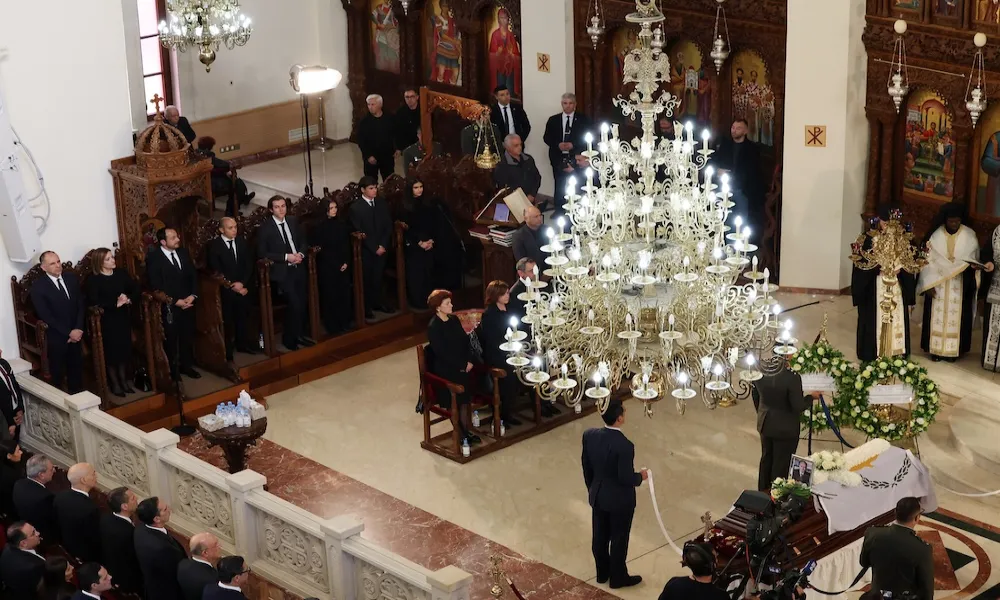
With deep emotion and representing the Hellenic Republic, Greek Foreign Minister Nikos Gerapetritis bid farewell to former President of the Republic of Cyprus, George Vassiliou, describing him as a remarkable figure who left an indelible mark on the island’s modern history.
In his eulogy, Gerapetritis praised Vassiliou’s gentleness, conciliatory nature, and integrity, highlighting the rare qualities he embodied, including erudition and a profound democratic conscience. He described Vassiliou as a man who “elevated the art of synthesis to a way of life” and “expressed Aristotelian moderation better than anyone.”
A visionary reformer
The Greek minister spoke at length about Vassiliou’s reformist legacy, noting that he was a leader who “laid the foundations for 21st-century Cyprus,” creating a modern and dynamic state despite the trauma of the 1974 invasion. Gerapetritis gave special recognition to Vassiliou’s role in establishing the University of Cyprus, calling it “a major milestone in the island’s long and illustrious educational history.”
Regarding the Cyprus issue, the minister recalled Vassiliou’s commitment to international law and the activation of global actors, emphasising that “Cyprus continues George Vassiliou’s just struggle in full alignment with the Hellenic Republic.”
Cyprus’ EU accession
Gerapetritis also highlighted Vassiliou’s leadership of the negotiating team for Cyprus’ accession to the European Union, calling this perhaps the “opus magnum” of his career, even surpassing his presidency.
“He completed this process in exemplary fashion, ensuring that Cyprus was technically prepared when the political phase of accession concluded,” the minister noted.
Pragmatic patriot
Closing his speech, Gerapetritis remembered Vassiliou as a “pragmatic patriot” who avoided demagogy and easy slogans. He also paid tribute to the late president’s close ties with Greece, Vytina, and Mytilene, conveying the condolences of all Hellenism.
“Today, Cyprus and all of Hellenism bid farewell to a worthy son who left an enduring imprint on the island’s contemporary identity,” Gerapetritis concluded.