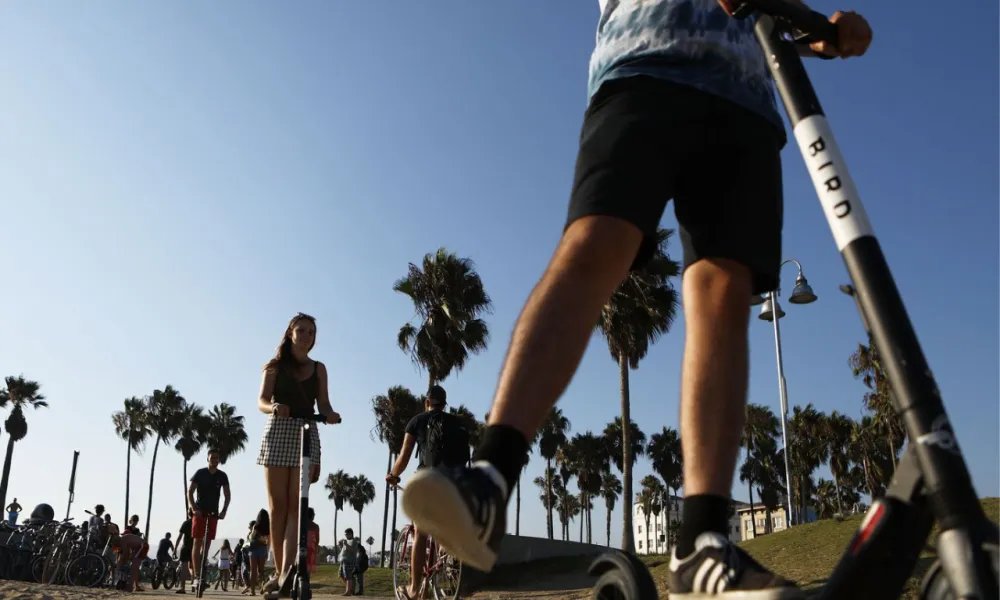

A DIPA MP is facing intense pressure to withdraw a private member's bill that would ban electric scooters from public roads, but says he has no intention of backing down. With the bill scheduled for a full parliamentary vote next Thursday, lobbying efforts have now shifted toward persuading other parties and MPs to vote it down.
Alekos Tryfonidis tabled the proposal citing persistent road safety concerns: repeated violations in the use and parking of e-scooters, risks to pedestrians and other road users, and what he described as the inadequate enforcement of existing legislation. If passed, the bill would not only prohibit e-scooters from public spaces but also terminate the licensing of all businesses operating in the sector, effectively forcing them to shut down.
According to official police data, between 2019 and 2025, accidents involving e-scooter riders resulted in two deaths and 30 injuries. The legal speed limit for electric scooters is 20 kilometres per hour, but cases have been recorded of devices operating on motorways at considerably higher speeds. Authorities have also identified modified electric bicycles that were effectively converted into motorbikes after purchase.
A broad coalition of objectors
Opposition to the bill is wide-ranging. The Ministry of Transport, along with its departments of Road Transport, Public Works and Electromechanical Services, submitted objections, as did the Limassol Municipality, the Union of Municipalities, the Union of Communities, the Energy Office, ETEK (the Cyprus Scientific and Technical Chamber), the Association of Transport Engineers, the employers' organisations OEB and KEVE, the environmental group Friends of the Earth Cyprus, and the company Tshibo Ebikes. All submitted written memoranda to parliament in addition to voicing objections during committee hearings.
While acknowledging the road safety imperative, the objectors pointed to Cyprus's commitments on reducing greenhouse gas emissions and promoting micromobility. They argued that a blanket ban would not resolve the underlying problems and could create new ones, and that e-scooters contribute to sustainable urban mobility and traffic decongestion. They put forward a range of proposals for strengthening the existing regulatory framework instead.
The Legal Service of the Republic also raised serious concerns, noting that existing business licences are issued by local authorities and that a law cannot override acts of the executive. It further warned that the bill encroaches on constitutionally protected freedoms that must be assessed against the principle of proportionality.
Fines and seizures
Two further bills, tabled by Greens leader Stavros Papadouris, are also on next Thursday's plenary agenda. The first, as revised following discussion in the Transport Committee, would raise the maximum speed limit for e-scooters from 20 to 25 kilometres per hour, introduce a formal licensing procedure for rental and distribution businesses with the ability for municipal or community councils to attach conditions, allow councils to require electronic speed control systems on rental devices, oblige rental companies to provide user data to police or local authorities in the event of an offence, and enable authorised municipal traffic wardens to seize devices found exceeding 25 km/h, operating in prohibited areas, or being used by underage riders.
The second Papadouris bill would introduce on-the-spot fines for anyone riding an e-scooter above 25 kilometres per hour. An amendment raising the minimum age for e-scooter use is also expected to be put to a vote. The current minimum is 14 years. Proposals under discussion would raise it to 16 or even 17. The matter is expected to be resolved next week.