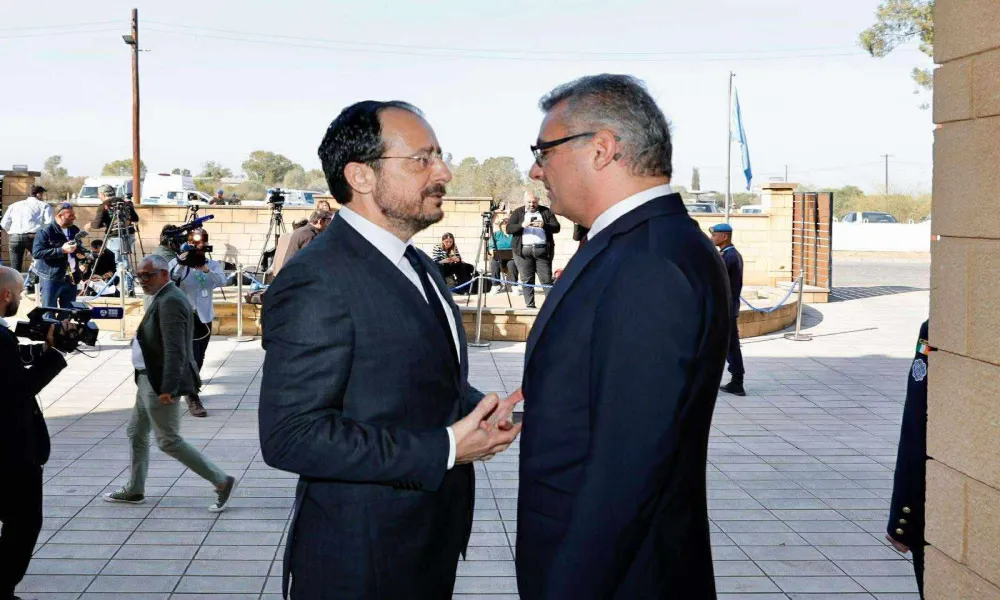
Within the flow of yesterday’s contact between the two leaders, which lasted longer than expected at around one hour and twenty minutes, a positive atmosphere emerged along with certain decisions that can be described as pivotal for the next steps on the Cyprus problem. Based on their statements, and the overall picture both sides tried to project, it is clear that the dialogue is entering a phase of rejuvenation and at a pace that gives the impression both sides want to make up for years of inertia and ineffectiveness.
Low-key contact
A generally and vaguely positive climate does not on its own solve the problems of a dialogue that has effectively been blocked for eight consecutive years. What matters, therefore, in this first contact between the two leaders is the fact that both sides gave a positive assessment, kept their tone low in public remarks and showed no appetite to pick out even indirect criticisms of each other in what has been said. These elements act as decisive factors, shaping and opening the way for a clear field of action for the leaders to achieve concrete results in the period ahead.
From the two leaders’ statements, the key point of reference that emerges is their agreement to hold a joint meeting in early December with the UN Secretary-General’s envoy on the Cyprus issue, María Ángela Holguín. This is clearly something Ms Holguín herself sought from the moment she intervened constructively during the first meeting of the two, sending the message that the United Nations expects a change of stance if tangible results are to be achieved in the coming period.
Convergences
From Nikos Christodoulides’ statements, it is evident that the Greek Cypriot side attaches particular importance to the issue of a shared understanding of the convergences already achieved, in other words a renewed emphasis on the acquis of the talks. Such a shared understanding inevitably creates a different dimension for attempts to move forward from where things were left.
This is a particularly important development since, based on what transpired in the meeting, it appears that at least three of the four points in the methodology put forward by the Turkish Cypriot leader as conditions for restarting talks are effectively falling away. These concern political equality, the reaffirmation of convergences reached so far and the issue of timelines.
On the available indications, the fourth point, which relates to what will happen if the new talks also end in deadlock, will evidently form part of the discussion between the negotiators that is expected to begin in the coming days, as well as at the joint meeting with María Ángela Holguín.
As regards Tufan Erhürman’s proposals, which in his view could help improve the climate, the first signs suggest there is room to discuss them, even if some issues will require a different approach.
In any case, it should be noted that yesterday may well prove to have been the starting point of a new state of affairs for the dialogue, based on the key characteristics the two leaders displayed, both in their public statements and in the way they treated each other.