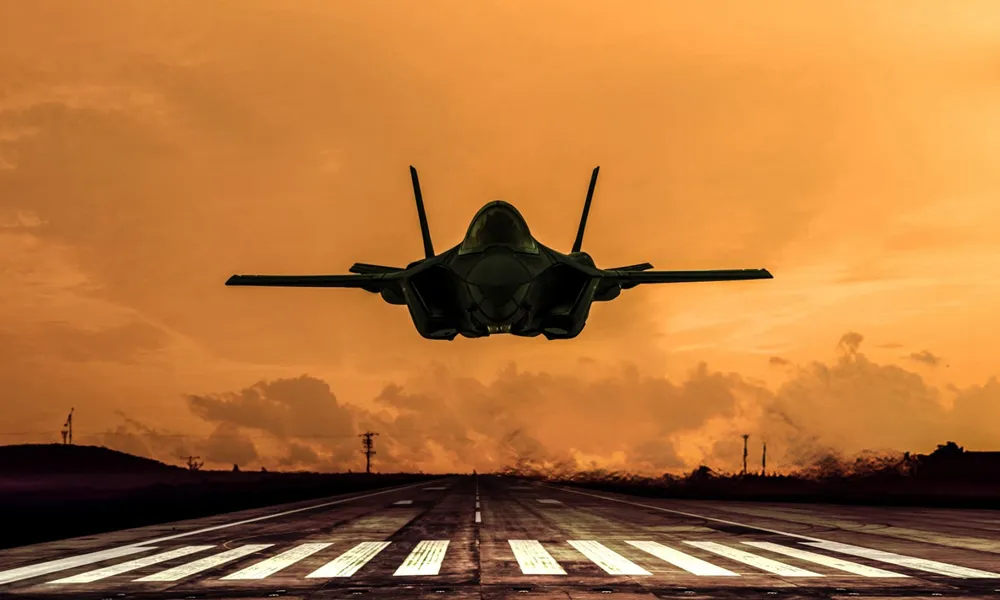
Turkey is “very close” to lifting the main obstacle preventing its return to the F-35 fighter jet programme, US Ambassador to Ankara and Special Envoy for Syria Tom Barrack said.
According to the US diplomat, the issue concerning the Russian S-400 long-range, anti-aircraft missile system may be resolved “within four to six months.”
The S-400 obstacle
Speaking to Bloomberg, Barrack said Ankara has addressed, to a significant extent, US concerns over the “operational compatibility” of the S-400s, noting that the system’s non-use reduces tensions on the issue.
He stressed, however, that the presence of the S-400s on Turkish soil continues to pose a problem for Washington.
The US Ambassador assessed that “the process is being resolved rapidly” and that Turkey is “each day closer” to fully abandoning the Russian system.
The S-400 issue was discussed during the meeting between Turkish President Recep Tayyip Erdoğan and US President Donald Trump at the White House in September.
Sanctions in place
The purchase of the Russian anti-aircraft missile system had led to Turkey’s removal from the F-35 programme, as well as the imposition of sanctions on Turkish defence companies in 2020 under the CAATSA (Countering America’s Adversaries Through Sanctions Act) law.
The United States argues that the Russian system poses risks to the F-35’s “low observability,” while Turkey assures that the equipment will not be connected to NATO structures.
According to American media reports, Trump is open to a possible restart of F-35 sales if an agreement is reached that renders the S-400s “non-operational.” Fox News sources indicate that the White House is also examining options for lifting or circumventing CAATSA sanctions.
Erdoğan has stated that “positive steps were taken” on the issue in his discussions with Trump and expressed hope that “the commitments will be fulfilled.”
Bloomberg points out that the United States and Turkey possess the two largest armies in NATO, something that acts as an additional incentive for resolving disputes and restoring defence cooperation.
Sources: Bloomberg, CNA