
“Tufan Erhürman should use a more peaceful language. He must follow an inclusive policy towards the community with which we aim to make peace.”
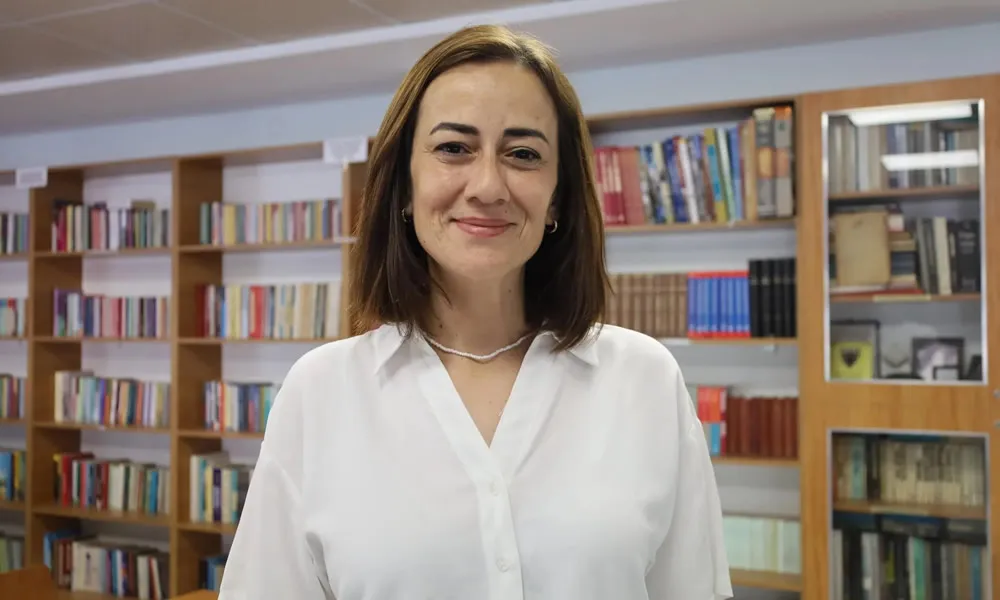
For the first time since his election, Tufan Erhürman has come under criticism from within his own party, the Republican Turkish Party (CTP), regarding the language he uses when referring to the Cyprus issue. The criticism comes mainly from MP and chairwoman of the party’s women’s organisation, Doguş Derya, along with other party members who would have preferred a clearer and more convincing approach from the new Turkish Cypriot leader.
Doguş Derya, known for her outspoken political stance, was direct when speaking on the online program of the website Kıbrıs Postası. She argued that a more peaceful language should be used, adding: “If society wanted such an approach, it would have elected Ersin Tatar.”
The newspapers Avrupa and Güneş highlight that Derya’s remarks represent the first criticism from inside the CTP directed at Tufan Erhürman. Derya was responding to the new leader’s comment that President Christodoulides’ statement on guarantees and troop withdrawal was “invalid for me.”
She added that society does not prefer a leader who engages in verbal confrontations with the Greek Cypriot leader or uses a harsh tone. As leader, she said "he should use a more peaceful language. He must follow an inclusive policy regarding the community with which we seek to make peace,” she said.
Murat Şenkül, another prominent CTP figure, responded to Derya through social media, commenting that less than a month after the elections some individuals were making comments and statements, forgetting that Erhürman had been elected with 63 percent of the vote and that this 63 percent included people with many different opinions. Noting that some were even giving advice on how he should speak Şenkül said: “They started early. They should give it some time.”
A bold voice
It should be recalled that Doguş Derya was the first Turkish Cypriot politician who, in a 2018 speech in the 'parliament', accused the Turkish army of rapes of Greek Cypriot women during the Turkish invasion. Her statements caused significant uproar in the Turkish Cypriot community, and she received threats from nationalists and extremist groups.
“Greek Cypriots experienced the pain of missing persons, the dead, and displacement. They were victims of rape. The Church permitted abortions in 1974 precisely because of the rapes committed by the Turkish army,” she said back then, adding that “while we speak of our own justice and pain, we should not forget the justice and pain of others.”
It should also be remembered that in 2013, when she first entered the so-called parliament, she again provoked anger among extremist Turkish Cypriots when she read an oath calling for the reunification of Cyprus.