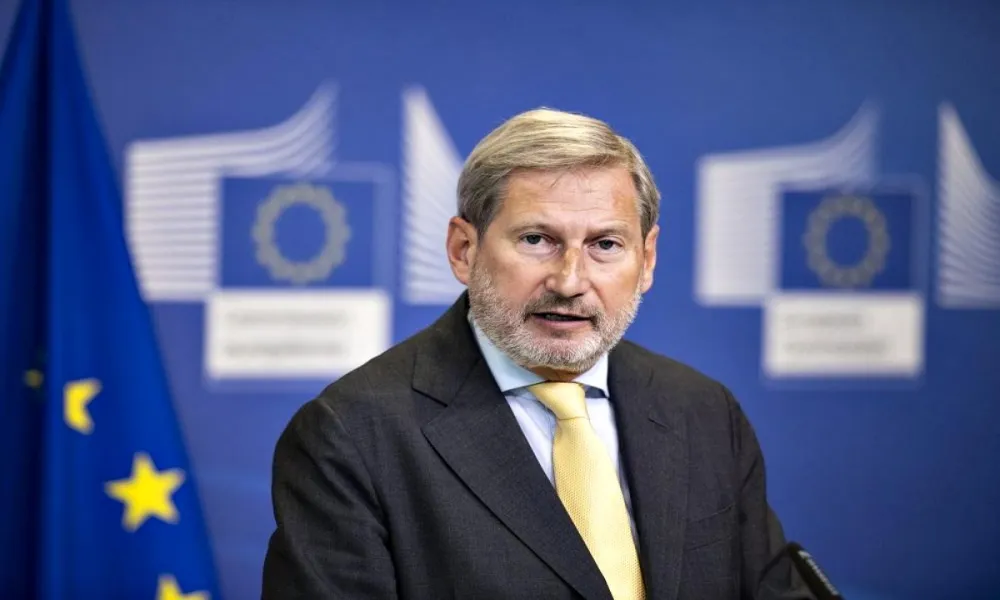

European Commission Special Envoy for Cyprus Johannes Hahn is coming to Cyprus this week to meet with the two leaders and UN Personal Envoy María Ángela Holguín, along with other political and civil actors.
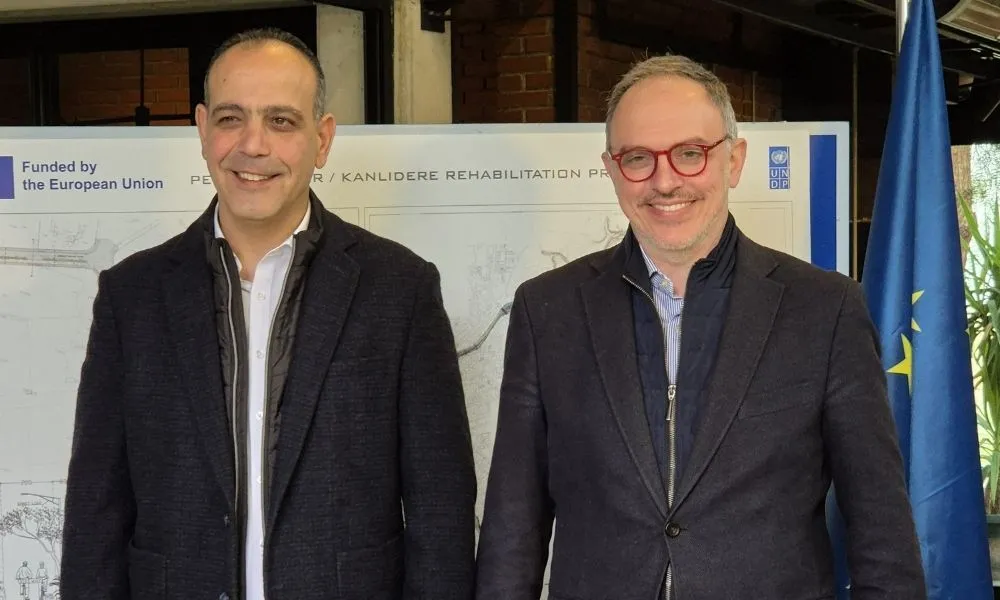
Hahn will meet with Turkish Cypriot leader Tufan Erhürman and his representative Mehmet Dana during his stay, marking his first such meeting with the Turkish Cypriot leadership in his capacity as EU special envoy. Erhürman’s predecessor Ersin Tatar was reluctant to meet with Hahn, arguing – along with Ankara – that the EU could not play the role of honest broker given that Cyprus and Greece were EU member states with seats in the European Council, while Turkey and the Turkish Cypriots did not.
Apart from Erhürman and Dana, the special envoy will also meet with President Nikos Christodoulides, Foreign Minister Constantinos Kombos, negotiator Menelaos Menelaou, House President and DISY leader Annita Demetriou, AKEL leader Stefanos Stefanou, representatives of civil society organisations, and the UN Secretary-General’s personal envoy Holguín.
Following his appointment last May, Hahn reports directly to Commission President Ursula von der Leyen. His mandate is to contribute to the settlement process within the UN framework and in close cooperation with the UN personal envoy.
UN-EU cooperation in practice
According to diplomatic sources, no clear framework has been established yet on how this close cooperation with the UN personal envoy will be in practice. Up to now, the EU special envoy has not yet had direct involvement in the effort to bring the sides closer to a resumption of negotiations.
It is expected that Hahn and Holguín will have the opportunity to explore the nature of their collaboration in greater detail during their meeting here in Cyprus. This will depend, of course, on whether Christodoulides and Erhürman make any progress during their trilateral with the UN personal envoy this Thursday. If progress is reached on certain matters, then everybody’s roles will become clearer, said the source.
To date, Christodoulides has focused mostly on the need to resume talks based on a bizonal, bicommunal federation. To this end, he called on German Chancellor Friedrich Merz last month to utilise key aspects of EU-Turkey relations as leverage to get Ankara on board.
Erhürman’s focus is on three main areas regarding the Cyprus problem:
- His four proposals on the methodology of a future negotiations process.
- A 10-point package of proposals to improve the climate on the island, including his pre-election pledges to Turkish Cypriots and people of Turkish origin living in the north.
- Agreement on certain confidence-building measures (CBMs), before convening the next ‘5+1’ meeting with the guarantor powers, with specific reference to new crossing points and an EU-funded solar energy park in the buffer zone.
Hahn’s potential next steps
According to another diplomatic source, the UN Secretary-General made it clear in September that the UN is ready to work with the EU which has a clear role to play in the Cyprus issue. A first step could be for the special envoy to attend the next ‘5+1’ meeting. So far, the Turkish side has refused to accept the EU’s direct participation.
It remains to be seen how Hahn will make use of his position and role in the coming period and where he will focus his energies and leverage. Will he focus on pushing forward EU-funded CBMs like the solar energy park? Will he use EU ‘tools’ or incentives to convince Ankara to give up its two-state solution narrative? What role will the EU play in ensuring compliance with the Acquis Communautaire while overseeing potential transitional arrangements regarding implementation of EU laws? If the sides agree on resuming talks and reach within touching distance of a settlement, will the EU make a financial pledge towards a solution? In January 2017, at the Conference on Cyprus in Geneva, then European Commission President Jean-Claude Juncker reportedly offered to allocate €3.1 billion from the Multiannual Financial Framework for a solution.
EU-Turkish Cypriot relations
Asked what the EU special envoy could do for the island, PRIO Cyprus Centre researcher Mete Hatay said it depended how much he wanted to get involved.
“He could be very instrumental on CBMs,” said Hatay.
He could also address the “epistemic asymmetry” in Cyprus, said the researcher, referring to the imbalance in knowledge, information or understanding between the actors.
“The EU only knows one side of the problem. They could listen to both sides’ viewpoints.”
He noted that the EU deals directly with Turkey but not the Turkish Cypriots. “But Turkish Cypriots have their own worries, fears, reasoning, and they are EU citizens,” he said. Rather than giving monologues to the Turkish Cypriots about what they need to do, the EU could treat them more like partners, Hatay argued.
He suggested the EU organise bicommunal workshops on specific themes, inviting both Greek and Turkish Cypriot experts, diplomats, or politicians, to work towards building a sustainable relationship and interdependency, which is key to coexistence on the island, said Hatay.