There is progress at bicommunal technical level and a shift in Turkish Cypriot stance as the Greek Cypriot side remains committed to the informal multilateral conference, top negotiator Menelaos Menelaou tells ‘Politis’ in an exclusive interview, referring to confidence building measures that will change daily lives, such as opening additional crossing points.
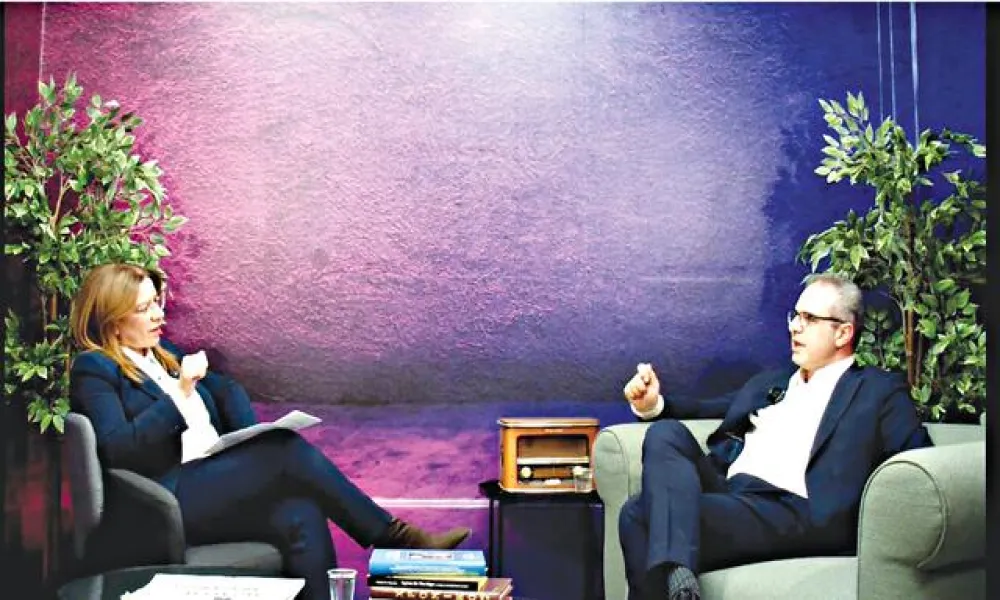
‘We need to bridge the distance and the Cyprus issue placed on the right track’, he notes in a sit down with Andri Daniel.
So, any substantial developments to speak of or are we just managing the deadlock?
There are new things. There’s a different setting following the change in the Turkish Cypriot leadership on October 19th. The leaders of the two communities have already met twice, with the UN Secretary General’s personal envoy also attending. In fact, the 2nd meeting gave the opportunity, as our goal was, to set off a conversation on substance, this is what needs to take place now. In the framework of this new setting, the discussion is shifting away from the previous notes on the table, mainly just confidence building measures, as the obstacle of the previous Turkish Cypriot position on a two-state solution, could not be overcome. So all in all, discussion is now right at the substance and I mean towards the resumption of settlement talks based on the agreed bizonal bicommunal federation framework, with political equality as prescribed in relevant UN resolutions.
Does bizonal bicommunal federation remain a realistic solution or just a diplomatic reference?
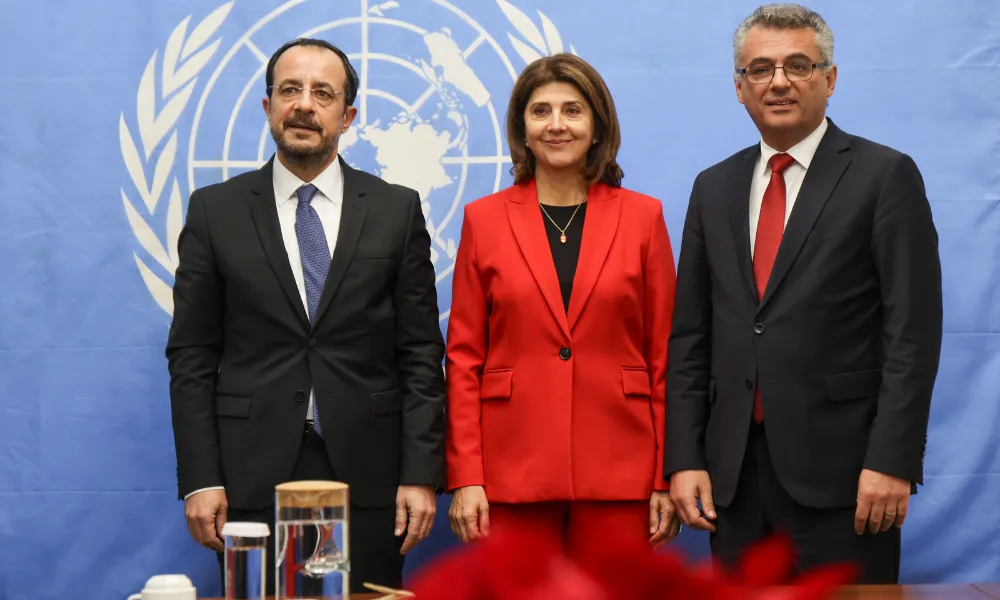
It’s realistic too. It is the only way through which we can reach the intended goal, the liberation and reunification of Cyprus. It is important that in the framework of the first two meetings between the two leaders, the opportunity was provided to discuss at such a level, with significant references in the joint communique following the second meeting, held in the presence of Maria Angela Holquin.
Such references include Security Council resolutions notes, prescribing a federal solution with political equality as set in the aforementioned resolutions. This is indeed the crucial element, the shift from what the Turkish Cypriots previously brought to the table, meaning the two-state solution, set against the federal solution framework. We’re now having a discussion on one state. It doesn’t mean that the road ahead is wide open, but things are moving in the right direction. There are still aspects that we need to overcome, mainly when it comes to the comprehensive clarification of the Turkish side’s intentions, including Ankara that is.
Safeguarding convergences
Turkish FM Fidan spoke of two states this week. Is there any other interpretation to what he said?
It won’t be helpful to anyone, including the effort to put the Cyprus issue back on track, to operate in a fashion that is based on exacting conclusions out of possible meanings of what was said or what could be implied. Things should be clear. The settlement basis is the one prescribed in resolutions, this is an historic compromise and as such the federal framework is the only one possible. The road ahead that should be acceptable to all is that we are discussing on forging a federal bizonal bicommunal state with political equality as prescribed in Security Council resolutions. This is not just a definition. It is a direction which has become abundantly clear and specific through convergences that had been achieved right through to the Cran Montana Cyperus conference. Convergences which beyond governance, include the rest of the chapters in the Guterres six points, meaning territory, property, guarantees, troops and the implementation of the acquis communitaire. This is why such achievements must be safeguarded, convergences maintained and focus on covering the distance between the two sides in order to reach a successful outcome.
Is the Turkish Cypriot leader more conciliatory?
I think that a shift can be established.
And what about Turkey?
No, there is an issue there that can also be ascertained in the recent remarks that you have previously referred to. That’s why there is still a distance that needs to be covered, so we can have a clear and comprehensive picture of that the Turkish intentions and political will. Besides, Ankara has the decisive, final word.
Are you more optimistic this time?
We are pragmatic about things. We try and avoid this bipolar optimism and pessimism approach. The important parameter here is the right approach and management of expectations, so people won’t end up getting disappointed. On many previous occasions, expectations were forged that did not materialise. The most crucial aspect of this effort is to work decisively, with knowledge of the facts and the need to create the right conditions towards overcoming occupation and move ahead towards aa future of prosperity, progress and peace.
The Informal Multilateral Conference
Can we expect a multilateral conference in January?
The initial decision was to have that before the end of the year, byt that timeline is now being exhausted. We believe that this decision to which all parties involved are committed, as it was reached with all present, including the UNSG, during the previous multilateral in New York, must be implemented. We expect to hear more specific things out of the United Nations on next steps, as they conclude their assessment, also on the basis of what Holquin has heard and contacts with all involved. But holding the next multilateral is definitely a decision that should be implemented and walk us into the next step which must be the resumption of talks. Substantive negotiation is needed.
There is still distance
Are we relinquishing positive climate every time we make our case against Turkey across European and international fora?
No, it doesn’t work negatively when it comes to climate. And besides, we should say things as they are. Turkey is an occupying force in Cyprus and will only be rid of its responsibility when the occupation is overcome and Cyprus is reunited. The violation of international law is the same everywhere. The position of principle we should hold involves all international issues. And what we’re focusing right now is to work through this preparatory UN framework process and the personal Guterres envoy mandate and see how the background wil be laid in order to move towards a hopeful prospect. The messages being relayed by the Turkish side through public remarks, do not go unnoticed and are not in a positive direction. Exactly for this reason, the distance remains and there is a need for political will by all parties involved, mainly Turkey to get things on track.
The European Role
Can Europe contribute towards this direction? Do we see European officials joining the talks setting, the cadre if you will or exerting pressure on Turkey?
The European Union can definitely contribute. We consider the appointment of a personal envoy highly significant, it was after all a goal that we had set and was achieved. And to that I might add a relevant reference in the European Council’s latest conclusions. The Johannes Hahn recent contacts in Cyprus with all parties involved is an indication that the European Union has a very important role to play. First and foremost in the more general framework of Euroturkish relations and creating mutually beneficial conditions. The EU has also played a part in the past, achieving what we call the Cran Montana acquis, namely convergences that ensure the settlement’s compatibility with the acquis communitaire. This is really important in the framework of current efforts to kickstart the process.
One step at a time
Would perhaps a timeframe be preferable for all?
We know from recent history, particularly in the 2004 case, that timeframes have worked counterproductively. What we are operating on, are scheduled steps. That is having meetings following which we schedule the next ones. And this is the way to go. After the next multilateral, which should definitely take place, we need to make decisions on issues of substance, but also planning next steps on how to structure our further discussions. This is something that will ultimately climax. It must be a process that is guided by content and substance, not articial elements such as timeframes.