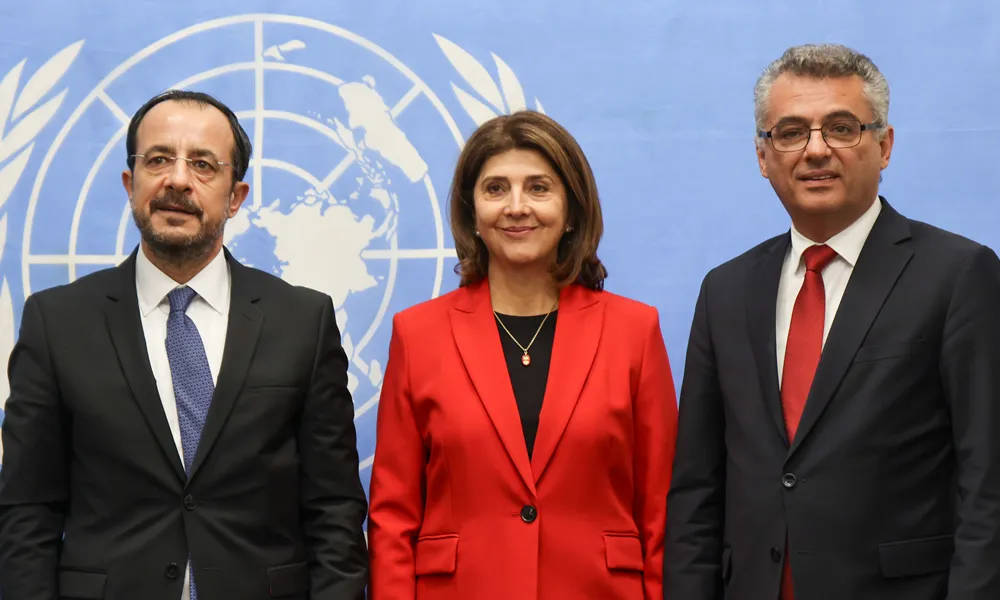

The two leaders are engaged in an ‘informal’ process of dialogue with two goals in mind: to agree and implement a host of trust-building initiatives, and to find a way back to the negotiating table for a peace deal.
On the latter, the sides are still in the early stages, sounding each other out as to where they stand and how far they’re willing to go to reassure their counterpart of their intentions.
The substance
President Nikos Christodoulides has said he’s ready to return to talks on a federation without preconditions, providing of course, the framework is based on UN Security Council Resolutions and EU laws, values and principles.
Turkish Cypriot leader Tufan Erhürman wants political equality spelt out before engaging in talks on a comprehensive solution. He wants to know in advance what the Greek Cypriot position is on a rotating presidency and effective participation. He also wants a clear timeframe for talks and acceptance of past convergences, as well as assurances that the Turkish Cypriots will not return to the status quo should the talks fail.
His proposals on methodology were tabled before his election and remain in place after it. They are partly an effort to remove certain potential roadblocks on the path to a solution, partly a safeguard against bad faith negotiations, and very much a test of sincerity that Erhürman can use to steer Ankara’s course away from a two-state solution.
The balance
The sides need to tread carefully in this endeavour. The long history of the peace process is characterised by a zero-sum mentality. If one side gives the semblance of setting preconditions for the resumption of talks, this predictably triggers a similar effort by the other.
Questions of substance need to be clarified, but in a way that leaves both sides confident moving forward, rather than exposed. It remains to be seen whether the two leaders can find the delicate balance of mutual assurances that will unlock the long dormant peace talks.
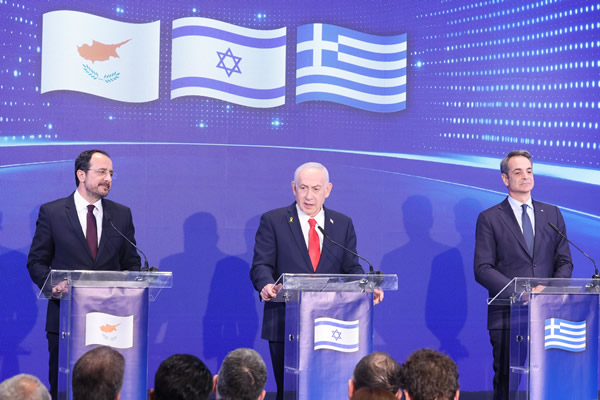
According to PRIO Cyprus Centre researcher Mete Hatay, the leaders’ efforts are also being played out under the shadow of new geopolitical games in the region that are raising tensions and making Ankara increasingly suspicious. Energy deals, along with Cyprus and Greece’s growing military ties with Israel makes Turkey restless, he said, noting that if you follow Turkish media, you get the impression World War Three is starting. In this environment, Erhürman has less room for manoeuvre, argued Hatay.
The CBMs
In parallel, the two leaders are working on confidence-building measures (CBMs). The international community, fully aware of the pervasive distrust on the island has sought to keep the dialogue going, as a way to keep the candle burning and, if possible, build incremental trust.
The two informal talks – the ‘5+1’ meetings – held last year in Geneva in March and New York in July saw Christodoulides and then Turkish Cypriot leader Ersin Tatar discuss with the foreign ministers of the guarantor powers a series of relatively low-level CBMs.
After Erhürman came to power, he and Christodoulides both unilaterally tabled additional trust-building initiatives.
The next ‘5+1’
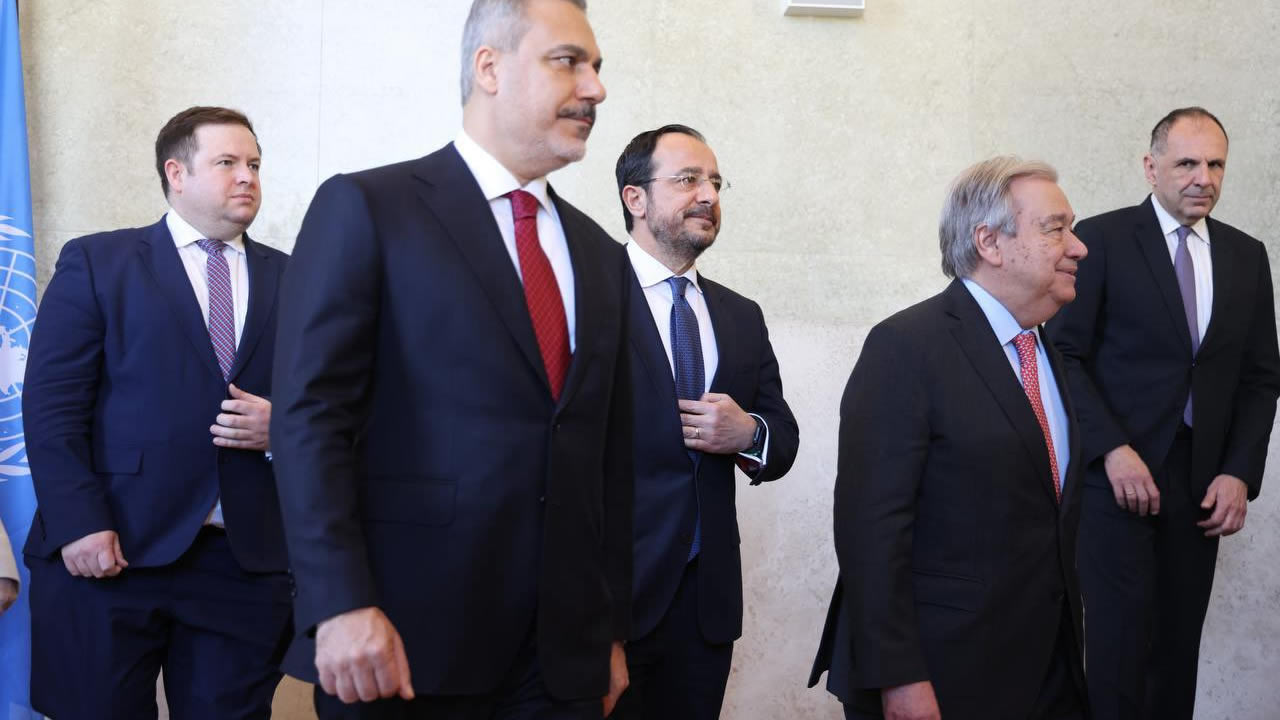
Regarding the prospect of a new ‘5+1’, although UN Personal Envoy María Angela Holguín Cuéllar intended to convene a broader meeting by the end of 2025, the new year has landed and there is no clear timeline for the next one.
Erhürman argues the two sides need to get more work done in Nicosia before meeting again with the guarantor powers. After Holguín met with Turkish Foreign Minister Hakan Fidan in Ankara last month, she echoed the view in an interview with ANKA news agency, saying that further steps were needed “to consolidate the early momentum and foster genuine trust” before the UN Secretary-General could call a new ‘5+1’.
It is not yet clear what it will take to unlock the door to a new ‘5+1’. Do the sides need to agree on pending CBMs, find new, more creative CBMs, make progress on issues of substance, or all the above?
According to Politis sources, Holguín will meet in Amman this month with a variety of opinion leaders who may come up with more creative ideas that can help bring the sides closer.
The details
On CBMs, Politis spoke with people knowledgeable on the issue to find out how far the leaders have gone since Erhürman’s election.
Below is the implementation status of the CBMs raised in the Geneva and New York meetings.
March 2025 (Geneva)
· New Technical Committee on Youth – Done
· Environment and climate change initiatives – Done
· Restoration of cemeteries – Ongoing
· Clearing of suspected hazardous areas from booby traps, mines and other explosives – Pending
· Opening of four crossing points (Mia Milia, Athienou-Pyroi-Aglandja, Louroudjina-Lymbia, Kokkina) – Pending
· Solar energy parks in the buffer zone – Pending
July 2025 (New York)
· Consultative body for civil society engagement – Pending
· Exchange of cultural artifacts – Pending
· Improving air quality monitoring – Under discussion within Technical Committee on Environment
· Addressing microplastic pollution – Under discussion within Technical Committee on Environment
On the CBMs not yet agreed, a government source said the Greek Cypriot side has submitted a list of suspected hazardous areas for clearing and was now waiting on the Turkish Cypriot side to do the same before the UN could initiate the demining process.
The source added that the sides have yet to agree on which cultural artifacts they will exchange.
Regarding the civil society consultative body, discussions have yet to begin on how this will take shape though the idea is to have an informal and inclusive body, highly representative in terms of age, gender, profession, origin, and other criteria. This will be a Track 2 initiative that will mainly deal with issues involving society, professional bodies, education, health, economy etc. It will be made up of citizens in their individual capacity, not representatives of other organisations. They will deliberate on issues of concern and present their consultations to the leaders.
The most high-profile CBM is the effort to open new crossing points. According to the government source, the sides have not really come any closer on this issue. The two representatives have completed all the necessary preparatory work and it is now a matter of the leaders taking a political decision.
According to PRIO researcher Mete Hatay’s understanding of the situation, for the Athienou-Pyroi-Aglandja crossing, the Greek Cypriots are requesting a 10km road to pass through the buffer zone, which apparently UNFICYP does not consider practical. Erhürman proposed a shorter passage instead. As for the Mia Milia checkpoint, it is believed the Greek Cypriot side is not in favour, and as such, it is expected to propose an alternative to relieve congestion at Ayios Dometios, said Hatay.
Another CBM that could help break some ground is the EU-funded solar energy park in the buffer zone that would feed green energy to both communities. According to the government source, differences remain between the two sides on location and the number of connections to the grid, as in, whether power would be transmitted to both electricity grids separately or pass through one and then be sent to the other.
Hatay’s understanding here is that the EU feasibility study proposed four potential locations for the solar energy parks. Erhürman agreed on three locations from which the Turkish Cypriot electricity authority could have direct connection to the park, but rejected the fourth, where this was not possible. It remains to be seen whether Christodoulides will take an all or nothing approach here.

The one CBM that neither leader has mentioned is a return to the Imagine Education Programme that brought thousands of school children from both communities until it was stopped by Tatar in 2022. Even if the Greek Cypriot side requested its return, it’s unlikely Erhürman could get the ruling Turkish Cypriot coalition led by the National Unity Party (UBP), which controls the education portfolio, to implement it.