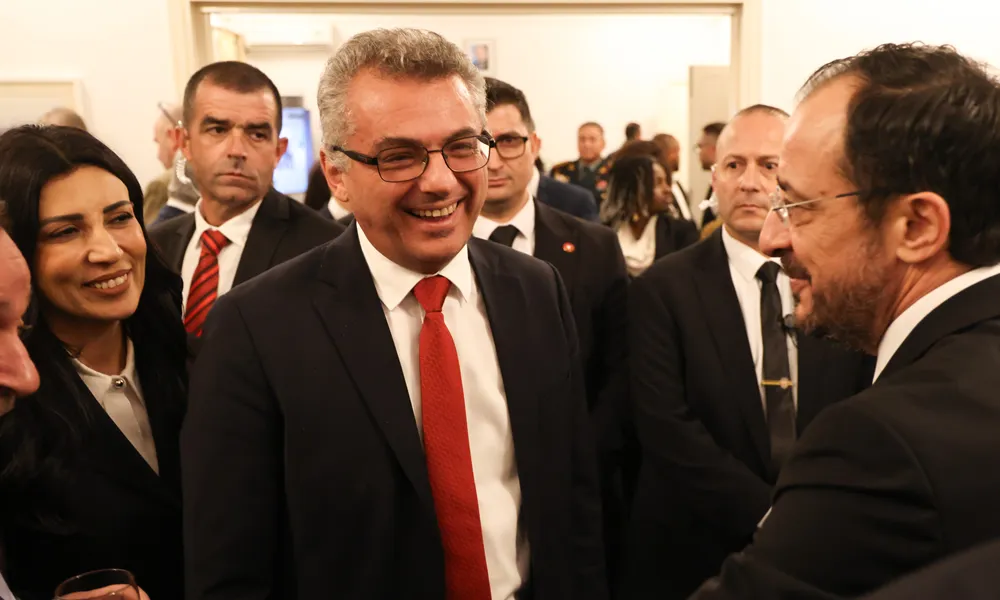

UN Secretary-General António Guterres’ latest report on his Good Offices mission in Cyprus includes updates from President Nikos Christodoulides and Turkish Cypriot leader Tufan Erhürman. What stands out the most from the 23-page document is the often divergent and contradictory narratives of the three authors, particularly on the lack of progress on trust-building initiatives and technical committees.
The peace process
UNSG: More needs to be done
Guterres notes “there is a new moment of opportunity to move forward on the Cyprus issue”. He welcomes “the commitment shown by the Cypriot leaders and the guarantor Powers to sustain this kind of engagement, notwithstanding this being the longest gap in active negotiations in the history of the Cyprus peace process.”
He was “particularly encouraged by the outcome” of the last trilateral where “for the first time in more than five years, discussions on core political issues took place”. While constituting an important step forward, Guterres said the dialogue process was still at an “early stage”.
“More will need to be done to strengthen the nascent momentum and establish a genuine climate of trust. I urge both sides to move forward on those in the coming period.”
The UNSG expressed his gratitude “for the active participation of the guarantor Powers” in the dialogue to find a mutually acceptable way forward, adding that he remained committed to the search for a path towards a peaceful settlement, guided by relevant Security Council resolutions.
Christodoulides on past convergences
President Christodoulides reaffirms his commitment to resume talks from where they left off in Crans-Montana, noting: “This comprises the agreed basis of a bizonal, bicommunal federation with political equality as prescribed in relevant UN Security Council Resolutions, the convergences achieved on all negotiating chapters and the six points presented by the UN Secretary General in Crans Montana.”
He then gives considerable space to his effort to create a mutually beneficial “alternative paradigm” in relations with Türkiye through a European framework.
TC leader: ‘Agree on 4-point methodology and talks start now’
Erhürman, meanwhile, focuses on the plight of Turkish Cypriots in the 21st century, arguing they’ve been “left out in the cold” after the Annan Plan and Crans-Montana “through no fault of their own”.
He argues that the gap between the two sides is “increasing significantly in nearly all aspects of life”.
Erhürman also warns that regional tensions and “exclusionary alliances” are increasing the distance between two sides politically and strategically, with negative impacts for dialogue and mutual understanding. He hints that this “trajectory toward greater polarisation” makes cooperative approaches to shared global challenges “significantly more difficult to achieve”.
While highlighting the need for a sustainable solution without delay, Erhürman argues that past experience demonstrates the need to prepare the ground and build trust first.
But if the Greek Cypriot side accepts his four-step methodology for talks, then “a new negotiating process can begin immediately”.
On the four steps, Erhürman clarifies that commitment to political equality, includes a rotating presidency and effective participation (with at least one favourable vote). The others are acceptance of past convergences leading up to Crans-Montana, ensuring the new process will be results-oriented and time-framed; and that Turkish Cypriots “will not be condemned” to their current status if the process fails despite their best efforts.
“This methodology constitutes, in no way, a set of pre-conditions,” he says while also noting that a new process “can only start once we agree in principle on our 4-point methodology in its entirety”.
Any solution, he notes, “shall derive from and be grounded on the inherent and inalienable equal sovereignty rights of each of the two peoples on the Island.”
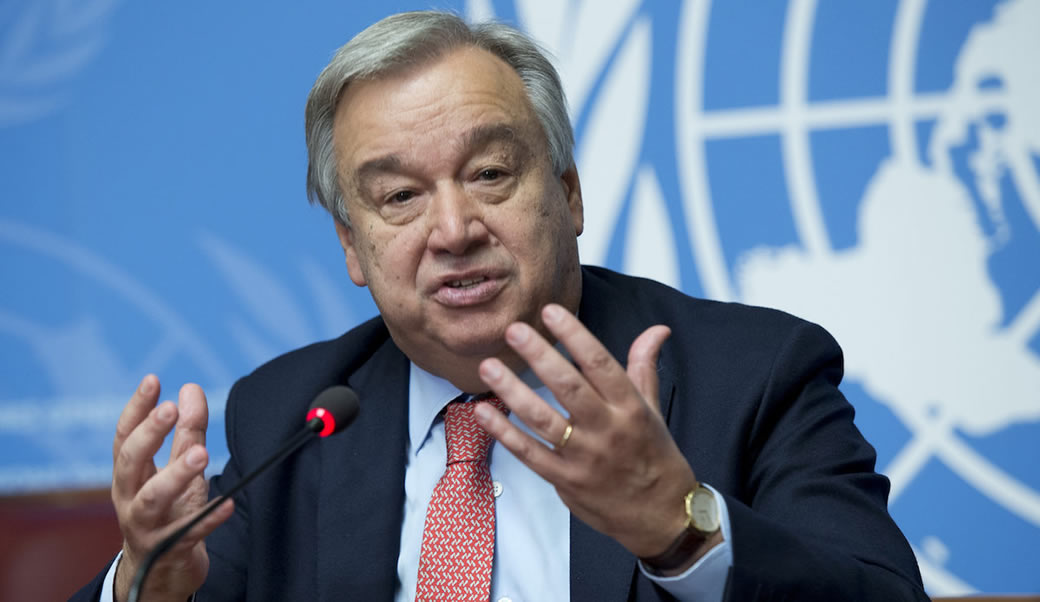
Trust-building initiatives
UNSG: Limited progress
The Secretary-General notes that some of the 10 trust-building initiatives identified in Geneva and New York have been implemented, while only “limited progress” was achieved in others.
“Specifically, there have been no concrete results achieved on the opening of new crossing points, the establishment of a solar plant in the buffer zone, the exchange of art and cultural artifacts and the establishment of a consultative body to engage with civil society,” he said.
He called on both sides to show “stronger determination” to implement pending initiatives, including on new crossing points without delay.
Hailing the “great promise” of the newly established Youth Technical Committee, Guterres reminded the leaders of the “importance of education, to instil reconciliation, forgiveness and cooperation among school-aged children”. He called on both to “reinvigorate” the Technical Committee on Education.
As always, the UNSG stressed the need for greater engagement with civil society to “enhance legitimacy and transparency in the dialogue, inject fresh thinking and increase public ownership” of the peace process.
Christodoulides ready to talk to Turkish Forces
For his part, Christodoulides refers sparingly to his government’s unilateral measures towards Turkish Cypriots, noting without detail, that implementation continues.
He then lists several reasons why Türkiye’s policies raise tensions and undermine the creation of an environment conducive to the resumption of talks, including the illegal exploitation of Greek Cypriot properties in the north and the continued upgrade of Türkiye’s military capabilities and infrastructure.
The President maintains his readiness to establish a mechanism for military contacts, clarifying this should comprise the National Guard and Turkish occupation forces, facilitated by UNFICYP. A reliable source told Politis to the point that the Turkish military will not participate, arguing it is the Turkish Cypriot military’s job to do so, while the Greek Cypriot side won’t engage without the Turkish military’s presence.
Erhürman: Need conducive climate
The Turkish Cypriot leader highlights the need to create a climate conducive to a solution. On opening new crossing points, he calls for the sides not to turn the issue into a zero-sum game, adding that he’s ready to work to open all four new crossings. A deal is possible “as long as the integrity of the buffer zone is not affected”, he said.
On the solar power plant in the buffer zone, Erhürman blames the Greek Cypriot side for impeding progress by insisting on direct control over the electricity generated. He accuses the Greek Cypriot side of not accepting any of the four location options identified by the EU feasibility study.
Technical Committees
Mixed bag of results
The Secretary-General hailed the effective work of some Technical Committees – such as Youth, Crime, Crossings, Cultural Heritage and Environment – while noting the lack of “concrete outcome” or complete lack of progress in others.
Specifically, the Technical Committee on Gender Equality “made no progress” in implementing its 2022 action plan, he said. The Crisis Management Committee “did not make progress on cooperation projects related to earthquake preparedness, wildfire response and the development of a joint crisis management protocol”.
Meanwhile, Guterres said the Education Committee “did not meet during the reporting period, and there was no cross-community cooperation on student engagement or on the review of textbooks.”
At least two sides to every story
Christodoulides identifies the lack of progress as boiling down to a recognition issue. He refers to “attempts to turn the Committees into vehicles for the promotion of cooperation between ‘separate administrations’” rather than the promotion of reunification.
For his part, Erhürman blames the lack of progress largely on the reluctance of the Greek Cypriot side to ensure their effective functioning under the pretext that they may lead to the ‘upgrading’ of the north.
While the UNSG notes the lack of progress by the Crisis Management Committee, Christodoulides highlights its “continued discussions” on crisis response and the launch of discussions on earthquake preparedness. Erhürman, meanwhile, argues the Crisis Management Committee did not even meet in the reporting period, neither did the subcommittee on earthquake preparedness.
Regarding the Culture Committee, both leaders refer to an upcoming photo exhibition taking place this month but can’t agree on what it’s called. According to Christodoulides, it’s titled, “Through Ordinary Eyes” while Erhürman calls it, “Through ordinary eyes in North and South Nicosia”.
And while the Education Minister’s circular to schools on the award-wining peace education project ‘Imagine’ remains pending, Christodoulides criticises the Turkish Cypriot side for not reversing its 2022 suspension of the programme, and for refusing to implement other projects that promote peace and reconciliation through education.
The UN Security Council is set to renew the UNFICYP mandate on January 29, 2026.