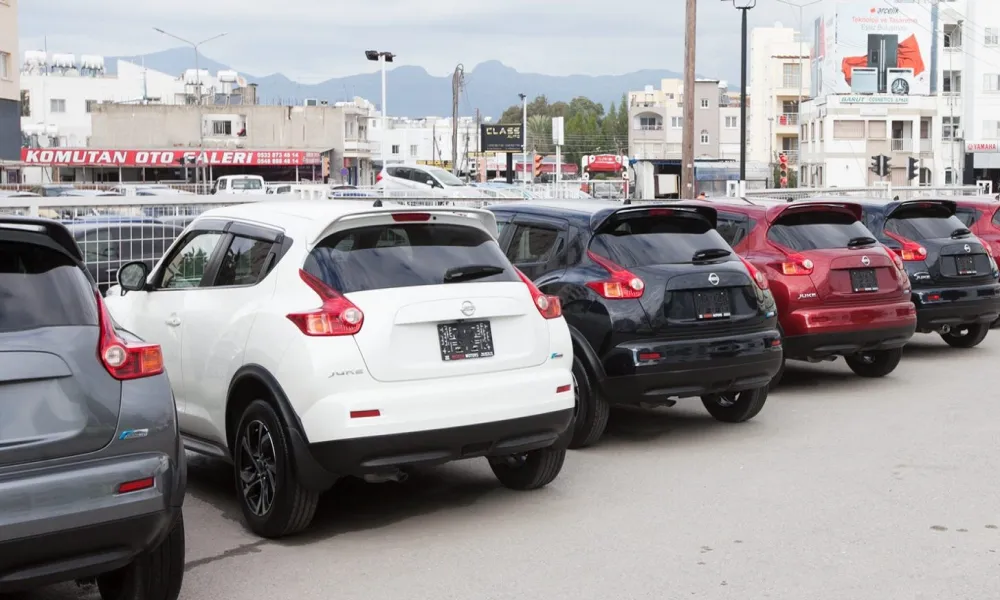
Growing concern is being voiced in the north over the explosive and largely unchecked expansion of the car sales sector, alongside mounting allegations of its entanglement with organised crime.
According to reporting in the Turkish Cypriot press, it is now virtually impossible to determine with any accuracy how many car dealerships and used-car yards are operating in the north. At the same time, allegations of extortion, with businesses being pressured to pay money in exchange for “protection”, have increasingly come to light.
Gunfire and black money
The rapid growth of the sector, combined with the absence of meaningful inspections and a reliable registration system, has raised serious questions about how the market operates and whether it is being adequately supervised.
Concerns have been further heightened by recent shooting incidents at car dealerships, which have received wide coverage and fuelled speculation about possible links between the sector and criminal activity.
In parallel, as reported by Kıbrıs Postası, a large number of vehicles remain on the market for long periods without changing ownership. This phenomenon is widely viewed as a potential indicator that the car trade is being used as a channel for laundering illicit funds.
How many dealerships are there?
The lack of clarity extends to the most basic data. There are no official figures on the number of car dealerships operating in the north.
In July 2024, Barış Yüca, president of the Motor Vehicle Dealers and Importers Association (MASİB), stated that around 700 dealerships were officially registered, while acknowledging that at least an equal number were operating outside any formal registry.
More recent sector estimates, cited by Kıbrıs Postası, put the total number of dealerships, registered and unregistered, at over 2,000.
Market data appear to support this picture. Each year, an average of around 13,000 new vehicles enter circulation, while by July 2025 the total number of registered vehicles in the north had reached approximately 450,000. At the same time, it is estimated that around 2,000 vehicles change ownership every month.
A visit to the website kktcarabam.com, which lists more than 310 car dealerships, offers only a partial glimpse of the scale involved.
What politicians and experts are saying
As the issue gained public attention, Faiz Sucuoğlu, an MP for the National Unity Party (UBP) and former “prime minister”, said in an interview on 27 March 2024:
“There are 1,500 car dealerships here, and more keep opening. Naturally, this brings other issues to mind, such as black money. In such a small country, I find it suspicious to have so many dealerships.”
The leader of the People’s Party, Kudret Özersay, warned in a statement on 23 November 2023:
“The market for luxury vehicles and real estate has turned into a method of laundering black money. Proceeds of crime come here without their origin being checked, purchases are made, and then assets are sold to create ‘legitimate’ income. When someone asks, the answer is ‘I sold a car’ or ‘I sold property’.”
Political scientist Ahmet Sözen of Eastern Mediterranean University told an interview on 23 February 2024:
“In just the past two years, perhaps 100 new car dealerships have opened. Luxury vehicles worth €100,000-€150,000 are being sold. These are not bought by local Turkish Cypriots. Black money is flowing into the north in amounts you could not imagine even in your dreams. Three or four people benefit from this.”
Alleged protection rackets
According to reporting by the newspaper Özgür Gazete, criminal gangs believed to be based in Turkey and operating mainly in Kyrenia are allegedly extorting car dealership owners, demanding money in exchange for “protection”.
Dealers have reported receiving explicit threats, including messages containing map screenshots showing both their businesses and their homes, accompanied by warnings such as “We know where you live”.
According to these accounts, when victims turned to the local 'police', they were told: “We cannot act based on a message alone. If they come to you, inform us.”
Reporting by Günlük Gazetesi in November 2025 claimed that criminal groups had collected more than £2 million within a short period, primarily through extortion targeting car dealership owners.
The growing body of allegations has intensified debate over oversight failures in the north, with critics warning that without meaningful controls, the car trade risks becoming a central conduit for organised crime and illicit finance.