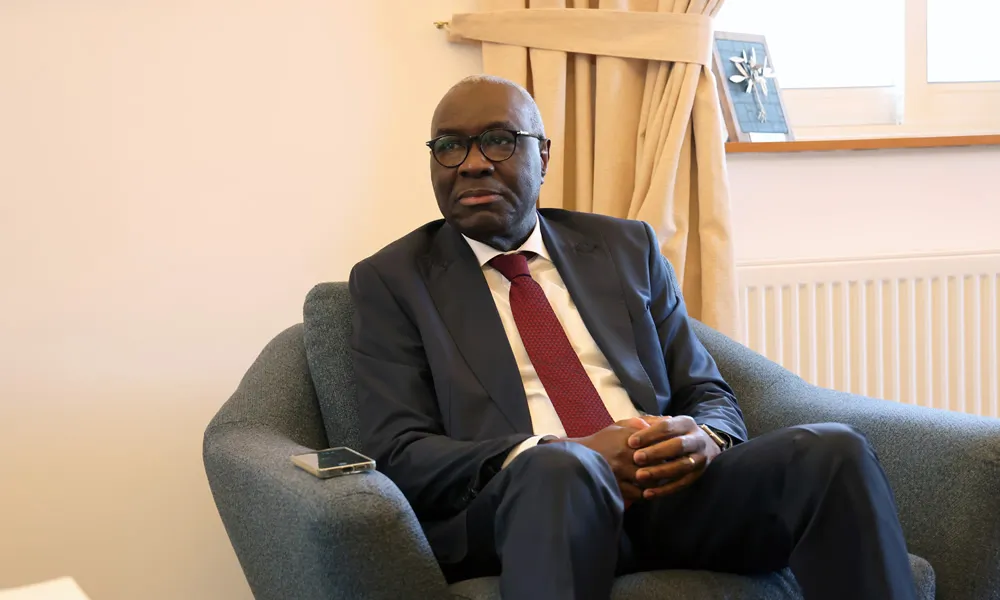

Today marks 62 years since the UN Security Council adopted Resolution 186 establishing the UN Peacekeeping Force in Cyprus (UNFICYP). According to head of mission and Special Representative of the UN Secretary-General Khassim Diagne, the UN has successfully kept the peace in Cyprus during that period, ensuring no return to violence.
In his first interview since arriving on the island last October, Diagne says his key takeaway is that UNFICYP has enabled the sides to continue talking and engaging, creating space for the political process.
“And that's what peacekeeping is about, giving the space, creating the conditions for dialogue,” he said.
“The legitimate question people usually ask is, ‘You've been there 62 years. What have you done?’ Well, we are physically present. We have managed to avoid a recurrence of violence, which was actually the original mandate entrusted by the Security Council in 1964, and we are also working towards a return to normal conditions.”
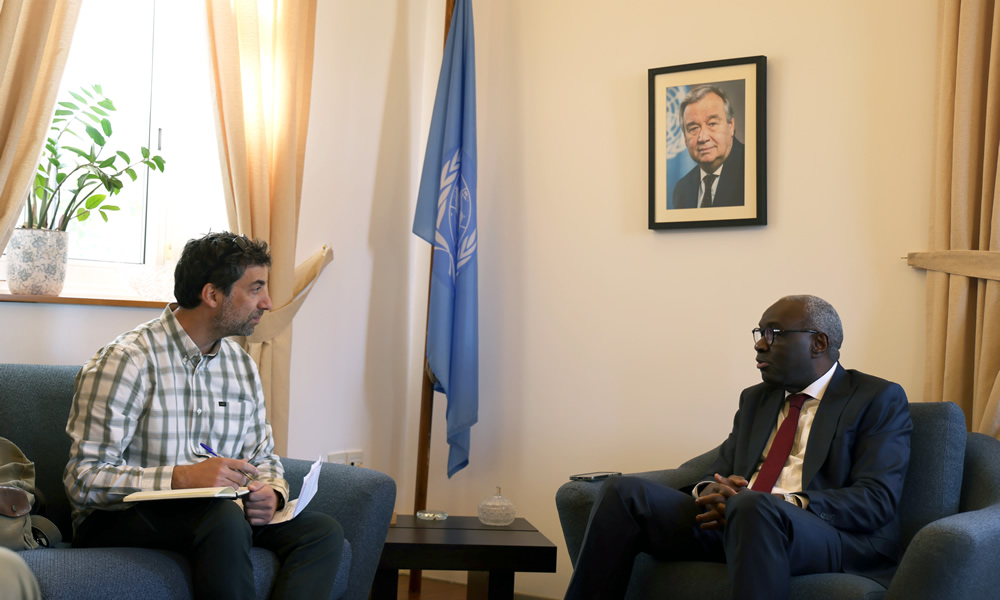
With 31 years of broad experience in the UN across multiple conflict and disaster zones – from Rwanda to Somalia, the Democratic Republic of Congo (DRC), Mali and more – Diagne notes that the UN in Cyprus works on a combination of goals – prevention of violence, stabilisation and bringing communities together.
“My first impression is that the UN has been doing it quite well.”
He pays tribute to the 150,000 men and women who served in UNFICYP since its establishment, including the 187 peacekeepers who lost their lives in the service of peace on the island.
UN not the problem
Asked if the UN’s success in preventing a recurrence of violence is also its weakness, in that it creates an almost ‘false’ sense of security, which perpetuates the status quo, the Senegalese national is adamant that the UN is not part of the problem.
“The primary objective was to ensure that there's no return to violence, and that has been the case for 62 years,” said the Special Representative, noting that the buffer zone is “largely incident-free”.
He added that the UN is creating conditions that are conducive for political discussion. But peacekeeping in itself is not a solution to a political process, it is an enabling tool that allows the conflicting parties to go to the negotiating table. If there is a final political solution, the peacekeeping mission ends.
UNFICYP challenges
Diagne notes three main challenges for the peacekeeping mission in Cyprus.
“The major challenge is the delineation of the buffer zone. And this is something that the Security Council has repeatedly expressed concern on. There is no physical demarcation of the buffer zone.”
He notes that the UN must count on the opposing sides to respect UN authority in the buffer zone, despite differing accounts on where the ceasefire line actually sits.
“That has been largely respected. But it's been challenged, obviously, because it's not demarcated and the situation evolves on the ground.”
A second challenge is unauthorised activities in the buffer zone, which partly comes from people not understanding where the buffer zone starts and ends.
Some might enter restricted areas knowingly, to push the boundaries of what’s permissible, but when asked why the UN does not call either side out on this, Diagne replies that the fundamental principle of peacekeeping is impartiality.
“We cannot take positions in this area. Our role is to facilitate, to mediate, to defuse tension. […] The minute that they feel we are taking sides, we are doomed.”
A third challenge is implementing the Security Council’s mandate to facilitate military engagement between the sides.
“It’s very complex, and there’s not going to be a solution overnight. But that’s something we’re working on with the sides.”
Diagne referred to UNSG Antonio Guterres’s call for the sides to get beyond the recognition issue to find a way forward.
The UN official notes that just as a way was ultimately found for police from both communities to communicate via the Joint Contact Room, a way can also be found for the opposing forces on the island.
Another challenge – more global than Cyprus-specific – is the liquidity crisis at the UN which has hit UNFICYP hard. The number of patrols and helicopter sorties to monitor the buffer zone have been reduced, as has the facilitation of intercommunal activities.
The political process
Despite these constraints, UNFICYP is prepared to implement any agreement the leaders reach on opening new crossing points, including to provide access to the old Nicosia-Larnaca road in the buffer zone that could connect Athienou and Algandjia.
“Anything that can facilitate discussions between the two sides to find a compromise or solution, we are ready to look into it. But the UN does not, own territory. The UN is a custodian of the buffer zone. There is no UN territory in Cyprus so whatever agreement or arrangements have to be made, have to be made between the sides.”
Asked to comment on his experience with the two leaders on the island, he said: “I see personally a genuine sense by both leaders to work together. I'm not privy to the details of the substance of the negotiations, but I can see a very conducive environment between the two.”
Diagne said, based on his many years’ experience in peacekeeping operations, mediation requires a lot of patience.
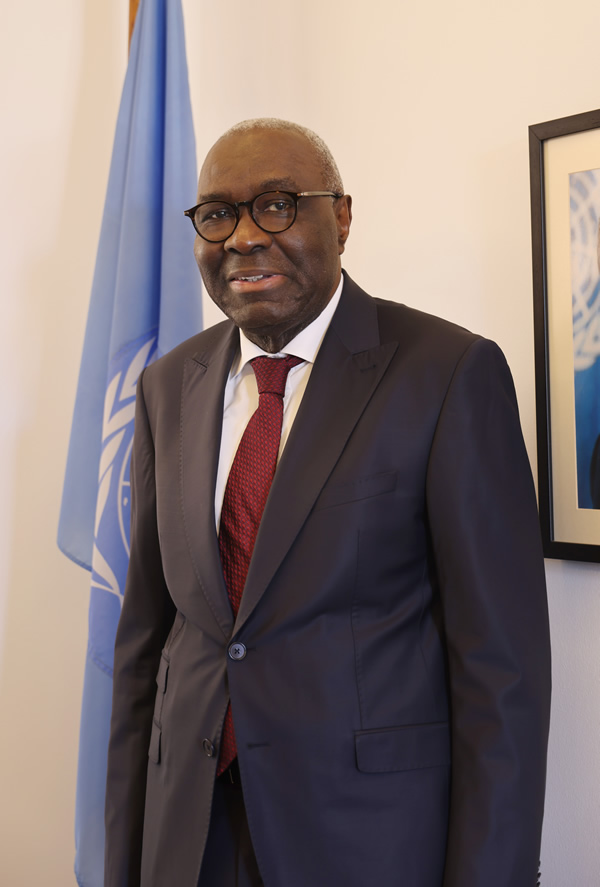
“We are still committed, whether it's in the peacekeeping side or the political process, we are here to invest efforts and time and energy to see to it that stability is maintained and that there is a solution to the Cyprus issue.”
On reports that María Ángela Holguín is giving up on Cyprus, he said: “That’s not true. Both the Personal Envoy and Secretary-General remain extremely committed to the Cyprus issue.”
He noted that when he worked in Guterres’ cabinet in 2017, he saw up close how the UNSG chose to deal with Cyprus as the first file when he took office.
After the failure of Crans-Montana, “a sceptic would have said, ‘I've tried, nothing worked, so I'm going to give up.’ He did not. He kept on meeting the leaders, sending envoys.”
He added: “The idea that they have given up on the Cyprus issue is absolutely incorrect.”
"The UN does not give up"
On his most challenging posting, Diagne notes that Rwanda in 1994 just after the genocide was “a crisis of mega proportions”. He came across a lot of violence and life and death issues working with refugees, also “in one of the largest UN peacekeeping operations in the world” in the DRC.
Asked if the experience made him cynical, he replied: “Not at all. It made me more optimistic, resolute and resilient. The bulk of these crises were man-made. And what man has triggered man can resolve. You don't give up belief in the solution.
The head of mission concludes: “The UN is about optimism. The UN is about not giving up. And the UN is really about always finding the possibilities beyond the current crisis.”