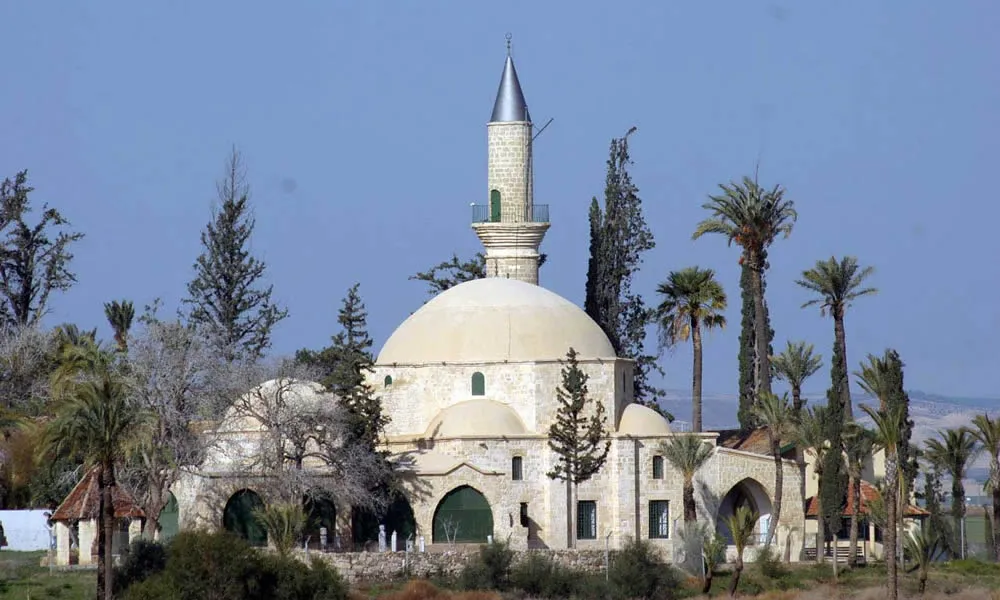
A process that turned into a standoff
The Turkish Cypriot side’s attempt to organise a pilgrimage to Hala Sultan Tekke in Larnaca for Eid al‑Fitr evolved into a diplomatic tug-of-war, ending without the visit taking place. Talks between the two sides became deadlocked, and the pilgrimage was ultimately cancelled.
The so‑called “foreign ministry” in the north accused the Greek Cypriot side of refusing to allow the visit, while the government of the Republic has so far made no public statement. However, a Foreign Ministry source told Politis that the Turkish Cypriot side abandoned the consultation process and did not return with the additional information requested regarding the pilgrims.
Erhürman reacts
Last Saturday, the Turkish Cypriot “foreign ministry” accused the Greek Cypriot side of rejecting the initial request for a group pilgrimage on 21 March. It claimed that new dates – 22 March and subsequently 28 March – were proposed and also rejected. According to the “ministry,” previous group visits involved 300-500 pilgrims, but this year the Greek Cypriot side cited security concerns and asked that numbers be reduced first to 105 and then to just one bus.
Turkish Cypriot leader Tufan Erhürman then stated on social media that the Greek Cypriot side’s repeated negative responses and the attempt to impose restrictions “on the basis of unjustified reasons is unacceptable.”
What the Foreign Ministry says
A Foreign Ministry source told Politis that the Turkish Cypriot side did not submit a request to the Office of the Religious Track of the Cyprus Peace Process (RTCYPP), which operates under the auspices of the Swedish Embassy. This, the source said, had always been the procedure in the past and was why the pilgrimage planned for 21 March did not take place.
The Turkish Cypriot side, the source added, refused to approach the Religious Track, wasting valuable time. Although the request was eventually submitted to the United Nations Peacekeeping Force in Cyprus (UNFICYP), the Greek Cypriot side ultimately agreed to accept it, and a new date was set.
According to the source, the Greek Cypriot side consented for the pilgrimage to take place on 28 March, but imposed limits on participant numbers due to the situation created by the war in the Middle East and the increased security risk in Cyprus.
The same source said the Turkish Cypriot side had submitted a list of pilgrims’ names, but the Greek Cypriot side asked for further information to verify the identities of the individuals. Approval, the source stressed, concerns the exceptional transfer of settlers to the mosque for pilgrimage, and such a process requires proper organisation. The Department of Antiquities must close the site to the general public on the day of the pilgrimage, and police must arrange for patrol cars to escort the buses.
The source also claimed that the Turkish Cypriot side never returned with the requested additional information and “did not even attempt to cross through the checkpoints.”
The Religious Track
It is worth recalling that pilgrimages by Turkish Cypriot residents to Hala Sultan Tekke began in 2014 following an agreement between religious leaders within the framework established by the Religious Track. The agreement was reached between the late Archbishop Chrysostomos II and former Mufti Talip Atalay and concerned specifically the transfer of settlers for religious worship, since Turkish Cypriots can cross freely through the checkpoints.
A formula was eventually agreed, and until the COVID-19 period the Religious Track office coordinated the organisation of pilgrim transfers. According to information obtained by Politis, after the pandemic the Turkish Cypriot side changed its stance and sought to bypass the Religious Track. The most recent Mufti, Hakan Moral, did not participate in the religious dialogue, while the so‑called “foreign ministry” in the north took the lead in organising the Hala Sultan Tekke pilgrimage by sending requests directly to UNFICYP rather than through the Religious Track.
“The train has left the station”
A UNFICYP source told Politis that efforts continue to arrange a new pilgrimage date in early April. However, a Turkish Cypriot source stated there is no ongoing dialogue, arguing that the pilgrimage would only have meaning if it took place during the Eid al‑Fitr celebrations, which have now concluded.
“We are not Lebanon”
A Turkish Cypriot source told Politis that Turkish Cypriots stopped participating in the Religious Track after 2021 and that since then all pilgrimages were organised through UNFICYP. This time, however, the Greek Cypriot side insisted the visit should take place via the Religious Track.
The source said the Turkish Cypriot side does not participate in the Religious Track and that there are differing views over how the office operates, whether it is beneficial, and whether it considers the sensitivities of the Turkish Cypriot side. The source argued that the Religious Track is currently inactive and that “it is not logical to ask the Turkish Cypriot side to follow a mechanism that does not exist at present.”
The source also noted that the Turkish Cypriot side does not have a Mufti but an appointed head of the religious affairs directorate, adding: “We are not Lebanon.”
The same source said the Greek Cypriot side sought to determine the date and reduce the number of pilgrims. According to the source, the Greek Cypriot side proposed 28 instead of 21 March, with conditions the Turkish Cypriot side could not meet. At a time when new leaders are trying to build trust, the source said, it is “regrettable” that the Greek Cypriot side took such a hard line – initially saying a firm “no,” then at the last moment saying it would be possible on a specific date with far fewer participants. “We could not tell three in four pilgrims that they could not take part this year,” the source added.
Requests for pilgrimages
A Foreign Ministry source in the Republic of Cyprus said pilgrimages by Greek Cypriots in the north and Turkish Cypriots in the government‑controlled areas have never been linked. The source added that since the period of Ersin Tatar, 70% of Greek Cypriot requests for pilgrimages in the north have been rejected.
However, a Turkish Cypriot source rejected that claim, saying that in 2025 only 32% of Greek Cypriot requests were rejected. The source accused the Greek Cypriot side of repeatedly requesting religious services in churches that are in poor condition or in military areas – knowing they would be denied – so that the rejection rate would appear higher and could later be used “for propaganda purposes.”