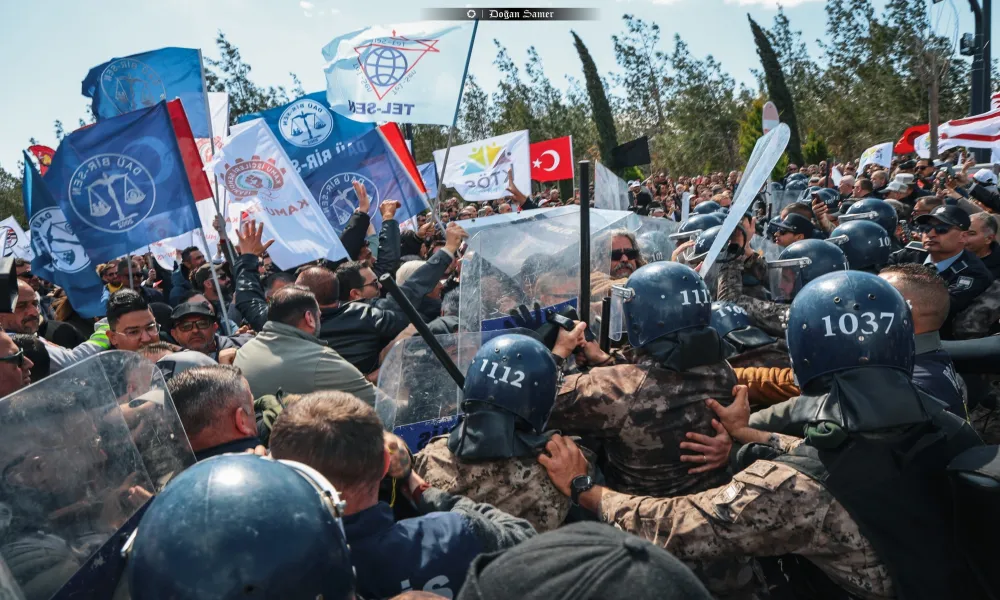
Strike action by the 62 Turkish Cypriot unions and organisations that demonstrated in the north on Monday was suspended Tuesday morning, after the plenary debate on the controversial “bill” to cut the Cost of Living Allowance for nine months was adjourned without a vote.
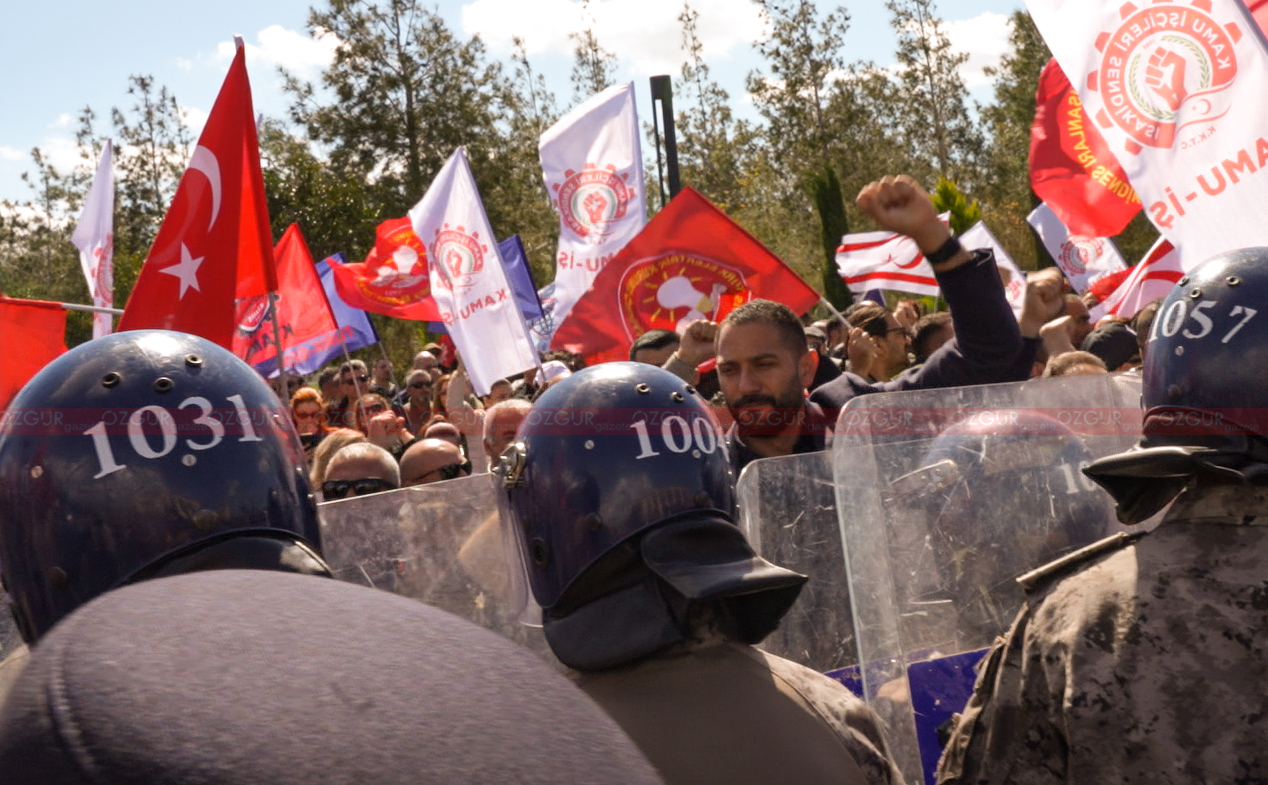
Long negotiations by the “crisis management team” over the issue had ended Monday afternoon without result, following clashes outside the assembly building.
The 11‑member team – comprising representatives of the ruling coaliton in the north and the unions that organised the general strike and demonstration – failed to reach agreement. The unions declared that the strike would continue “until the government falls,” insisting on the withdrawal of the bill providing for the suspension of CoLA until 2027.
In a development early Tuesday morning, after the ‘parliament’ announced it would not reconvene to discuss the controversial bill, all 62 unions issued a joint statement suspending the strike for the day.
Political pressure
The issue is heading to debate among Turkish Cypriot assembly representatives, while Turkish Cypriot leader Tufan Erhürman held contacts with both sides. Erhürman referred to the need for proper crisis management, transparency and avoidance of violence in a statement on Monday’s clashes.
In a social media post, he wrote that the first principle of crisis management is the safeguarding of trust. He also stressed the need for participation and transparency, noting that decisions must be taken at a “crisis management table” in a fair manner.
He made special reference to the protests, saying peaceful demonstrations are fundamental and that “violence cannot be justified by either side”. He added that legality and proportionality in the use of force by “security forces” are human rights imperatives that must be upheld under all circumstances.
Tensions have also emerged within the ruling coalition –National Unity Party (UBP) representative Özlem Gürçağ Altugra said she would not support the bill.
Why Turkish Cypriots took to the streets
The outburst of unrest among Turkish Cypriot workers is rooted in “two years of accumulated political and economic tension,” says Dev‑İş’s Koral Asam, speaking to Politis.
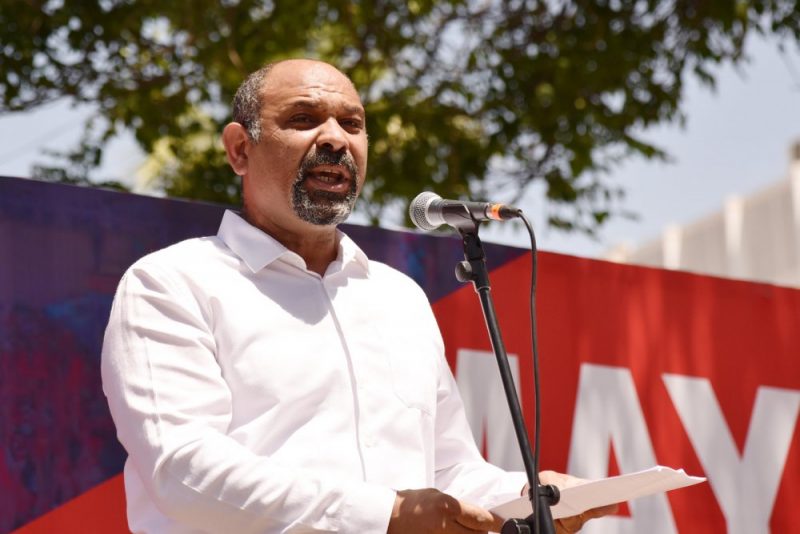
He explains: “Reports of irregularities in public tenders, corruption cases and scandals involving forged diplomas of officials have already eroded public trust in institutions. At the same time, the surge in oil prices due to developments in the region and the closure of the Strait of Hormuz sharply worsened the cost of living, pushing workers to their limits.”
“Crisis being shifted onto workers”
Within this context, he says, the ruling coalition’s proposal to suspend CoLA payments for nine months acted as a catalyst. “This is not just an economic measure – it is a political choice that reinforces the perception that, once again, the burden of the crisis is being shifted onto workers,” he notes.
Monday’s turnout – estimated between 8,000 and 10,000 people – shows that the reaction “has broad social resonance and is not confined to unions,” he adds.
“A crisis of governance”
Commenting on the reaction of the authorities, Asam described “an alarming escalation,” stressing that the use of tear gas, water cannons and disproportionate force shows that “when a government’s capacity to govern weakens, security reflexes begin to replace policymaking”.
Although the existing legal framework allows the ruling coalition to postpone strikes twice a year for up to 60 days, using this provision “as a tool of political pressure pushes unions toward civil disobedience,” he said.
Asam believes the ruling coalition’s call for dialogue reflects “growing awareness of the social cost”, but warns that if negotiations fail, the general strike will continue. “At this point, we are no longer talking about a technical negotiation, but the manifestation of a deeper crisis of governance.”
The movement’s demands
Asam summarises the workers’ demands as “crystal clear: fair distribution of the economic risks arising from the ongoing crisis, and restoration of institutional transparency.”
If these expectations are not met, he says, social reaction will intensify, “because when a crisis is mismanaged, society inevitably finds a way to respond”.