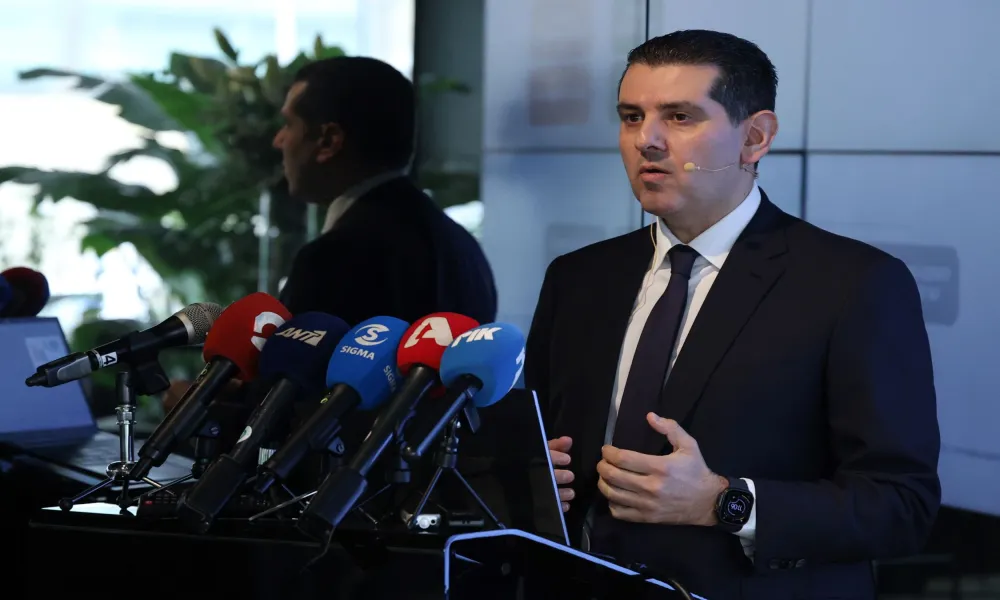



President Nikos Christodoulides announced Tuesday morning, at the opening of the Council of Ministers meeting, that he contacted the US government to request FBI assistance in the Sandy case, and that the response was immediately positive. According to the President, a team is expected in Cyprus within days, tasked primarily with analysing statements and testimonies. No further details have been confirmed about the composition of the team, its precise mandate, or the timeline of its stay. According to information, one possibility is that the FBI sends one of its Behavioural Analysis Units (BAUs) to the island, bringing to the investigation a form of expertise that goes well beyond conventional forensic support.
Should this be the case, it will introduce a new dimension to an investigation that has, so far, relied heavily on witness accounts, contested denials, and a sprawling network of alleged connections across Cypriot and Greek judicial and political circles. Police are already cooperating with Europol on forensic checks, particularly of digital devices. Any FBI involvement would likely be different in nature focusing on behavioural patterns rather than forensic evidence.
Who may be coming
The FBI's Behavioural Analysis Units (BAUs) are among the most specialised investigative support bodies in the world. Established over decades of research into criminal psychology, they consult on active, cold, and complex cases for federal, state, and foreign law enforcement partners. They do not operate as an independent investigative force outside US territory. In an international context, their role is advisory, but that advisory role can be decisive. The BAUs cover a broad range of case types, including terrorism, cybercrime, organised abuse networks, and violent crimes against adults and children. Should specialists from this unit be part of the team that arrives, the most relevant expertise for the Sandy investigation would likely fall into two areas: statement analysis and interview strategy.
Reading testimony
In cases where physical evidence is limited or disputed, testimony becomes the primary battleground. BAU specialists are trained to examine statements for behavioural markers - inconsistencies in sequencing, language that suggests rehearsal, omissions that follow a pattern, and indicators that a witness may be withholding or distorting information under pressure.
They use a structured, research-based methodology for assessing the credibility and coherence of accounts. In a case like Sandy's, where multiple individuals with significant institutional standing have either denied involvement or offered competing versions of events, that kind of analysis could help investigators determine where to focus, who to re-interview, and what questions have not yet been asked.
Interview strategy
Beyond analysing existing material, the BAUs are also equipped to help design interview approaches tailored to specific psychological profiles. They combine behavioural principles with scientific methods to prepare investigators for high-stakes conversations, particularly with individuals who may be experienced in managing institutional scrutiny, or who have legal and professional resources at their disposal.
This is especially relevant in a case involving people who are not ordinary suspects. Lawyers, judges, and political figures present very different interview dynamics than conventional criminal suspects. Knowing how to approach those conversations, what to ask, in what order, and how to read the responses, is a distinct skill and one the BAUs are specifically trained to provide.
Unusual level of investigation
Any FBI specialised team could bring a layer of expertise that Cypriot investigators do not routinely have access to, and that could prove critical in a case where the credibility of testimony, and the behaviour of those giving it, may ultimately determine the outcome. With Europol already engaged on the digital forensics side, and the possible addition of FBI behavioural as well as forensic analysts, the Sandy investigation could soon be drawing on international expertise at a level unusual for Cyprus.