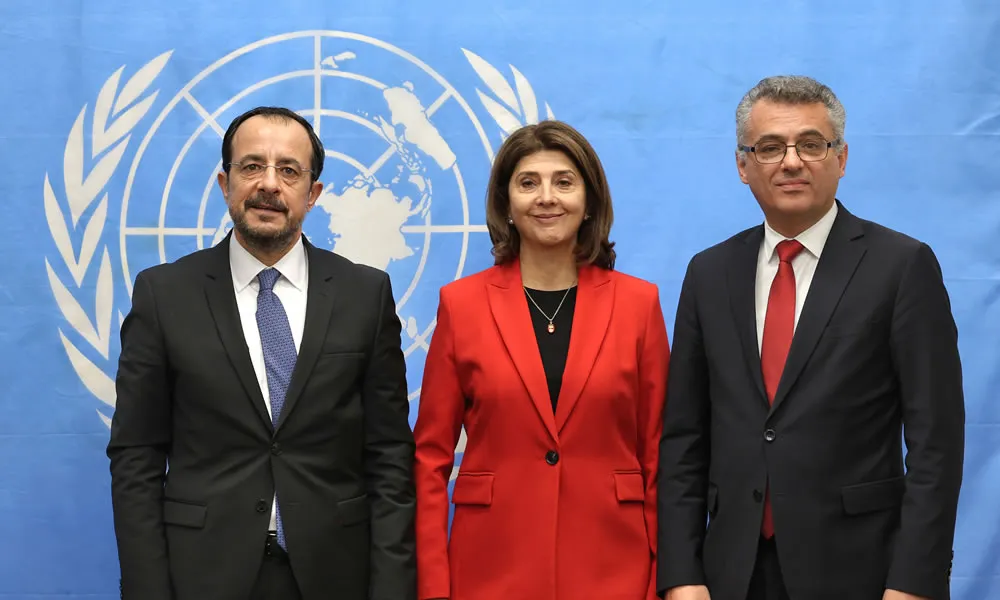
After seven years of diplomatic stagnation, Cyprus talks have cautiously re-entered the international agenda. Yet for María Ángela Holguín Cuellar, the renewed engagement represents both an opportunity and a risk. Momentum exists, she says, but it remains fragile and vulnerable to the same missteps that have undermined previous efforts.
In an exclusive and wide-ranging interview with the ANKA news agency, the United Nations Secretary-General’s Personal Envoy on Cyprus offered her most detailed assessment to date of the UN-led trilateral meeting held on 11 December with Greek Cypriot leader Nikos Christodoulides and Turkish Cypriot President Tufan Erhürman. Her message was clear: promise alone is not enough.
A cautious opening after years of deadlock
Holguín described the tone of the December meeting as “profound, sincere and very direct”, leaving her encouraged by the quality of the exchanges. At the same time, she stressed that the dialogue remains at an early and delicate stage.
“Although the discussions are promising, the dialogue between the two leaders is still in its initial stages,” she told ANKA. “Further steps are required to consolidate the early momentum and foster genuine trust, which would make it possible for the Secretary-General to host a 5+1 informal meeting.”
The first UN trilateral since Crans-Montana
The 11 December meeting marked the first UN-led trilateral since the collapse of the Crans-Montana talks in Switzerland in 2017, widely regarded as the closest Cyprus has come to a comprehensive settlement since intercommunal violence erupted in 1963.
Those talks ended abruptly when the Greek Cypriot side left the negotiating table, ushering in a seven-year period without formal negotiations and with repeated but inconclusive diplomatic initiatives.
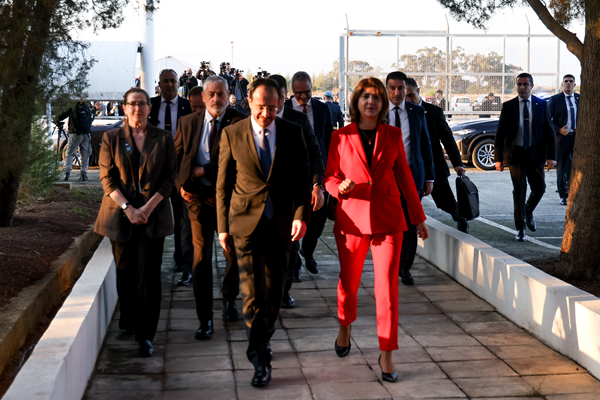
Against that backdrop, the December trilateral was significant not only for reopening leader-level dialogue under UN auspices, but also for its outcome. The two sides agreed to continue discussions aimed at a settlement based on “political equality as described in UN resolutions”, language that lies at the core of longstanding UN parameters.
Substance over form at leader-level meetings
Holguín acknowledged that part of the December meeting focused on issues that could have been prepared at technical level. However, she said the leaders’ experience allowed them to quickly identify the core matters that must be addressed before entering full negotiations.
“It would be important that a great part of such high-level meetings be more focused on substance and on taking decisions on pending matters,” she noted.
Looking ahead, particularly during periods when she will be away from the island, Holguín stressed the importance of negotiators and representatives ensuring that leader-level meetings are well prepared and result-oriented.
“I am glad that the leaders’ representatives are already discussing ways to have more structured and more result-oriented efforts at their level,” she said, expressing confidence in the experience and skills of both negotiating teams.
Confidence-building measures as the immediate priority
According to Holguín, the next phase will focus on resolving outstanding issues related to confidence-building measures with tangible benefits for daily life across the island.
“In the immediate phase, they will work on resolving outstanding issues related to a range of confidence-building measures that could have tangible benefit for the life of all Cypriots,” she said.
Such measures, she stressed, are not secondary. Without visible progress, it will be difficult to sustain momentum toward deeper discussions on substance.
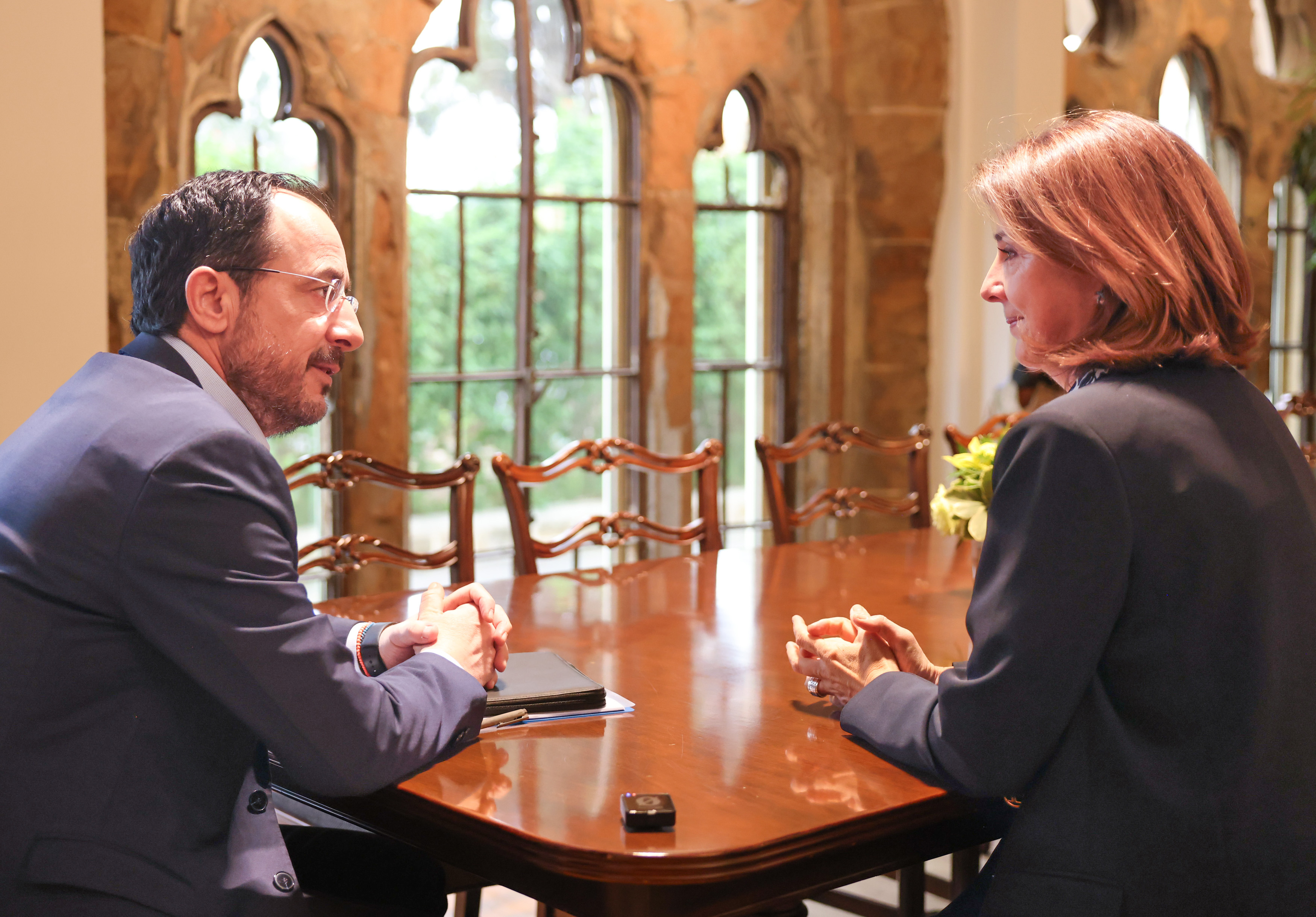
Among the measures under discussion, Holguín highlighted the opening of new crossing points as particularly significant.
“If I had to single out one, I would say the opening of new crossing points, because this sends the loudest positive signal about political commitment and has the most immediate impact on daily life,” she said, recalling the transformative effect of the crossings first opened in 2003.
A phase shaped by opportunity and risk
Holguín described the current phase as one defined by both possibility and danger.
“Either the leaders and their teams will strengthen the nascent momentum and establish a real climate of trust that allows for a deepening of discussions on substance,” she said, “or we witness the same protracted discussions on confidence-building measures that have been on the table since March 2025.”
Her hope, she added, is clearly the former, paving the way for an informal enlarged meeting convened by the UN Secretary-General.
When a 5+1 meeting makes sense
While Holguín does not question the principle of convening an informal enlarged meeting, she cautioned strongly against doing so prematurely.
“The principle of convening an informal enlarged meeting should not be challenged,” she said. “At the same time, we need to ensure that we have a good chance of ensuring its success.”
The proposed 5+1 format would bring together the two Cypriot communities alongside António Guterres and representatives from Britain, Türkiye and Greece. However, Holguín warned that without deeper convergence at the trilateral level, such a meeting could undermine rather than advance the process.
“If an enlarged informal meeting is organised prematurely, we could run the risk of derailing the productive dialogue between the leaders,” she said, summing up her caution with the proverb: “The good is the enemy of the best.”
Diverging approaches and unresolved fundamentals
The warning comes amid diverging approaches between the sides. While the Turkish Cypriot leadership and the UN envoy emphasise sequencing and preparation, the Greek Cypriot side and Greece have pushed for an early 5+1 meeting, arguing that international involvement could inject momentum.
Erhürman, however, has repeatedly warned that unless the modality of talks changes, the process risks repeating familiar cycles of failure.
In a separate interview with ANKA, Erhürman outlined a four-point methodology, placing political equality as the first and still unresolved pillar.
“Political equality cannot be considered complete unless rotating presidency and effective participation in decision-making are also accepted,” he said, adding that agreement on the solution model itself remains absent.
Lessons from past failures
Cyprus diplomacy remains burdened by decades of failed initiatives, false starts and missed opportunities. The collapse of Crans-Montana continues to shape expectations and caution on all sides.
Holguín’s approach reflects a determination to avoid repeating that history: prioritising substance over optics, empowering negotiators, and resisting pressure to internationalise the process before meaningful convergence exists on the island.
Whether this cautious optimism can translate into durable progress will become clearer in the coming weeks, as confidence-building measures are tested and the parties decide whether this renewed engagement can move beyond promise toward a viable negotiating framework.