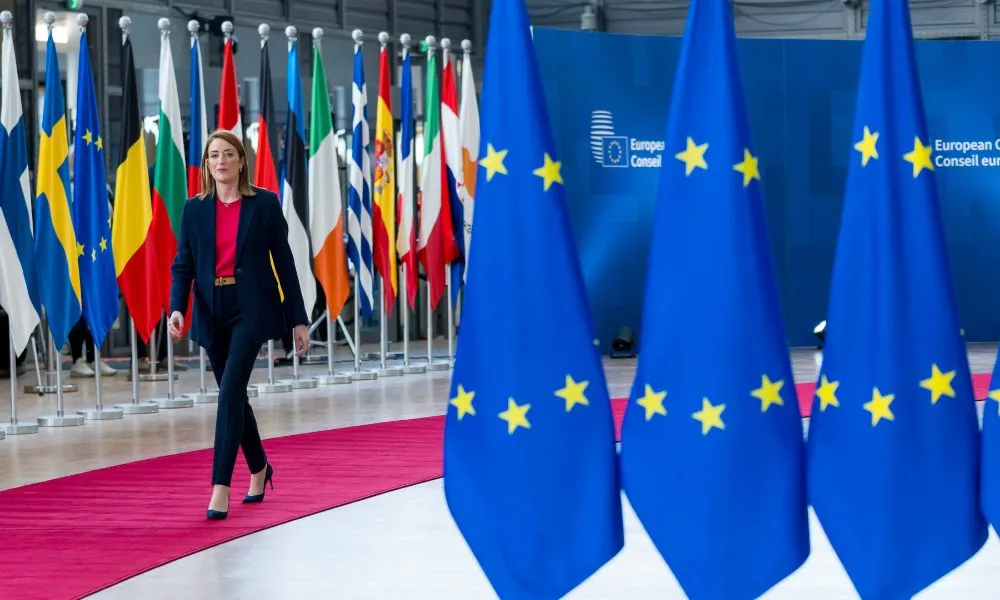
On the official launch of Cyprus’ Presidency of the Council of the EU, the President of the European Parliament, Roberta Metsola, speaks to Politis, sending clear messages on the major geopolitical challenges facing Europe, as well as the key issues affecting Cyprus and the European Parliament’s response to them. She acknowledges that the Cypriot Presidency comes at a pivotal moment for Europe, with expectations rightly running high.
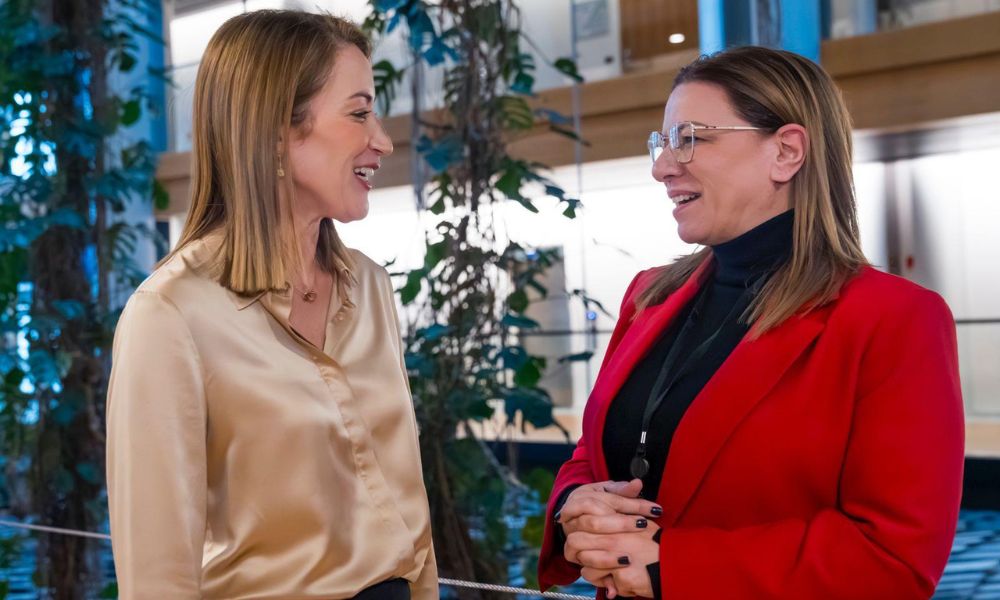
She explains the handling of migration and responds to the pressing question of whether Europe is becoming an extension of NATO. Asked about the younger generation, Ms Metsola answers as a mother, setting out how Europe becomes tangible in citizens’ everyday lives. She is also invited to assess the role and influence of Cypriot Members of the European Parliament.
Cyprus takes over the Presidency of the Council of the EU. What do you see as the most pressing challenges for Europe, and what does this mean in practice for Cyprus?
This Presidency comes at a pivotal moment for Europe, and expectations are, rightly, high. I know that Cyprus is fully prepared to assume this responsibility. I have had several meetings with President Christodoulides and his government, and the serious preparation and clear focus on priorities are evident. Cyprus brings valuable experience to the European table and is well placed to help steer the Union on critical issues: from supporting Ukraine and promoting stability in the Middle East, to managing migration, strengthening energy resilience and boosting Europe’s competitiveness.
This Presidency is also particularly significant for Cyprus itself, as it keeps European attention firmly focused on reunification, within the broader framework of our commitment to peace and stability.
How can the Cypriot Presidency strengthen EU cohesion and effectiveness at a time of multiple geopolitical, economic and social crises?
It is true that we are facing unprecedented challenges. It is equally true that we have always been stronger when we act together. Cyprus has spent more than two decades contributing to the building of this unity, and I know that President Christodoulides is ready to assume the role of coordinator of European solutions to our shared problems.
Frontline states often experience challenges earlier and more intensely. The Cypriot Presidency can draw on this experience to reinforce cohesion by focusing on what unites member states: security, stability and tangible results for citizens.
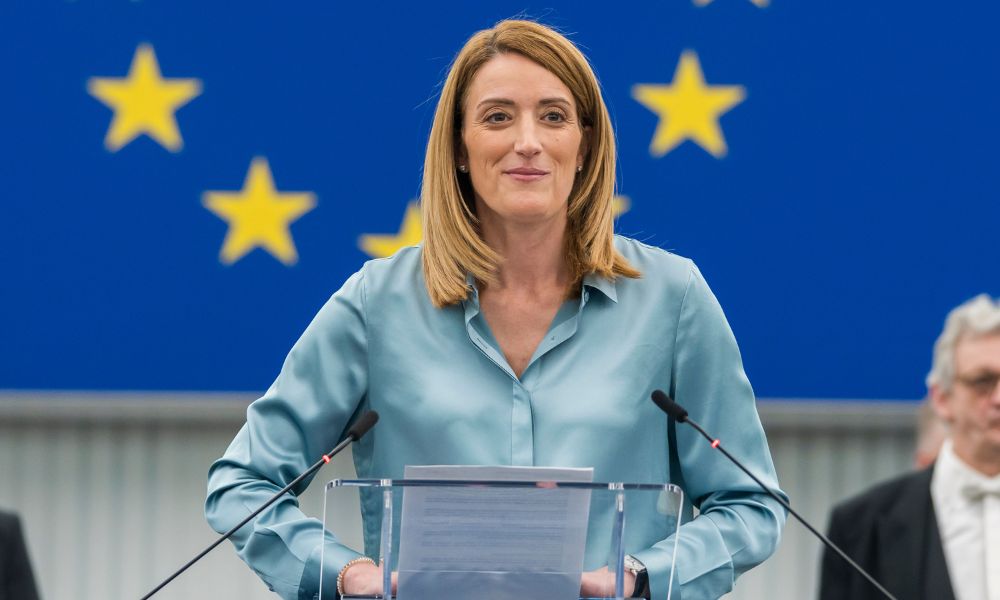
In practical terms, this means guiding the implementation of the Pact on Migration and Asylum, completing the creation of a common European returns system, advancing negotiations on the EU’s long-term budget and strengthening the European competitiveness agenda.
Cyprus faces significant migratory pressure relative to its size and capacity. Can the new Pact on Migration and Asylum bring real improvement on the ground?
Migration is a shared European challenge and cannot be left solely to frontline countries such as Cyprus. That is why the Pact on Migration and Asylum has the potential to make a real difference, introducing solidarity, responsibility and clarity through a more coordinated European approach.
As one of the four member states officially recognised as being under migratory pressure, Cyprus will also be able to draw on the newly established solidarity pool, receiving support from other member states through relocations, financial assistance and operational support.
This is important progress, but we are not stopping there. Last month, agreement was reached between the European Parliament and the Council on a common list of safe countries of origin and revised rules on the application of the safe third country concept. This will make the European asylum system more effective and more harmonised, speeding up procedures, strengthening borders and easing pressure on exposed member states such as Cyprus.
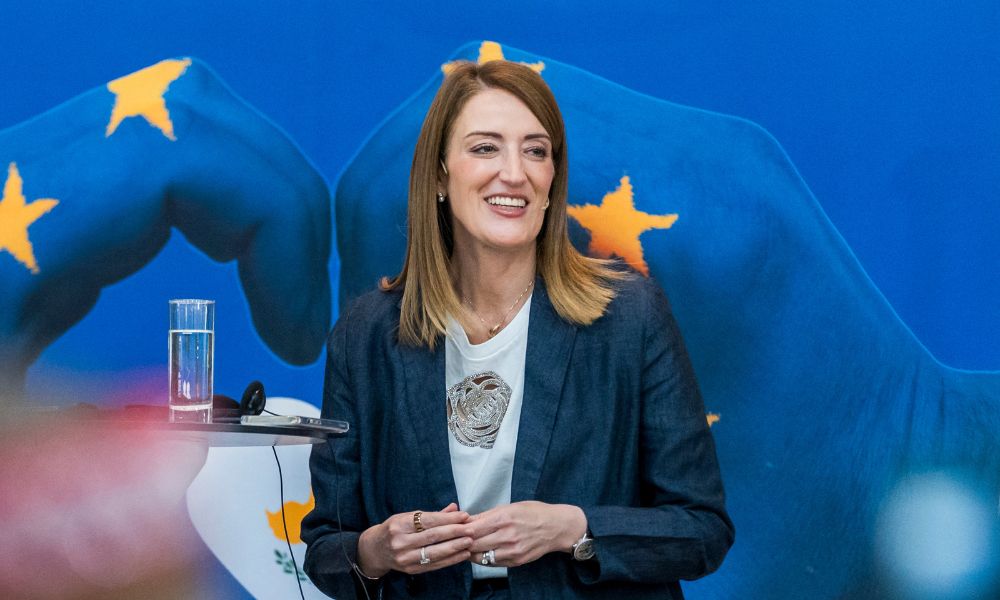
The European Parliament is also ready to work closely with the Cypriot Presidency to finalise the Returns Regulation, something I am confident we can achieve together.
Can the European Parliament play a decisive role in building trust in efforts towards a comprehensive solution to the Cyprus Problem?
In many cases, it already does. The European Parliament has been clear and consistent in its support for a united Cyprus, in line with United Nations resolutions and European law. This commitment is reflected in practice: from keeping the Cyprus issue high on the European agenda, to appointing a Permanent Rapporteur on missing persons and supporting UN-led efforts.
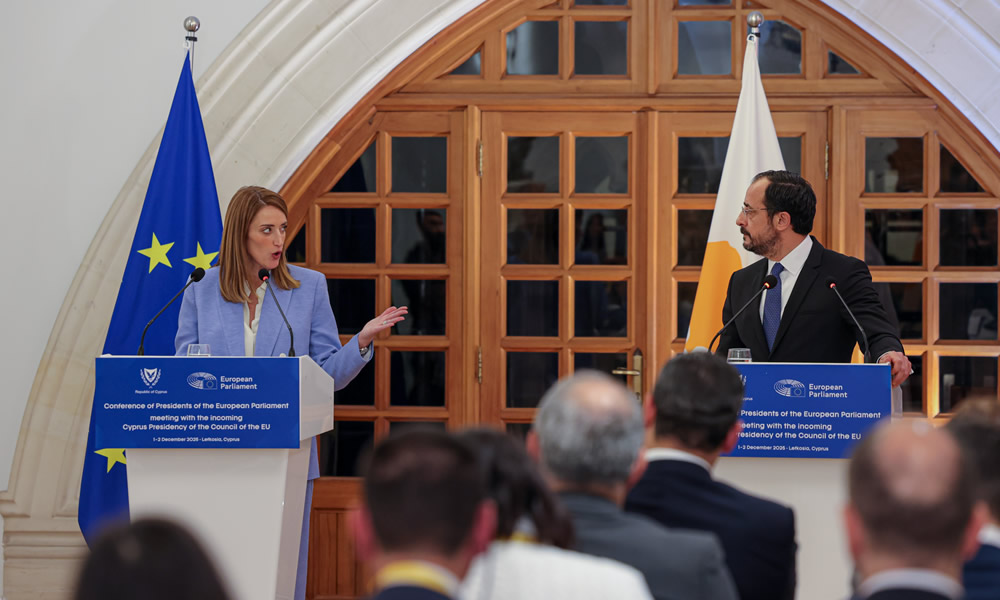
This is not a responsibility that rests solely with Cyprus. It is a European responsibility. There is a renewed sense that progress is possible. By providing political support, strengthening confidence-building measures and maintaining sustained European attention, the Parliament contributes to creating conditions of trust and reconciliation. We will continue to work for reunification on the basis of a bi-zonal, bi-communal federation, as a stable partner for a comprehensive and sustainable solution.
How do you respond to concerns that the EU is gradually becoming an extension of NATO rather than an autonomous geopolitical actor?
I do not agree with that characterisation, and I believe it does not reflect Europe’s real strength. The European Union is, and remains, an autonomous geopolitical actor. This is evident in our actions every day: from supporting Ukraine and strengthening our own defence capabilities, to President Christodoulides’ leading initiative to establish the Amalthea maritime humanitarian corridor, through which more than 27,000 tonnes of aid have been delivered to Gaza. These are European choices, based on European interests and values.
As for NATO, this is about Europe taking greater responsibility for its own security and strengthening our capabilities, resilience and readiness. By reinforcing the European pillar within NATO, we ensure that the EU and NATO operate in a complementary rather than competitive way. The more Europe contributes, the stronger a partner it becomes.
At a time when citizens’ trust in institutions varies significantly across Europe, how can the EU remain visible, relevant and useful in everyday life, even in small states like Cyprus?
It comes down to two words: results and connection.
First, results. Citizens trust the European Union when they see and feel what it delivers in their daily lives. Most people do not follow institutional debates, but they do notice when their consumer rights are protected, when they can travel freely, when more jobs are created, or when European funding improves infrastructure and supports local businesses. That is where trust is built.
Second, connection. To reach citizens, we need to listen better. In Cyprus, the priorities are clear: cost of living, affordable housing and security. The European Parliament has responded by promoting more renewable energy to reduce costs, creating a Special Committee on Affordable Housing and strengthening our work on defence and security. When Europe addresses the issues that matter most to citizens, it proves its relevance.
How do you assess the presence and work of Cypriot MEPs? Do they have real influence in key legislative and policy debates?
It is true that when you come from an island member state such as Cyprus or Malta, questions are often raised about how much influence you can have. Yet in every parliamentary term, we prove the opposite. In the European Parliament, influence does not depend on size, but on how effectively you use your voice.
I see Cypriot MEPs exercising substantial influence: from elevating health, social policy and housing issues at European level, to interventions on competitiveness and energy diversification, including reducing our dependence on Russian natural gas. These are issues at the heart of European priorities: cost of living, energy security, migration and regional stability. They show that every voice in Europe counts.
Finally, why does the European project matter to a 16-year-old today, and how can the EU inspire young Europeans growing up in an era of uncertainty?
It is something I think about very often, especially as a mother. When I look at my children and the questions they ask about the future, I ask myself what kind of Europe we are building for them. Many young people today grow up with uncertainty about security, the cost of living and even democracy itself. That is precisely why the European project matters more than ever.
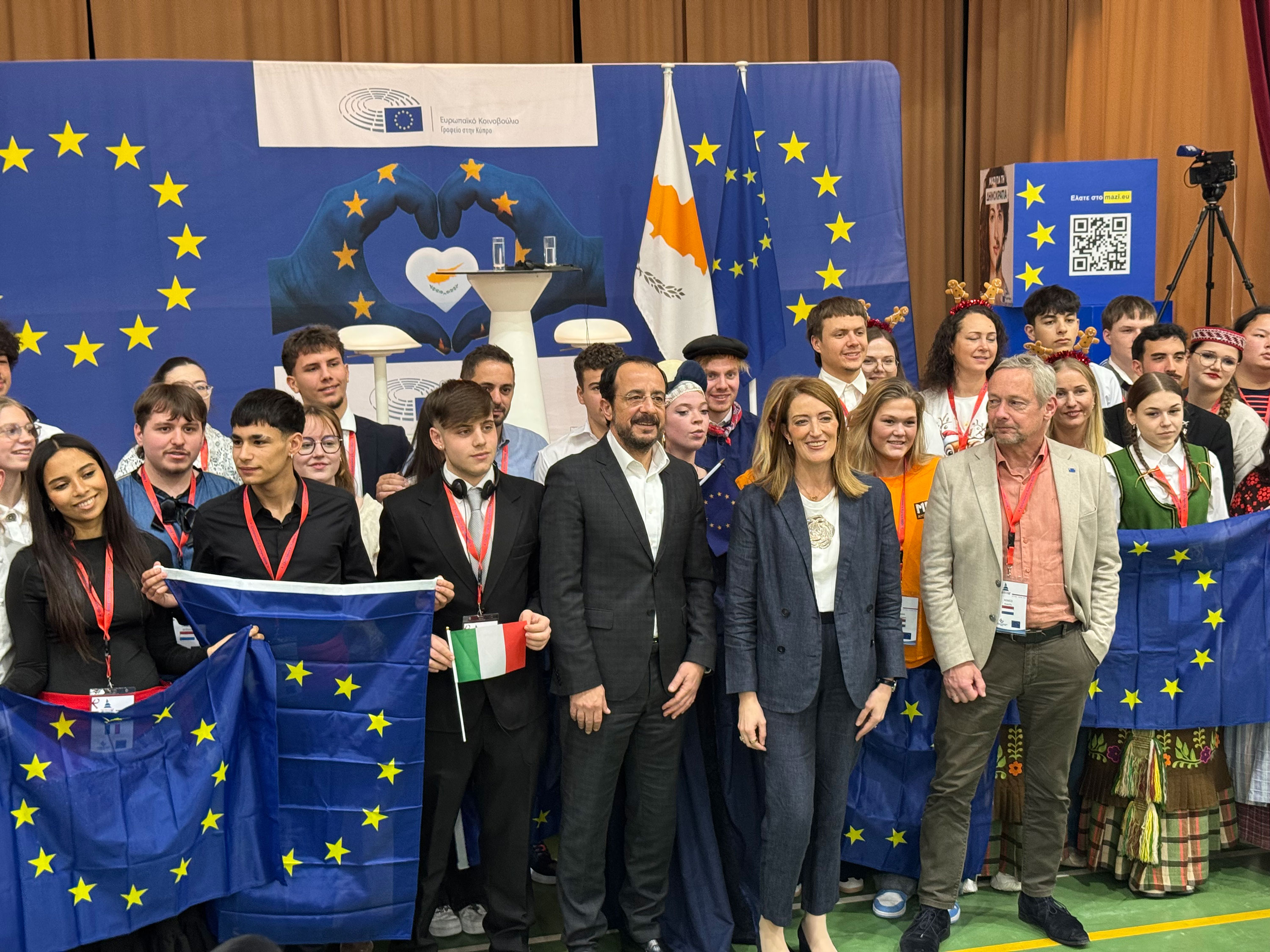
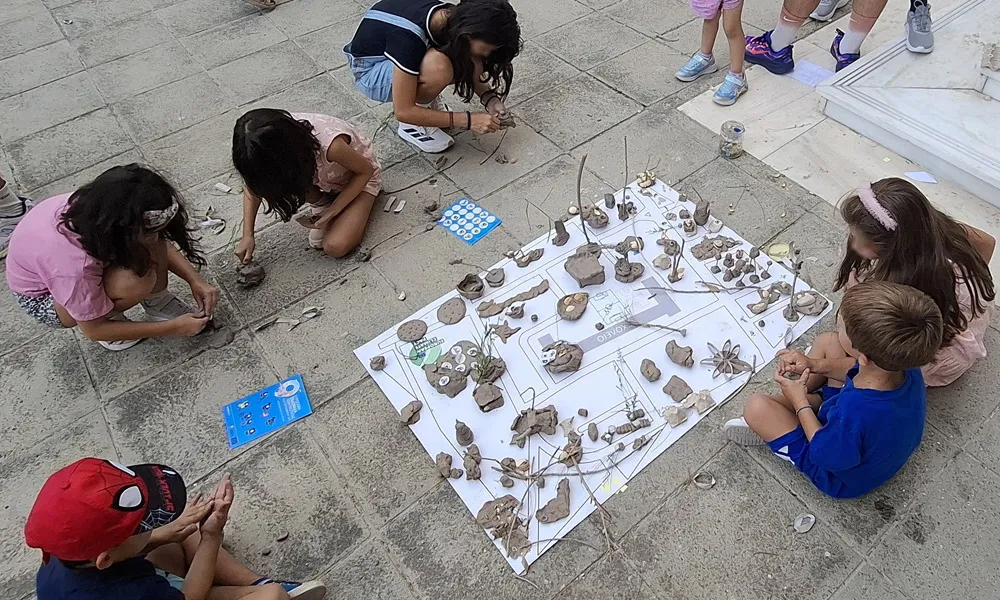
For a 16-year-old, Europe needs to feel close and meaningful. That is why I make a point of being frequently outside Brussels and Strasbourg and visiting member states, including Cyprus. Recently, I spoke with students in Larnaca, and what struck me was their energy, ideas and hope. Young people want European decisions to connect with their real lives and the issues that concern them. The European Parliament is responding with action. And I firmly believe that if we continue to listen and deliver results, Europe can continue to inspire the next generation.