Approximately 1,300 sheep and goats had been culled by Tuesday evening in infected units in Aradippou and Livadia, with a further 2,700 expected to be put down by Wednesday. Authorities confirmed that, to date, no additional cases have been detected beyond the 22 livestock units in Larnaca district.
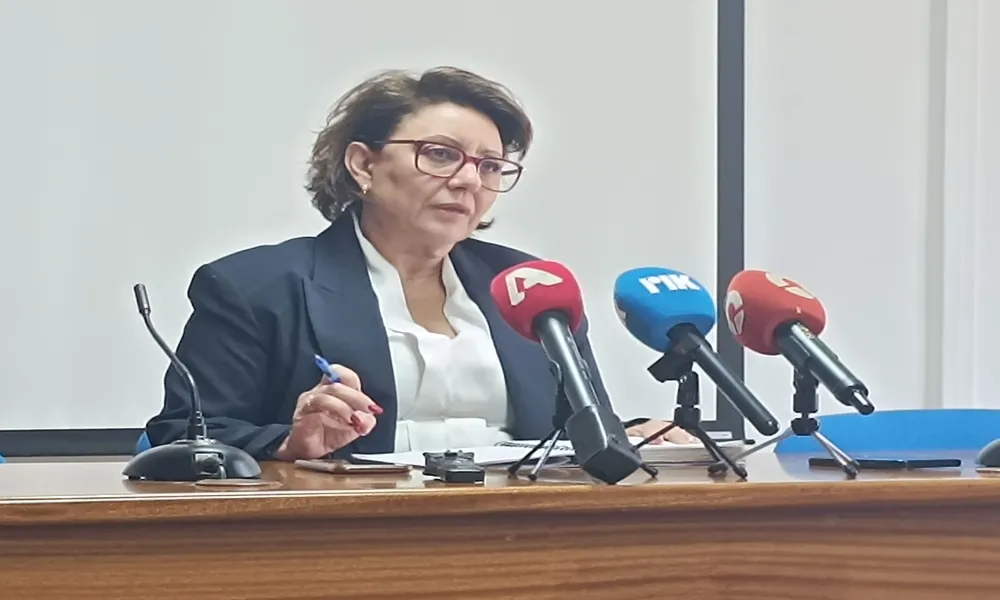
Speaking at a press conference at the Veterinary Services in Nicosia, the press spokesperson of the Veterinary Services and Senior Veterinary Officer, Sotiria Georgiadou, said the situation remains stable. Epidemiological investigations, sampling and laboratory testing are ongoing, with results so far negative.
Culling and vaccination process
Ms Georgiadou stated that vaccinations of sheep and goats are progressing through private veterinarians, who had received an additional 26,000 vaccine doses by Tuesday evening to cover 42 livestock units within the infected zone.
At the same time, simultaneous culling operations are under way in Aradippou and Livadia. She confirmed that around 1,300 animals had already been culled in those areas, with another 2,700 expected to follow by Wednesday.
Authorities are also assessing the market value of animals, hay and feed, as well as destroying and recording milk from infected units. These procedures form the basis for compensation to affected livestock farmers.
Investigations and legal framework
Referring to investigations into the conditions under which foot-and-mouth disease emerged in the free areas of the Republic of Cyprus, Ms Georgiadou said that any information that comes to the attention of the Veterinary Services is submitted to the Police. Statements are continuing to be taken and, once the investigation is completed, any criminal liability that may arise will be addressed accordingly.
She underlined that daily biosecurity, cleaning and protection measures are being implemented in infected units. Specialised teams are conducting epidemiological investigations and collecting samples both in the wider outbreak area and in other regions of Cyprus.
Responding to questions, she noted that repeat samples of pathological material may be taken for archiving and research purposes. She emphasised that the Veterinary Services laboratory is accredited, subject to daily checks and in direct communication with the national reference laboratory. It undergoes annual assessments for the diseases it examines and issues results verified through inter-laboratory testing.
“If we were deemed incapable or issued an incorrect result, the European Commission would be immediately notified and our licence to issue results would be suspended. The fact that we continue to operate means that we have consistently met the required standards,” she said.
No new cases reported
Ms Georgiadou reiterated that no cases have been identified beyond the 22 livestock units in Larnaca district. She urged that any suspicions of potential infection be reported, noting that authorities investigate and trace both animals and reported concerns.
Regarding the culling procedure, she clarified that it is mandated by legislation on animal health and specifically by the legislation governing foot-and-mouth disease. “It is not a matter of approval by affected farmers. Culling is required under the law for animal health,” she said.
She explained that no animal or herd is culled without laboratory confirmation that the unit has been infected. However, animals that become infected after vaccination will also be culled.
Current situation and next steps
Ms Georgiadou stated that the outbreak remains contained within the infected zone between three and 10 kilometres and expressed hope that it will remain confined there.
She described the situation as a state of emergency, warning that wider spread across Cyprus would result in significant losses for livestock farmers and producers.
In response to a question on a possible reassessment of the vaccination plan, she said that vaccination of all sheep and goats in the infected area is expected to be completed within the week. Once vaccinations are finalised, authorities will reassess whether sheep, goats and cattle in other areas of the island should be vaccinated in the same manner. A specific decision is expected in the coming days.
Source: CNA