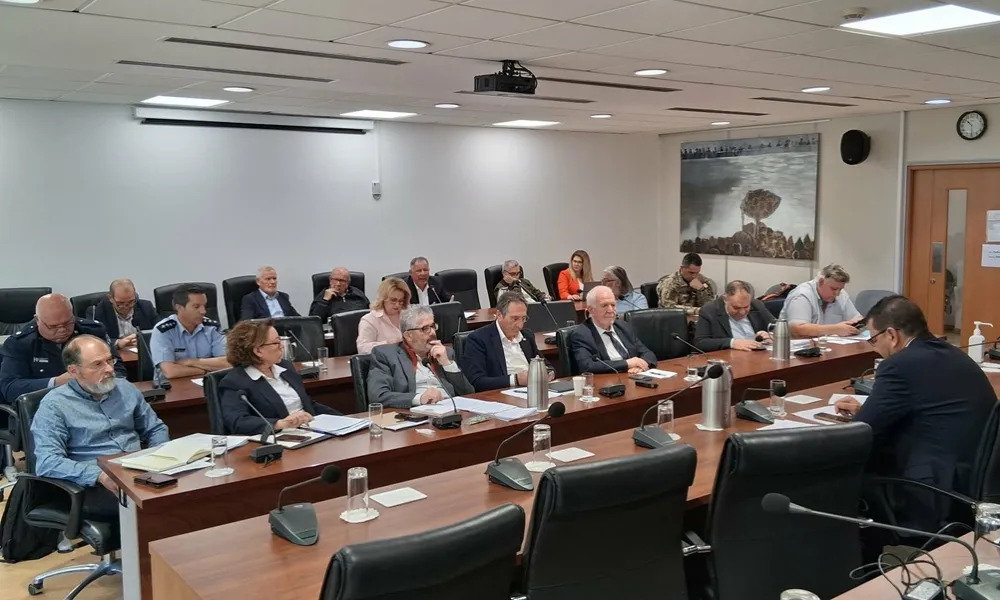


The Parliamentary Agriculture Committee held an emergency session on Thursday to examine the worsening foot-and-mouth disease outbreak, with MPs and agricultural organisations directing sharp criticism at the government's handling of a crisis that has spread significantly further than initially anticipated. The Director General of the Ministry of Agriculture, Andreas Gregoriou, acknowledged the gravity of the situation, telling the committee that "this crisis is unprecedented for Cyprus and the Ministry shares the concerns, as the virus has not yet completed its cycle." He added: "The front is very difficult. We have an invisible enemy facing us and we are not all facing each other," stressing that all parties are obliged to follow the protocols in order to save the livestock population.
Gregoriou confirmed that 104 infected units had been detected as of Wednesday, with a rising trend in new cases in recent days attributed to intensified sampling in the contaminated zones. The Ministry's stated intention is for farmers to receive compensation at the market value of their animals, a matter currently before the Compensation Advisory Committee.
Parliament's concerns
Committee chairman Giannakis Gavriil opened the session with pointed criticism. "It is clear that we made mistakes in managing foot-and-mouth disease. We want to know results today, we want to know the immediate measures. We are hearing complaints from farmers, information to them is minimal, everyone is in uncertainty," he said, adding that the situation in the occupied north, where equivalent measures are not being applied, remained an unresolved threat. "Whatever we do with the cullings, we do not know when foot-and-mouth will reappear, given that in the occupied areas they are not implementing the same measures."
Disy MP Charalambos Pazaros said the party had warned from the outset that measures should have been taken when the first case appeared in the occupied north. Diko MP Christos Orfanidis warned that without application of the EU protocol in the north, the livestock population in the government-controlled areas faced eventual eradication regardless of what measures were taken in the south. Elam MP Linos Papagiannis questioned why, two months into the outbreak, the virus had not yet reached Paphos given the speed of spread described by the European Commissioner and Veterinary Services. Ecologist MP Charalambos Theopemptou raised the question of halloumi production, asking what strategy existed to replenish the livestock population and whether EU trade deals, including the Mercosur agreement that could bring halloumi from Argentina into the European market, had been factored in.
The North dimension
The issue of the north dominated much of the discussion. EKA Secretary General Panikos Hambas said agricultural organisations had received no response from European Commissioner for Animal Health Oliver Varhelyi regarding conditions in the north. "The EU gives €12 million a year to the occupied areas without any oversight, and there they apply a different philosophy to managing the virus," he said. "Whatever we do, it is clear this virus will stay. Our request is to seek an exemption from culling through the EU. In the past, exemptions were granted for pigs for other large countries." Hambas also said he had information that authorities in the north were actively supporting the goat and sheep farming sector, including through programmes linked to halloumi production.
PEK honorary president Michalis Lytras was more direct in his criticism, saying: "We lack decisiveness and responsibility. We all bear responsibility, because while we have known for years about the illegal trade with the occupied areas, we have kept silent about it." He called for more active intervention by both the Police and Veterinary Services, and said it would be a mistake if President Christodoulides did not raise the question of a culling exemption for Cyprus at today's informal EU summit. He also expressed concern that the independent farmers' protest at the Rizoelia roundabout, gathering participants from all districts, risked spreading the virus further in the absence of coordination with the agricultural organisations.
Gregoriou confirmed that the government had raised the issue of the occupied north at the level of the President of the Republic and at ministerial level with the European Commission, though he did not elaborate on the outcome of those approaches.