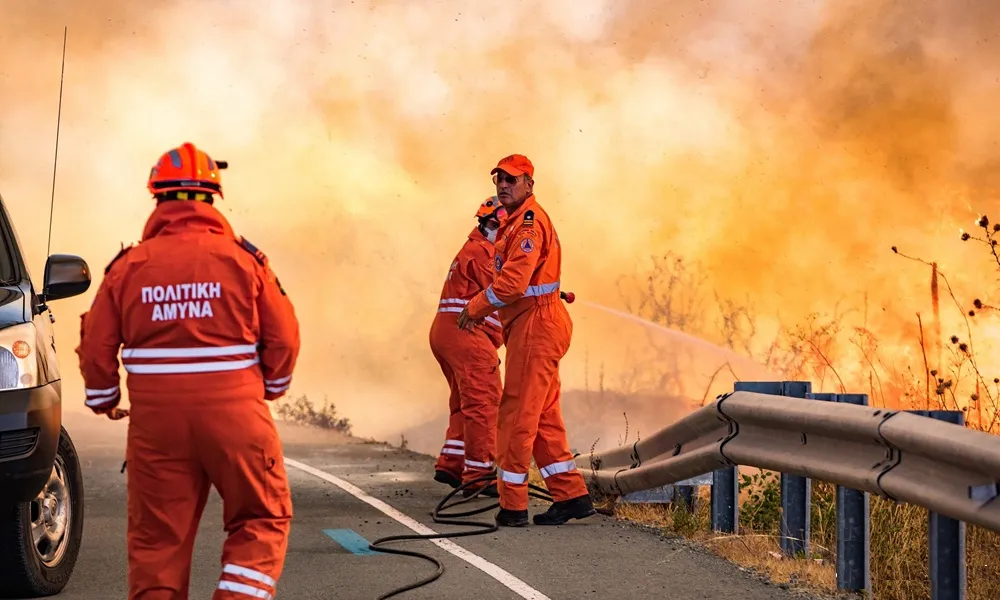
The start of the fire prevention season on 1 May finds Cyprus’ Civil Defence implementing a series of measures to strengthen community resilience, particularly in the evacuation of villages in the event of wildfires. Following serious shortcomings identified during last July’s major Limassol wildfire, authorities have updated the ‘Polyvios’ evacuation plan for communities across all districts. The revisions were completed in mid-April, while nationwide evacuation drills are being scheduled to put the updated protocol into practice.
“The aim of the on-site meetings held to revise the ‘Polyvios’ plan, as well as the evacuation drills planned in the coming period, is to ensure that local authorities are as well prepared as possible to respond effectively to potential wildfire incidents ahead of the fire season, and to strengthen coordination with the competent state services,” the Interior Ministry said in a statement.
Full update of the ‘Polyvios’ plan
To improve preparedness and coordination, the Civil Defence visited all communities across Cyprus in recent months. Working closely with community councils, officials revised the ‘Polyvios’ plan to reflect the specific characteristics of each area. The updates took into account local needs and procedures as identified by community representatives.
Evacuation drills in communities
Evacuation drills have been scheduled throughout May in communities in all districts, as part of the state’s broader strategy for prevention and effective emergency management. The goal is to improve operational coordination among relevant services, further strengthen cooperation with local authorities and familiarise residents with evacuation procedures.
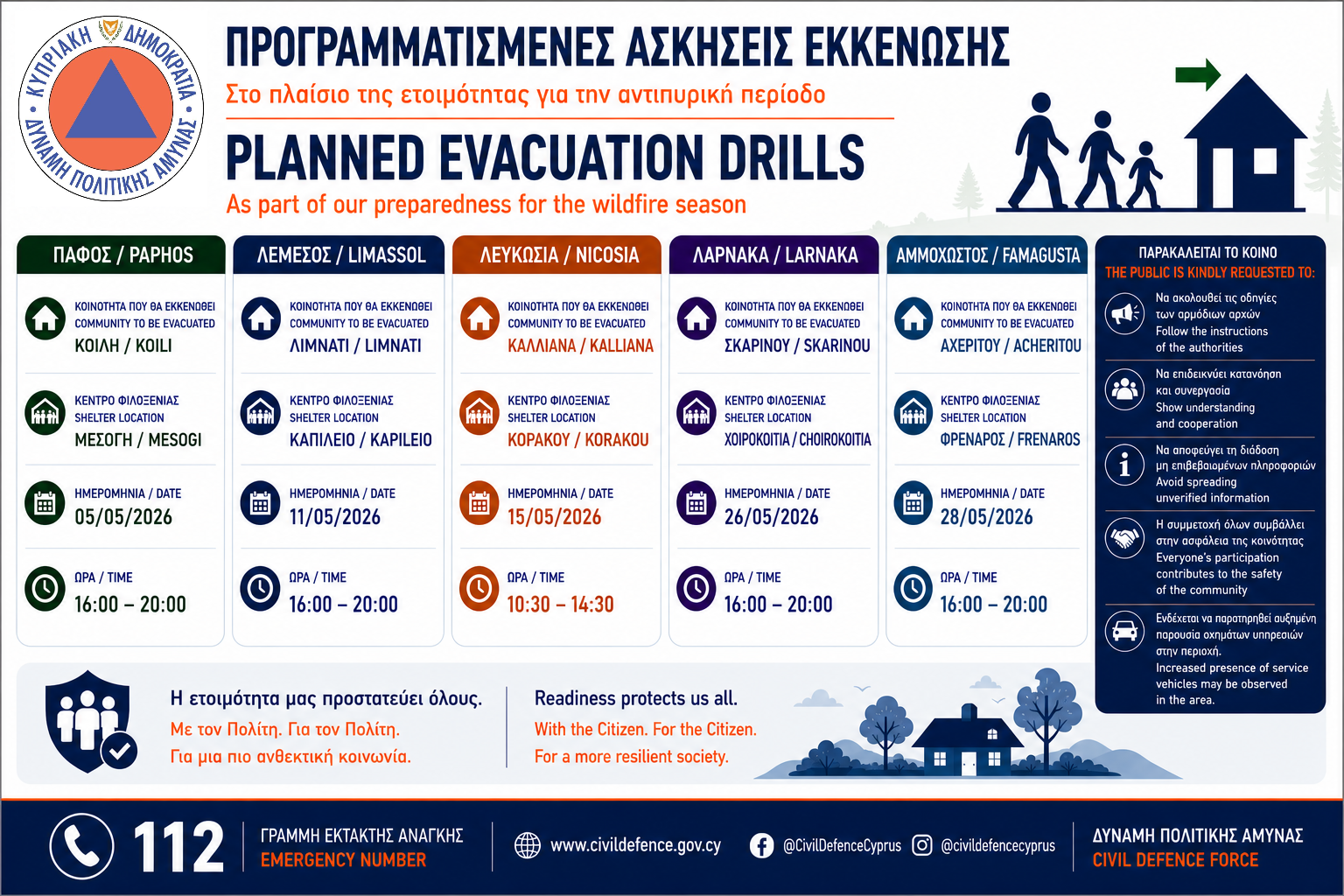
“The participation of citizens in these activities is critical for effectively managing emergencies and protecting human life, property and the natural environment,” the Interior Ministry said.
Early warning system still pending
As for the long-awaited early warning system, the Deputy Ministry of Research, Innovation and Digital Policy, which oversees its implementation together with Civil Defence, previously told Politis that the aim is for the system to be available to the public in the first week of June. After Civil Defence told parliament on 18 March that the system would initially operate on a “pilot” basis in June, the deputy ministry said it is expected to be “fully operational”.
However, a well-informed source told Politis that, based on the tender and the contract with the contractor, the system will initially operate in a pilot phase. This will not prevent its use in an emergency, the source said, while acknowledging that some issues may emerge during the initial phase and require immediate correction. What remains to be clarified is whether any problems will be resolved before a major wildfire, when communities would rely on the system for evacuations.
Temporary solutions
In the meantime, Civil Defence has put temporary measures in place. It has provided radio equipment to community clusters and to certain high-risk villages. Community leaders have been trained to use the radios, allowing Civil Defence to communicate more easily during wildfire emergencies. At the same time, some “community groups” have been created via CyTA to disseminate messages, while villages have been asked to set up Viber or WhatsApp groups so residents can receive Civil Defence instructions.
Vegetation clearing
District administrations have also launched tenders and started clearing dry grass and wild vegetation, which has increased due to this year’s heavy rainfall. The aim is to complete the work by the end of May. This year, the Interior Ministry has allocated additional funds to community service clusters to clear abandoned agricultural land within a radius of about 200 metres around villages.
Asked in parliament on 18 March what would happen if local authorities failed to carry out the clearances, an Interior Ministry representative said district administrations would “pursue” the community clusters to implement the decisions and absorb the available funds.
‘Crash test’
The level of readiness of the Interior Ministry’s services, and how they perform during wildfires in the coming months, will act as a “crash test” before the ministry formally assumes the role of the Interior and Civil Protection Ministry. Once the relevant bills pass through parliament, it is set to bring key crisis-management services, including the Fire Service, Civil Defence and the Forestry Department, under a single umbrella.