The government has announced a sweeping overhaul of the country’s civil protection structure, transferring the Fire Service and forest firefighting responsibilities to the already overstretched Ministry of Interior, which will be renamed the Ministry of Interior and Civil Protection.
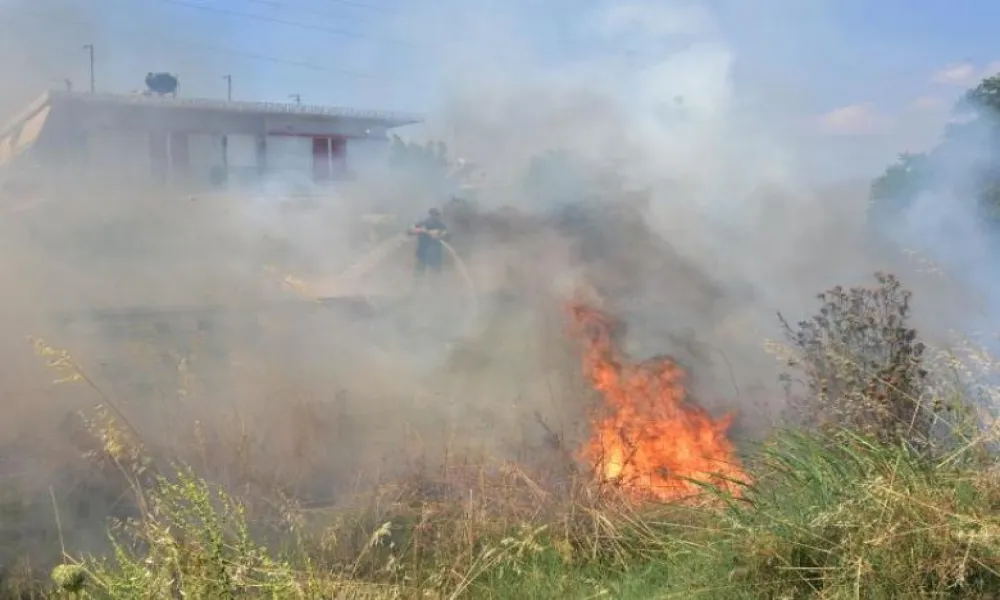
The move — presented as a long-overdue response to coordination failures highlighted during the recent deadly wildfire in Limassol — will see the creation of a National Civil Protection Mechanism, centralising services previously split between multiple ministries.
However, the plan has already drawn scrutiny, raising questions about feasibility, chain of command, and political accountability.
President takes the lead — but are ministers being quietly reprimanded?
The decision, announced by President Nikos Christodoulides himself during a sensitive political moment, is being interpreted by some as a subtle admission of political responsibility — and an indirect rebuke of the Ministers of Justice and Agriculture, who will now be stripped of key firefighting duties following widely criticised failures in recent emergencies.
Observers are also questioning whether the move is an attempt to sidestep public pressure for dismissals, presenting a structural solution in place of personnel changes.
What changes now?
Under the new plan:
-
The Fire Service will be moved from the Ministry of Justice, and forest firefighting responsibilities from the Ministry of Agriculture.
-
These will be integrated with the Civil Defence Service under the Ministry of Interior and Civil Protection.
-
A National Coordinator will be appointed — notably, not a civil servant — to oversee the operation of these combined services.
-
Administratively, all services will fall under the permanent secretary of the Interior Ministry, although the creation of a second secretary position is also being considered.
The new mechanism will also involve:
-
Updates to national and operational plans for natural disasters.
-
Possible legislative changes, including amendments to the Fire Service Law.
-
Budget reallocations expected in a supplementary budget proposal due in October or November.
Concerns and unanswered questions
The government’s rejection of proposals to create a dedicated Deputy Ministry for Civil Protection has raised eyebrows — particularly as the Interior Ministry had only recently been relieved of responsibilities through the creation of the Deputy Ministry of Migration.
Critics fear the ministry may now become overwhelmed again.
Additional concerns include:
-
The removal of trained forest firefighters from the Forestry Department, potentially disrupting established practices and institutional culture.
-
The need for secondments from other services, including meteorologists and police officers, to support the new civil protection structure.
These operational questions remain open and will be addressed in the coming weeks through consultations between the Presidency and the relevant ministries.
Accountability gap?
A critical issue is who will bear political responsibility in future disasters.
Former Fire Service Chief Markos Trangolas, speaking at a recent parliamentary session on the Limassol wildfire, warned that responsibility has been historically diluted due to fragmented authority across ministries.
Now, with a new centralised structure and a non-civil servant as National Coordinator, it is unclear whether accountability will lie with the Coordinator or the Interior Minister.
Coordinator to replace agriculture ministry role
According to Presidential Deputy Minister Eirini Piki, the National Coordinator will assume the responsibilities currently held by the permanent secretary of the Ministry of Agriculture, Andreas Grigoriou — though no immediate changes will be made to his role.
She confirmed that the Coordinator role will be included in the 2025 supplementary budget, and stressed there is no current plan to create a Deputy Ministry for Civil Protection.
No change for police, but more secondments expected
Responding to questions, Piki clarified that the Police will not be transferred from the Ministry of Justice, but its role in national and operational disaster plans may be expanded.
Other agencies — such as the Meteorological Department — may also be involved through memoranda of cooperation or secondments, depending on the evolving structure of the new mechanism.
Piki stated: “These decisions will be taken jointly with the competent ministers in the coming weeks, as we work towards implementing the President’s policy decision.”
Will the ministry cope?
Asked about the risk of overburdening the Interior Ministry, Piki dismissed concerns: “There are other ministries just as large and with just as many responsibilities.”
She acknowledged, however, that the reform would take time, as it requires legislative amendments, budget approvals, and organisational restructuring.
“We will work intensively to implement the decision as quickly as possible,” she added.