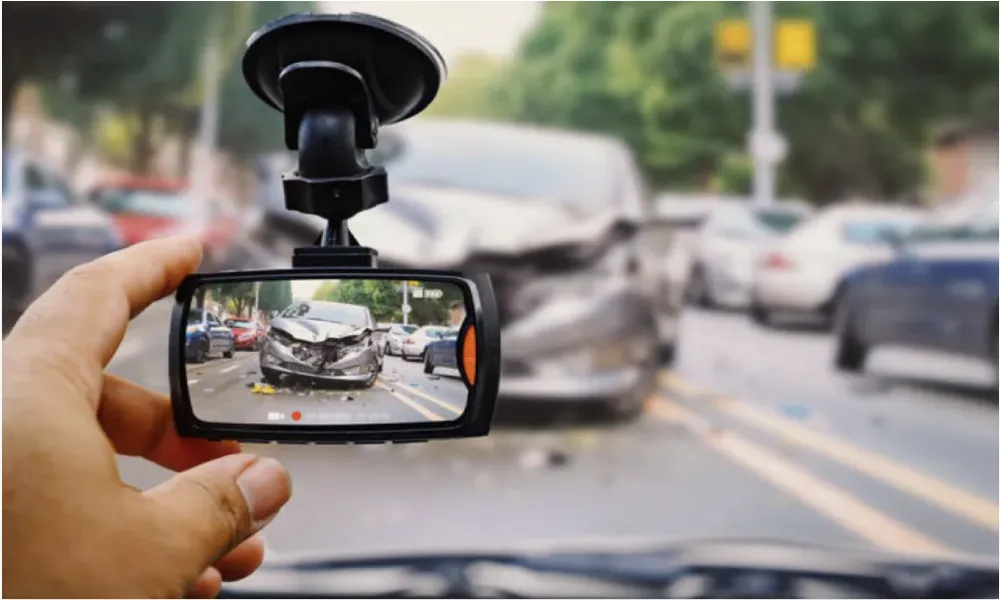
Despite earlier discussions, Cyprus still has no legislation governing the use of in-vehicle video recording devices. A new bill tabled by Stavros Papadouris on behalf of the Greens aims to change that by formally regulating dash cams.
According to the bill’s sponsor, the proposed legislation is necessary to ensure that both the installation of such devices in motor vehicles and the use of the recorded footage comply fully with EU Regulation 2016/679 (the General Data Protection Regulation) and the corresponding national law on personal data protection.
The explanatory report notes that the regulation would grant individuals the right to install and operate image- and audio-recording devices in their vehicles, while safeguarding personal data.
The proposal seeks to bring order to an area currently operating without any legal framework, even as dash cams become increasingly popular among drivers. Their widespread use has highlighted their value in protecting drivers, recording traffic offences and accidents, and supporting police and insurance investigations.
The report states that the aim is to “strike a balance between the need to enhance road safety and the protection of privacy, through the creation of a transparent and functional legal framework.”
Main Provisions
Under the draft law, the installation and use of image- or audio-recording devices would be permitted in private vehicles as well as private or public-use vehicles employed for professional purposes. Their use would be allowed for:
• personal protection in the event of an accident,
• documenting violations of the Highway Code,
• recording accidents or criminal acts,
• providing evidence to the authorities in the investigation of traffic offences or incidents, and
• monitoring fleets of commercial vehicles.
The bill stipulates that the operation of such devices, and any audiovisual material produced, must comply strictly with GDPR and national data-protection provisions. Breaches could result in administrative fines or criminal penalties.
The proposal also allows the police and insurance companies to collect and use dash-cam footage when investigating traffic offences, accidents or criminal activity. However, it prohibits the public reproduction or sharing of recordings that include identifiable individuals without their consent — or, in the case of minors, without the consent of parents or guardians, or prior approval from the competent authority.
What are dash cams?
Dash cams are devices installed in vehicles to record the exterior surroundings or the vehicle cabin. They are typically mounted on the dashboard, windscreen or rear-view mirror and may contain multiple cameras operating simultaneously. Technologically, they function like standard cameras but are adapted for continuous use in a moving vehicle.
A similar function is served by helmet cameras used by motorcyclists and cyclists. In all cases, the main purpose of a dash cam is to collect evidence in the event of an incident involving the vehicle — whether on the road or while parked.