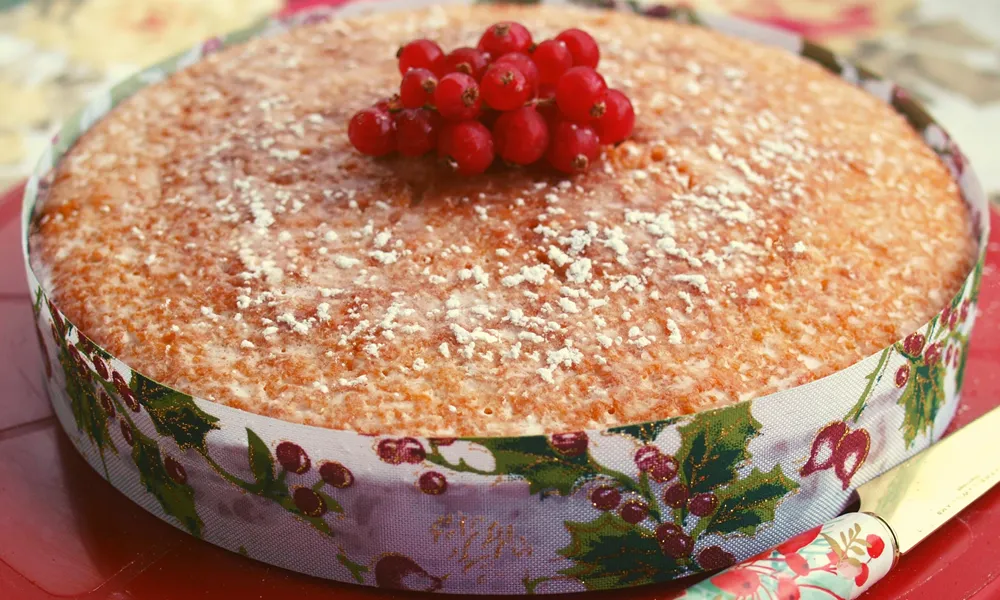
Hundreds of thousands of vasilopita cakes are expected to be sold and cut across Cyprus during the festive period, according to estimates from major bakeries and retail chains. While the exact number is difficult to calculate, market figures indicate that annual production far exceeds tens of thousands, reaching into the hundreds of thousands nationwide.
A central place on the New Year’s table
Among the many dishes that make up the Cypriot New Year’s table, vasilopita holds a special place. The tradition, largely unchanged in spirit, marks the family gathering and the symbolic transition into the new year.
Although recipes and habits have evolved over time, vasilopita continues to function as a symbol of blessing and good fortune. It is not merely a dessert but a ritual with clear social and cultural significance.
The origins of the tradition
Vasilopita is historically linked to Saint Basil and the well-known narrative of bread distributed with hidden coins to the poor. This story, widely known in Greece, was absorbed into Cypriot folk tradition and adapted to local customs.
In Cyprus, the ritual became closely associated with the blessing of the home and collective prosperity for the year ahead.
A simpler cake by tradition
Unlike other regions where vasilopita evolved into a rich, brioche-style cake, Cyprus preserved a simpler version for decades. Traditionally, it is made with basic ingredients such as flour, oil and sugar, lightly scented, resembling sweet bread rather than elaborate pastry.
In rural communities, the dough was often prepared using flour from the year’s harvest, reflecting the belief that the blessing would carry into the new agricultural cycle. The kneading was done quietly and carefully, reinforcing the ritual character of the process.
Flouri and its meaning
At the heart of the tradition lies flouri. In Cypriot custom, flouri is not just a game of chance but a symbol of protection, abundance and good fortune for the person who finds it.
The moment of cutting vasilopita still carries emotional weight, both within families and in wider social settings. Today, the tradition extends to schools, organisations and workplaces, where vasilopita often marks the first formal gathering of the year.
The ritual of cutting the cake
The cutting follows a symbolic order. The host or eldest family member first dedicates slices to Christ, Saint Basil and the household, followed by portions for each family member. In some areas, pieces are still set aside for absent relatives or even animals, echoing older beliefs linking blessing to survival and harvest.
“The purchase and consumption of vasilopita remains one of the most widespread traditions in Cyprus,” Consumer Association president Marios Droushiotis told Politis. “There is practically no Cypriot household that does not buy vasilopita and cut it during the customary family gathering for the New Year.”
He added that the custom extends well beyond family tables. “Clubs, organisations and associations place large orders every year for their cake-cutting events. These gatherings typically begin in early January and, in many cases, continue through to the end of February.”
Estimating the numbers
Although an exact figure is impossible to verify, indicative data provide a clear sense of scale. Politis spoke with five major retailers specialising in vasilopita sales, arriving at an estimate of around 200,000 cakes annually.
One large nationwide bakery chain reported that approximately 80,000 vasilopita cakes of various sizes are expected to be sold this year. Of these, around 15,000 are large-format cakes made to order for associations and organised groups. A second major bakery, operating mainly in Limassol and Paphos, reported sales of roughly 30,000 units.
Taken together, these figures suggest that total nationwide sales from bakeries and supermarkets comfortably exceed this number, reaching several hundred thousand vasilopita cakes each year.