A clear divergence of views has emerged between the state and local authorities over why the Pay As You Throw scheme will not be implemented universally in 2026, despite earlier commitments. Although initial planning foresaw full application for all waste streams except organics, the scheme will now begin only with large waste producers.
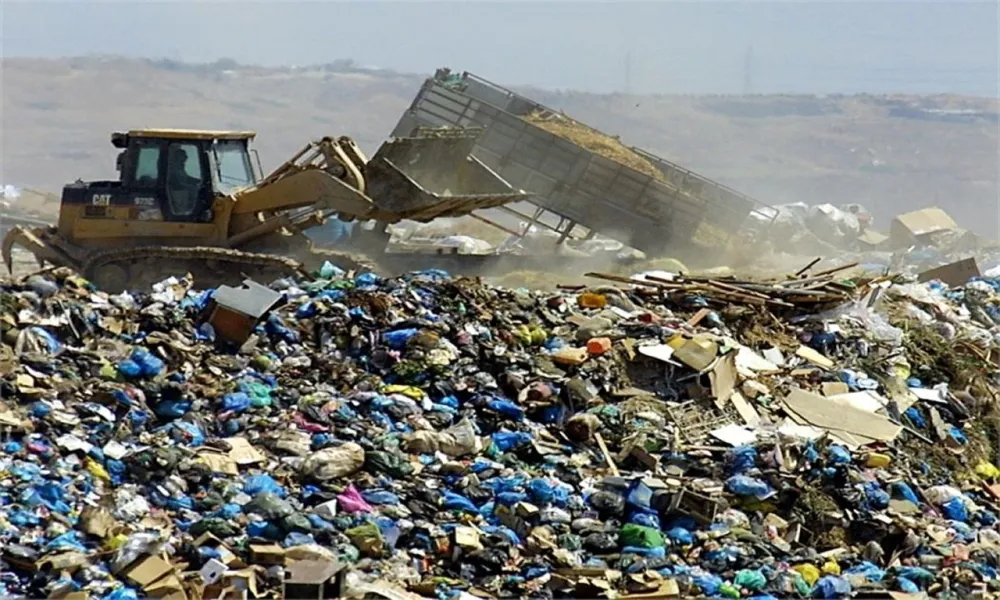
What is evident is that neither side is assuming responsibility for yet another delay to legislation that, under Cyprus’ European obligations, should have been implemented as early as July 2024. That date was followed by announcements pointing first to early 2025 and then to 2026. Yet uncertainty persists, even as illegal dumping continues unabated, wildfires frequently break out in rural areas, and large volumes of waste are repeatedly buried at the Pentakomo and Kosi Waste Management Facilities, as well as at the Paphos landfill.
Two contrasting narratives
The Environment Department maintains that municipalities could begin implementation in 2026. “There is nothing pending that would justify saying the state is to blame,” senior officer Ioanna Konstantinidou, who is responsible for Pay As You Throw at the department, told Politis. She addressed point by point the concerns raised by the Union of Municipalities in a letter sent on September 29 to the Department of Environment’s Director-General.
On the other hand, Union of Municipalities president Andreas Vyras told Politis that local authorities have yet to receive clear answers on six key issues outlined in that letter. These include organic waste infrastructure and processing costs, funding for equipment and actions, joint procurement tenders, the hiring and funding of inspectors, green points, and the licensing of the collective packaging waste management system.
Vyras stressed that without official and concrete responses, municipalities cannot commit to implementation even in early 2027. “We cannot say when we will be ready if we do not have clear answers,” he said, noting that procurement processes for equipment such as prepaid bins could take up to two years before delivery.
Infrastructure readiness disputed
Addressing the issue of organic waste infrastructure, Konstantinidou insisted that the system is ready to begin. According to her, the Kosi Waste Management Facility and the private sector can absorb organic waste, based on a study completed in February 2025. Licensed units are available to accept organics, she said, as an interim solution until the planned upgrade of the Pentakomo facility and the construction of an organic waste unit in Paphos, which is currently at the feasibility study stage.
Additional facilities are planned for Famagusta and Nicosia districts, while the state also plans to install autonomous composters by the end of 2026 to cover Limassol and Paphos. Funding of €25 million is available through the ThALEIA cohesion policy programme, which runs until the end of 2027, she added.
Vyras rejected this assessment as unrealistic. He questioned the actual cost of organic waste processing and the identity of private operators in Limassol and Paphos who could bridge the gap. He also raised doubts about the adequacy of funding, noting that a preliminary costing exercise carried out by the Union of Municipalities placed total implementation costs between €80 million and €100 million.
Equipment procurement and funding
Konstantinidou said municipalities and community clusters were fully briefed during a working group meeting last September. Tender documents for equipment procurement have been prepared and submitted to the General Accounting Office. She stated that by January 2026, municipalities would be able to place orders for prepaid bins, prepaid bags, organic waste bins, biodegradable bags and household composters.
Inspectors, green points and packaging waste
On the issue of inspectors, she said the framework for recruitment was defined by the Ministry of Finance and communicated to municipalities and community clusters. Funding is available through the ThALEIA programme, and feasibility studies have determined the number of inspectors required per municipality based on population and other criteria.
Regarding green points, 29 are currently operating nationwide, including new facilities in Ayia Napa, Troulloi and Avdimou, as well as a recently upgraded site in Alambra. Plans call for 11 additional green points by 2028, with six to be completed in 2026. In the interim, the state plans to operate 20 temporary green points and 50 green kiosks in remote areas, some of which will be upgraded to small green points.
As for the licensing of the collective packaging waste system, Konstantinidou noted that Green Dot’s third licence expires in June 2026 and is currently under review. She said the matter has been discussed with both municipal and community representatives, who have participated in targeted meetings and submitted feedback.
Studies completed, action plans lagging
According to the Environment Department, all 20 municipalities have completed feasibility studies, and around half are currently drafting action plans. These plans define priorities, timelines and total costs required for implementation.
Among community clusters, eight out of 30 have yet to complete feasibility studies, while only a small number have begun preparing action plans. As a result, the timeline for full implementation of Pay As You Throw remains uncertain, with 2026 now limited to large producers and no firm commitment from municipalities even for 2027.