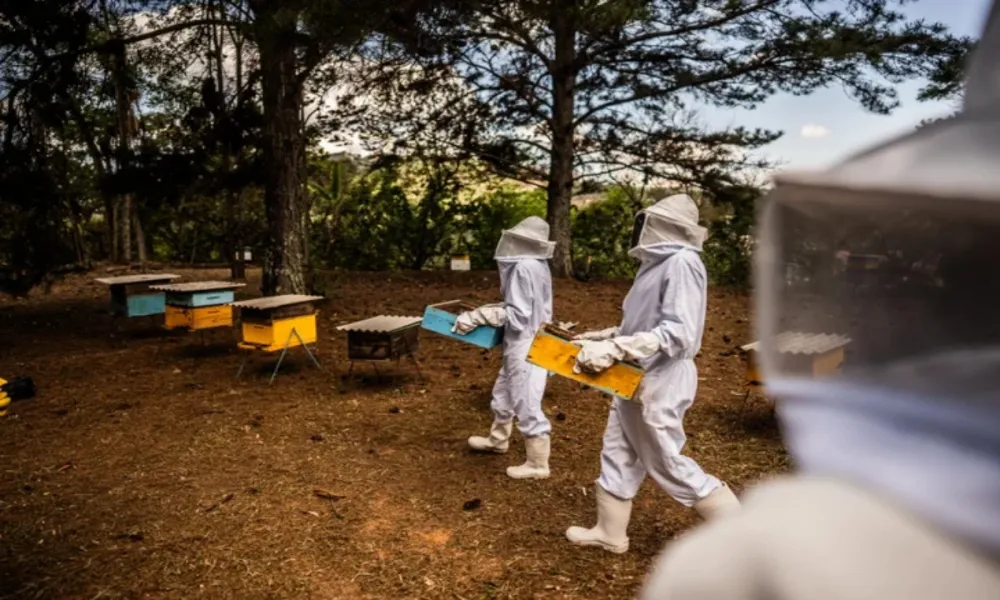

Honey production in Cyprus is under growing pressure as prolonged drought and rising temperatures take their toll on beekeeping. While the island has avoided the catastrophic colony losses seen elsewhere in Europe, production has fallen sharply, highlighting the vulnerability of a sector that plays a vital role in biodiversity, environmental balance and agricultural productivity.
Bees and biodiversity
The importance of bees goes far beyond the production of highly nutritious beekeeping products. Bees are essential to biodiversity, environmental stability and the productivity of other agricultural sectors. It is estimated that bees contribute to the pollination of 75% of plant species worldwide and to 80–90% of the production of many fruit bearing and large scale crops.
In a country increasingly affected by environmental pressures linked to climate change, the presence of healthy bee populations is considered critical.
Climate change pressures
Speaking to Politis, senior agriculture officer Lysandros Lysandridis described the pressures on bee populations as a complex global phenomenon. These pressures are mainly attributed to climate change, habitat loss due to urbanisation and wildfires, as well as the improper use of pesticides.
He noted that Bulgaria is estimated to have already lost up to 90% of its bee colonies, while the United States is expected to lose around 70% by 2025. In Cyprus, where dry and hot conditions have long been the norm, losses have not reached such levels. This, he explained, is largely due to the experience of Cypriot beekeepers in operating under such conditions and their costly efforts to restore colony numbers.
Nevertheless, the impact on production remains significant. In years with adverse conditions, average honey production per hive is estimated to be reduced by at least 30%.
Rising production costs
Asked about state measures to help beekeepers cope with climate change, Mr Lysandridis stressed the need for careful analysis so that support measures can be better targeted.
Higher temperatures combined with prolonged drought, urban expansion and wildfires have led to a dramatic reduction in both the area and diversity of wild vegetation, and consequently in the availability of pollen and nectar. At the same time, changes are observed in the biological cycle of bees themselves, affecting colony strength and weakening their immune systems. This makes bees more vulnerable to diseases and predators, whose populations have increased under current conditions.
Mr Lysandridis also pointed to intensified and longer lasting activity by predators such as wasps, swallows and, in particular, the protected migratory bird known as the bee eater. All these factors, he said, have contributed to a substantial increase in production costs.
Support measures
Acknowledging the impact of climate change on beekeeping, Mr Lysandridis referred to a range of national and EU supported measures aimed at strengthening the sector. These include:
- The Beekeeping Programme, with an annual budget of €340,000, co funded by the EU at 50%, supporting beekeepers in replacing old hives, purchasing specialised equipment, treating varroa disease, participating in training events, receiving expert advice and carrying out laboratory analyses of honey and wax quality.
- A Strategic Plan 2023–2027 action on the management of bee colonies to promote harmonious coexistence with insect eating birds, supporting beekeepers in maintaining or increasing their colonies.
- Measures under the Strategic Plan 2023–2027 to protect biodiversity, encouraging cereal producers to plant 8% of their cultivated land with bee friendly plants.
- Support for organic beekeeping.
- A national fuel subsidy scheme to reduce the cost of transporting hives to areas with stronger flowering.
- Additional emergency national or EU measures to help the sector cope with adverse weather conditions.
A younger generation of beekeepers
Asked about the future of the sector, Mr Lysandridis cited recent data showing that Cyprus’ self sufficiency in honey stands at around 45%, with the remainder covered by imports.
More than 25% of beekeepers are under the age of 40, compared with just 3% in other areas of agriculture and livestock farming, indicating strong interest among younger people in the sector.
He added that the high quality of Cypriot honey, linked to the island’s distinctive vegetation and dry hot climate, combined with the experience and passion of local beekeepers and targeted state support, are key reasons for cautious optimism.
Unfair competition
According to Mr Lysandridis, the most serious problem facing beekeeping in Cyprus is unfair competition from imported honey. He noted that the import price of honey from China, the EU’s largest source of imports, stands at €1.39 per kilo, while Cypriot honey sells at an average retail price of around €10 per kilo.
Due to this pressure, Cypriot beekeepers have not increased their prices for decades, despite rising production costs and additional expenses linked to climate change adaptation. This, he said, highlights the scale of the problem.
Adulteration concerns
In conclusion, Mr Lysandridis pointed to EU research completed in 2023 showing that 46% of imported honey samples breached EU legislation, with the most common violation being adulteration with sugar syrups.
He stressed that consumers must be informed about such cases so they can make informed choices about the honey they buy.