
Road safety remains a top priority during the winter months, as driving on snow and ice requires calm handling, increased attention and low speeds. Whether using snow chains or snow socks, drivers must be properly prepared and informed in order to move safely in difficult weather conditions.
During the winter season, snow chains and snow socks are essential and, in certain conditions, mandatory to carry in a vehicle. It is equally important, however, that drivers know when and how to fit them correctly.
Snow chains and snow socks
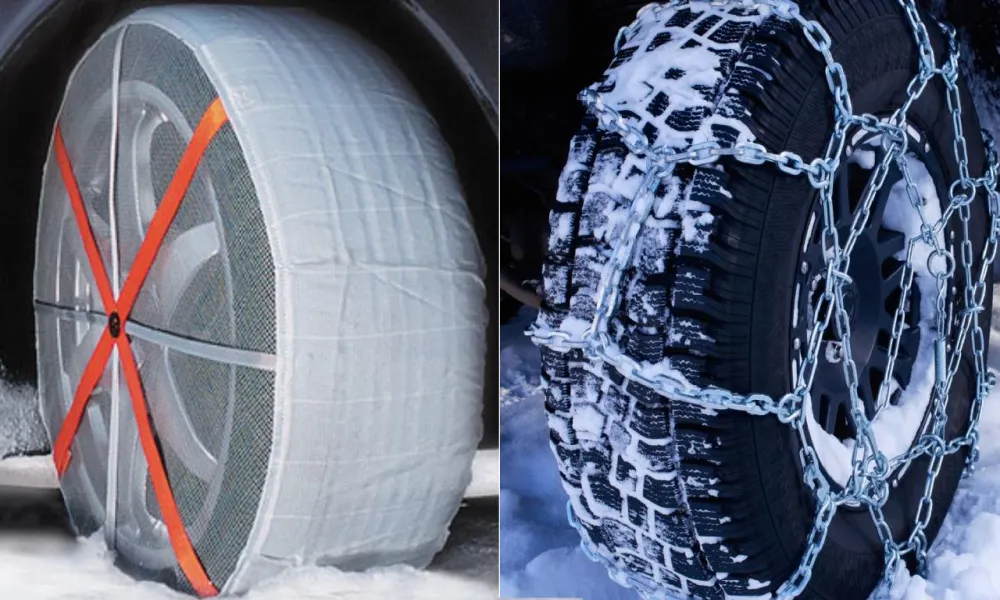
Snow socks are easier and quicker to fit and generally more user-friendly. Snow chains, on the other hand, are more durable and better suited to harsher conditions. Chains perform more effectively in deep snow, icy roads and mountainous routes, as they provide stronger contact with the road surface, greater durability and a longer lifespan, making them suitable for frequent use.
Their disadvantages include more complex installation, heavier storage requirements and the risk of damage to the wheel or vehicle if they are not fitted correctly.
Snow socks, by contrast, are designed for lighter snow conditions and shorter distances, particularly within urban areas. They are easy to install, allow for smoother driving, produce no noise, do not damage alloy wheels and are lightweight and easy to store. However, they offer less durability and grip compared to chains and must be removed immediately once the vehicle is no longer driving on soft snow.
Choosing the right option
For mountain destinations, unfamiliar routes and extreme weather conditions, snow chains are the preferred choice for maximum safety. For urban driving or mild winter conditions, snow socks are a practical and effective alternative.
Correct fit and use
Snow chains or snow socks must match the exact dimensions of the vehicle’s tyres. If the size is incorrect, proper grip cannot be achieved, compromising safety, and in many cases the equipment cannot be fitted at all. Drivers are strongly advised to carry out a trial installation in good conditions, before actually needing to use them on the road.
For vehicles with narrow wheel arches, chains with smaller and thinner links are required. SUVs and 4x4 vehicles, on the other hand, require reinforced chains designed for heavier use.
When driving with snow chains or snow socks, speed should not exceed 40 km/h. If a chain breaks while driving, it must be removed and replaced immediately, as continued use can cause serious damage to the vehicle.
Source: APE–MPE