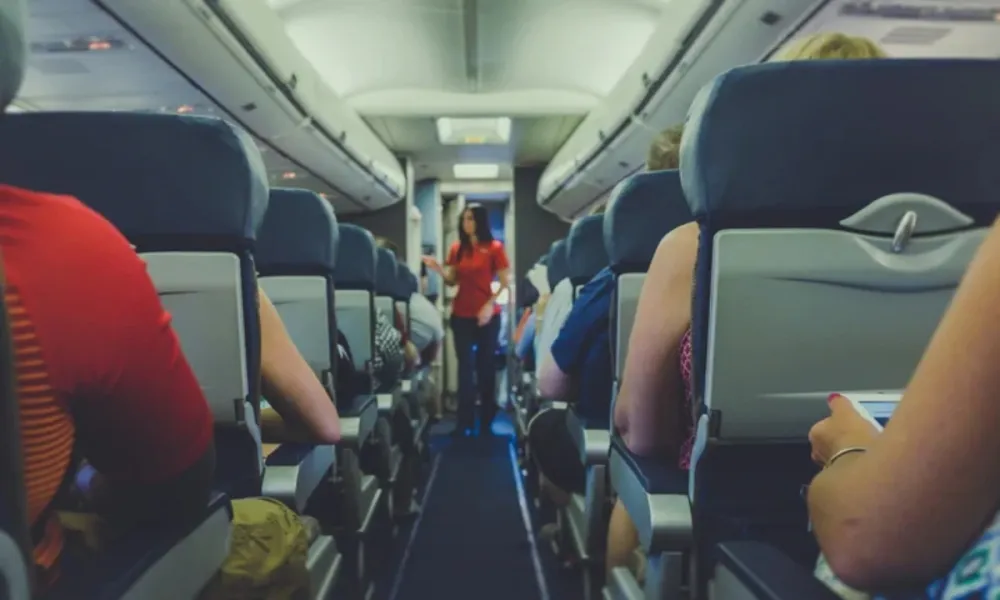

While most airlines do not impose a formal dress code, there are widely recognised recommendations on what passengers should avoid wearing on board. These guidelines are based on cleanliness, comfort, safety and, in some cases, airline contractual rules that may result in passengers being asked to change or even leave a flight.
According to travel experts cited by Travel and Leisure, airlines’ conditions of carriage include specific requirements regarding passenger attire. Failure to comply with these provisions may, in certain cases, lead to boarding being refused. The advice below reflects commonly accepted practices rather than official airline policies, unless otherwise stated.
Open-toed footwear
Wearing sandals or flip-flops may seem practical when travelling to warm destinations, but experts advise against it. Travel expert and former flight attendant Bobby Laurie notes that aircraft carpets and the areas beneath seats are rarely deep-cleaned. He also stresses that shoes should always be worn when using aircraft lavatories, advising passengers never to walk barefoot.
Clothing deemed offensive
Most airlines reserve the right to deny boarding to passengers wearing clothing they consider offensive. The wording in airline contracts is often deliberately broad. If an airline determines that an item of clothing is inappropriate, passengers may be asked to change. Refusal to comply can result in removal from the flight.
Pyjamas
Comfort is encouraged when flying, but wearing pyjamas in public airport spaces and on board is generally discouraged. Former flight attendant Susan Fogwell, who has 22 years of experience, advises opting for loose, elasticated trousers instead. She notes that wide-leg trousers can offer the same comfort while remaining suitable for public settings. An exception applies to business class passengers who are provided with pyjamas by the airline, which may be worn during the flight but should be changed before landing.
Swimwear
Some airlines explicitly prohibit passengers from wearing swimwear. Hawaiian Airlines is among the few carriers with a published dress code that bans it outright. Given that aircraft cabins are not designed for swimming-related activities, such attire is considered inappropriate for air travel.
Wearing only one layer
Aircraft cabin temperatures can vary significantly. Experts advise against wearing just a single layer, whether a vest or a heavy jumper. Layering allows passengers to adjust their clothing according to cabin conditions, adding or removing garments as needed.
Bulky metal jewellery
Large metal accessories can cause inconvenience during airport security checks and may need to be removed. Travellers are advised to pack bulky jewellery in their carry-on luggage and avoid placing valuable items in checked baggage. This is particularly relevant for high-value watches, which are best stored securely in travel cases.
Strong fragrances
Passengers are advised to avoid wearing strong perfumes or colognes. In the enclosed environment of an aircraft cabin, fragrances can spread easily and may cause discomfort to fellow passengers with sensitivities or allergies.
Source: Travel and Leisure