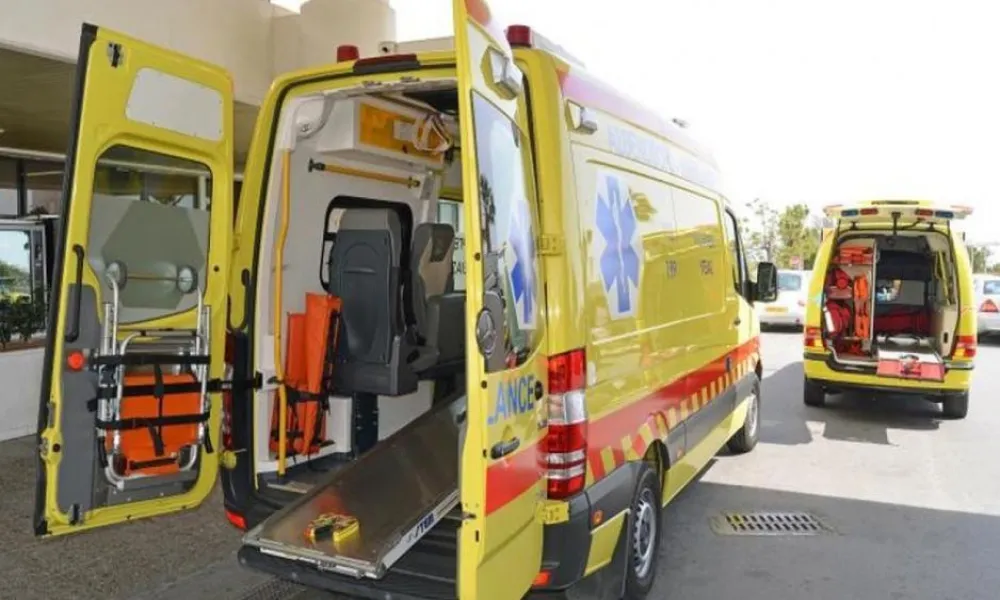
The proposal to establish a National Ambulance Authority has received wide backing, but its proposed subordination to the Ministry of Health has prompted questions about whether it could participate in the General Healthcare System, known as GeSY, without creating conflicts of interest. The issue was raised directly before the House Health Committee during discussion of the relevant bill.
Parliamentary scrutiny and legislative process
During deliberations at the House Health Committee, stakeholders agreed on the need to regulate ambulance services but expressed reservations regarding the proposed operational model, oversight mechanisms and the degree of autonomy of the new body.
According to the Chair of the House Health Committee, Efthymios Diplaros, the committee intends to proceed promptly to an article-by-article discussion of the bill, with the matter expected to remain high on its agenda in the coming period.
Provisions of the draft law
On behalf of the Ministry of Health, Carolina Stylianou presented the key provisions of the draft law establishing a National Ambulance Authority under the Ministry.
The new authority would be responsible for emergency pre-hospital care, the management of the emergency call centre and the poison control centre, as well as the licensing and inspection of ambulances and their providers.
The Ministry argues that ambulance services should be removed from the State Health Services Organisation, known as OKYpY, on the grounds that they constitute critical national infrastructure and should not remain under a provider within GeSY.
Position of OKYpY
From the perspective of OKYpY, Chief Executive Officer Kypros Stavrides clarified that the Organisation does not oppose the Ministry’s initiative and will consent to the establishment of the authority.
However, he noted that over the past five years OKYpY has invested significant resources in ambulance services. According to his statement, these investments must be assessed, costed and compensated accordingly.
Concerns among government doctors
Concerns have also been raised within the public sector. The President of the Pancyprian Government Doctors’ Union, Sotiris Koumas, focused on the practical consequences that the new operational model may entail.
He raised questions regarding patient flows to hospitals and the sustainability of public hospitals. According to Koumas, if the state assumes the role of both provider and regulator, conditions may arise that could affect equal treatment and the smooth functioning of the health system.
Legal and institutional issues regarding GeSY participation
The question of whether the new authority could legally participate in GeSY has also concerned the Health Insurance Organisation, known as HIO.
Speaking on behalf of the HIO, officer Christiana Michael stated that since the National Ambulance Authority would fall under the Ministry of Health, which politically supervises the HIO, a serious issue of conflict of roles arises as to whether it could also operate as a provider within GeSY.
The HIO referred to the example of Greece, where the National Emergency Aid Centre, EKAV, is not contracted with the National Organisation for the Provision of Health Services, EOPYY. It emphasised that the matter is not merely technical but fundamentally institutional and remains unanswered at this stage.
OSAC calls for an independent authority
The Cyprus Confederation of Patients’ Organisations, OSAC, also expressed institutional objections through its Honorary President, Marios Kouloumas.
While welcoming the creation of a national ambulance authority, OSAC clearly opposes its subordination to the Ministry of Health. It described such an arrangement as a step backwards in the health reform process, arguing that pre-hospital care cannot function as a subsystem of other administrative structures.
Operational pressures and staffing challenges
The debate also highlighted the current realities facing ambulance services.
The Head of the Ambulance Service, Riana Constantinou, stated that discussions are taking place about a reform that should have been implemented a decade ago. She stressed the need to introduce order in what she described as a “parallel system”, where anyone deciding to open a business can purchase ambulances and provide pre-hospital care services.
According to her statements, private ambulances perform pre-hospital care procedures “in the middle of the road” and subsequently call the public ambulance service to handle cardiac arrest cases from inside their vehicles.
She further noted that the ambulance service, which she described as “one of the most highly trained services on the planet”, has been required to shoulder the full burden of GeSY. Transfers have increased from 5,000 in 2020 to 45,000 today, without a corresponding reinforcement of staff.
“The rescue role is being sidelined. We cannot cope with this situation,” she stated.
Constantinou concluded by calling on the state to decide the future direction of the service, stressing that the ambulance service must be strengthened rather than turned into a transport function.