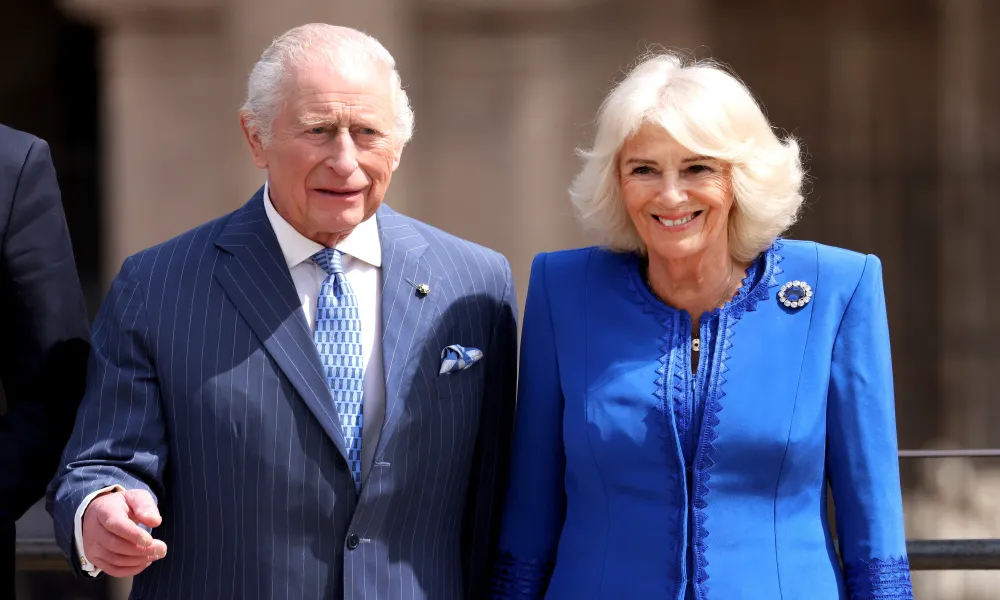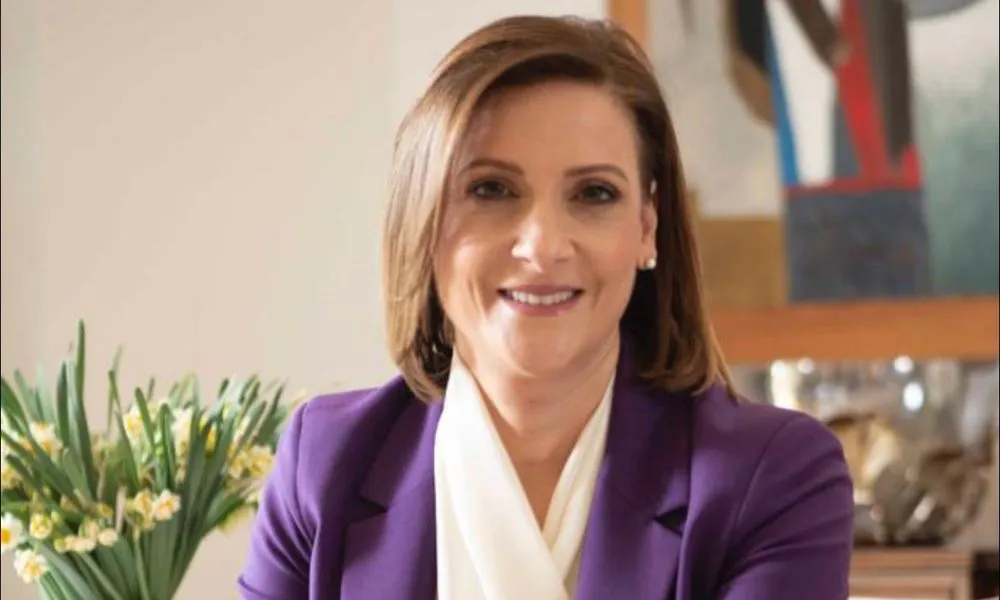

The Ministry of Finance has submitted two draft bills to the House of Representatives concerning the future of the Independent Social Support Body, from whose presidency First Lady Philippa Karsera recently resigned following the so-called “videogate” involving alleged investors.
Under the proposed legislation, any donation exceeding €20,000 will be accepted only if the donor consents to the publication of their name and the amount donated.
Government proposal following controversy
The controversy surrounding the video strengthened suspicions that the body had been used by the Presidential Palace for political purposes. Following strong criticism, the government of President Nikos Christodoulides decided to abolish the Social Support Body.
Finance Minister Makis Keravnos submitted two draft laws to Parliament for approval. The first seeks the dissolution of the body, while the second provides for the opening of a special account at the Central Bank of Cyprus. All future donations and sponsorships would be deposited into this account to provide additional financial support to students from families facing economic or social difficulties.
The bill also includes provisions for regulations to be approved by the Council of Ministers defining additional categories of support for these students.
Supervision of the special account
The bank account already exists, as it is currently used by the body, and will be supervised by the Accountant General of the Republic.
Private individuals, legal entities, foundations and organised groups will be able to make donations to support students in financial need through the Grants and Allowances Service of the Ministry of Finance, based on institutionalised criteria to be set through regulations.
Key provisions of the draft legislation
The bill submitted by the Ministry of Finance includes several provisions.
Each act of accepting a donation must be approved by the Minister of Finance, provided that it serves the public interest.
For reasons of transparency, the acceptance of any donation exceeding €20,000 requires the donor’s explicit consent for the publication of their name and the amount donated after the end of the academic year concerned.
Funds deposited into the special account will be used exclusively to provide additional support to eligible students, beyond the amount of the student grant they are entitled to receive each year.
Criticism regarding transparency
The proposal to publish the names of donors contributing more than €20,000 contrasts with the stance previously taken by the Presidential Palace.
For the past two years, the Presidency had resisted the disclosure of the list of donors to the Social Support Body. From March 2023, when First Lady Philippa Karsera assumed the presidency of the body’s management committee, until the end of 2025, a total of €6.4 million was deposited into the body’s fund, originating exclusively from private donations.
However, the identities of the donors and the amount contributed by each will remain unknown. Opinions issued by both Attorney General George Savvides and the Commissioner for Personal Data Protection Maria Manoli Christofidou halted parliamentary oversight initiated by members of the House Institutions Committee, citing concerns over personal data protection.
Questions raised by MPs
Members of the Institutions Committee have requested full disclosure of the individuals behind the private donations amounting to several million euros.
They aim to determine whether any benefits were granted in exchange for donations to the fund, which since 2024 has been the subject of allegations by MPs that it was used by the Presidential Palace for political gain.
In the widely circulated video that appeared on social media, associates of the President appeared to suggest that a large investor seeking to bypass bureaucratic procedures or secure the favour of President Christodoulides would need to contribute to the fund overseen by the First Lady.
MPs are also examining whether a conflict of interest arises. A recent investigation by the Audit Office identified cases in which individuals and companies made large donations to the body, in some cases exceeding €600,000, while at the same time holding state contracts or bidding for new government contracts.
Alternative legislative proposals
Beyond the government proposal, a bill submitted by AKEL proposes the abolition of the Social Support Body and the transfer of its responsibilities and assets to the Cyprus State Scholarships Foundation.
The proposal is co-signed by DISY MP Kyriakos Hadjiyiannis and Volt MP Alexandra Attalides.
Proposal to maintain the body with safeguards
In contrast, a proposal submitted by DISY MP Nikos Georgiou and co-signed by independent socialist MP Costis Efstathiou calls for the continuation of the Social Support Body with additional safeguards aimed at strengthening accountability and transparency.
Under this proposal, the body would be allowed to accept private financial contributions from individuals or legal entities, provided that the total annual contributions from a single donor do not exceed €50,000.
The chair of the committee would be a person of recognised integrity and reputation rather than the First Lady of the Republic.
The management committee would also be required to publish on its official website a list of the resources of the special fund, including the names of donors who contributed more than €500 during the current year and the total amount contributed by each donor.
Publication would take place only after the donor provides written and explicit consent. If such consent is not given in advance for the publication of the name, amount and date of the contribution, the body would not accept the donation.
Audit findings
Speaking to Politis, Nikos Georgiou said the proposal introduces the necessary safeguards to strengthen accountability and transparency in the fund, taking into account the findings of an Audit Office report dated 4 November 2025.
The report, which examined the Independent Social Support Body for the period 2018–2024, found that contributions to the fund chaired by the President’s spouse created conditions of a “special relationship”.
This situation arises because individuals and legal entities contributing to the fund may have dealings with the state, while their interests could be directly or indirectly affected by political decisions, draft legislation or actions of the executive branch.