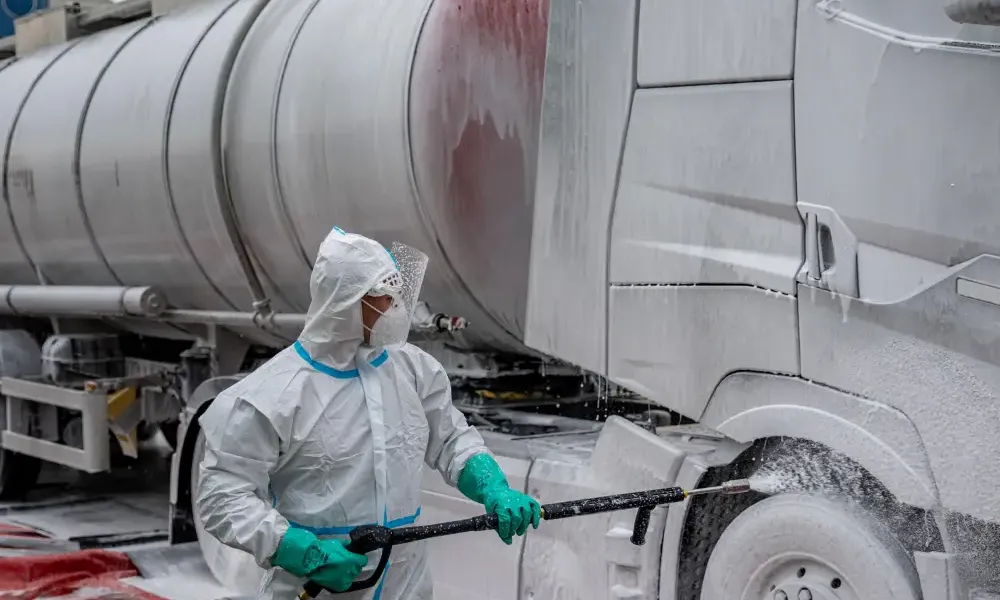
Cyprus authorities have outlined a comprehensive plan to contain the spread of foot-and-mouth disease, deploying a combination of tracing, sampling, vaccinations and predictive modelling.
The measures come amid heightened concern within the livestock sector following tensions earlier this week, when sampling procedures were obstructed at a unit in Geri.
Veterinary Services have since moved to clarify their approach, presenting a three-phase sampling process aimed at confirming the effectiveness of vaccinations and the development of antibodies within the animal population. The second phase of vaccinations is expected to begin by the end of the month.
No new cases but monitoring continues
Senior Veterinary Services official Sotiria Georgiadou said the situation had stabilised, with no new cases recorded and inspections continuing without disruption.
Authorities are conducting traceability checks to identify possible infections linked to animal movements prior to the first confirmed case in Oroklini, going back as far as early January.
At the same time, epidemiological investigations are ongoing within the designated zones of 3km and 10km around affected areas in Dali, Geri and Larnaca, as well as across the rest of the island.
So far, confirmed cases remain at 42 in Larnaca and Nicosia.
A third phase of sampling will follow the second round of vaccinations, in order to verify that immunisation has been successful and that antibodies are present across livestock populations.
EU involvement and cross-border concerns
At the European level, discussions in Brussels following a meeting between President Nikos Christodoulides and European Commission President Ursula von der Leyen focused on coordinated measures to address the outbreak.
According to government sources, the European Commission is expected to support efforts in Turkey and the Turkish Cypriot community through co-financing measures. These will cover the full cycle of response, including vaccination, culling of infected herds and sector recovery.
Officials stressed that such measures are necessary to prevent a resurgence of the disease, particularly as data indicates that Turkey is experiencing the highest increase in cases.
Modelling the spread
Authorities are also relying on mathematical models to anticipate how the disease may evolve, with advisory committees examining different scenarios to stay ahead of potential outbreaks.
Vaccination coverage currently stands at approximately 85% in cattle and 45% in sheep and goats during the first phase.
Farmers push back on restrictions
At the same time, new containment measures are drawing strong reactions from livestock farmers, particularly in the Paphos district.
Restrictions on crossing times, with access permitted only between 05:00 and 07:00, have been criticised as impractical and disruptive to daily farm operations.
Farmers argue that the measures fail to reflect the realities of livestock care, especially during calving periods that require constant supervision.
Argyro Ioannou, a farmer from the area, said the restrictions could prevent owners from returning to their farms until late morning or early afternoon, leading to significant operational and financial losses.
Balancing containment and livelihoods
Authorities maintain that strict measures are necessary to contain the virus, while acknowledging the need for clearer communication with farmers.
As Cyprus navigates both the epidemiological and economic dimensions of the outbreak, the effectiveness of coordination between local services and European mechanisms will be critical in preventing further spread.