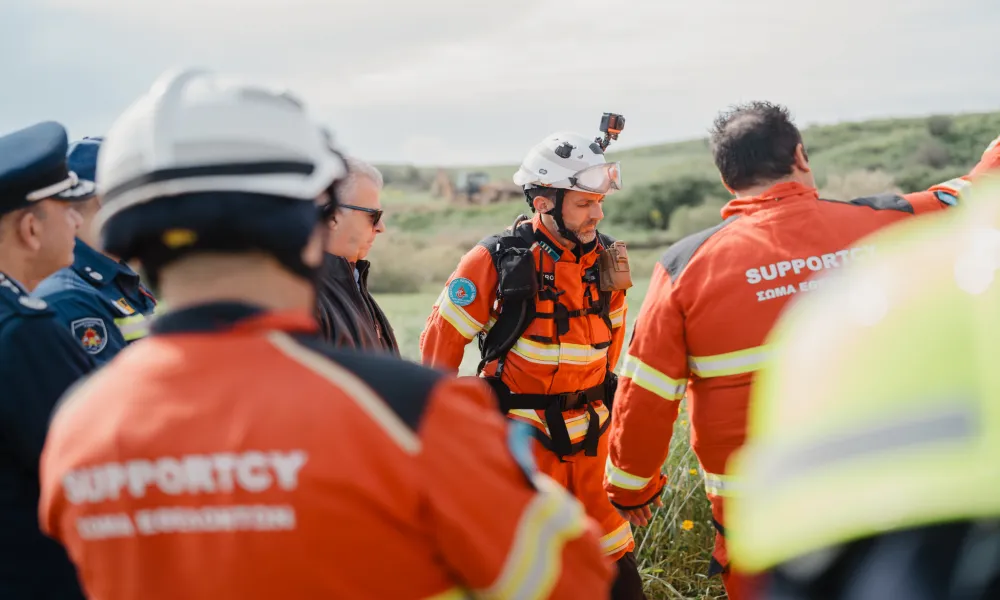

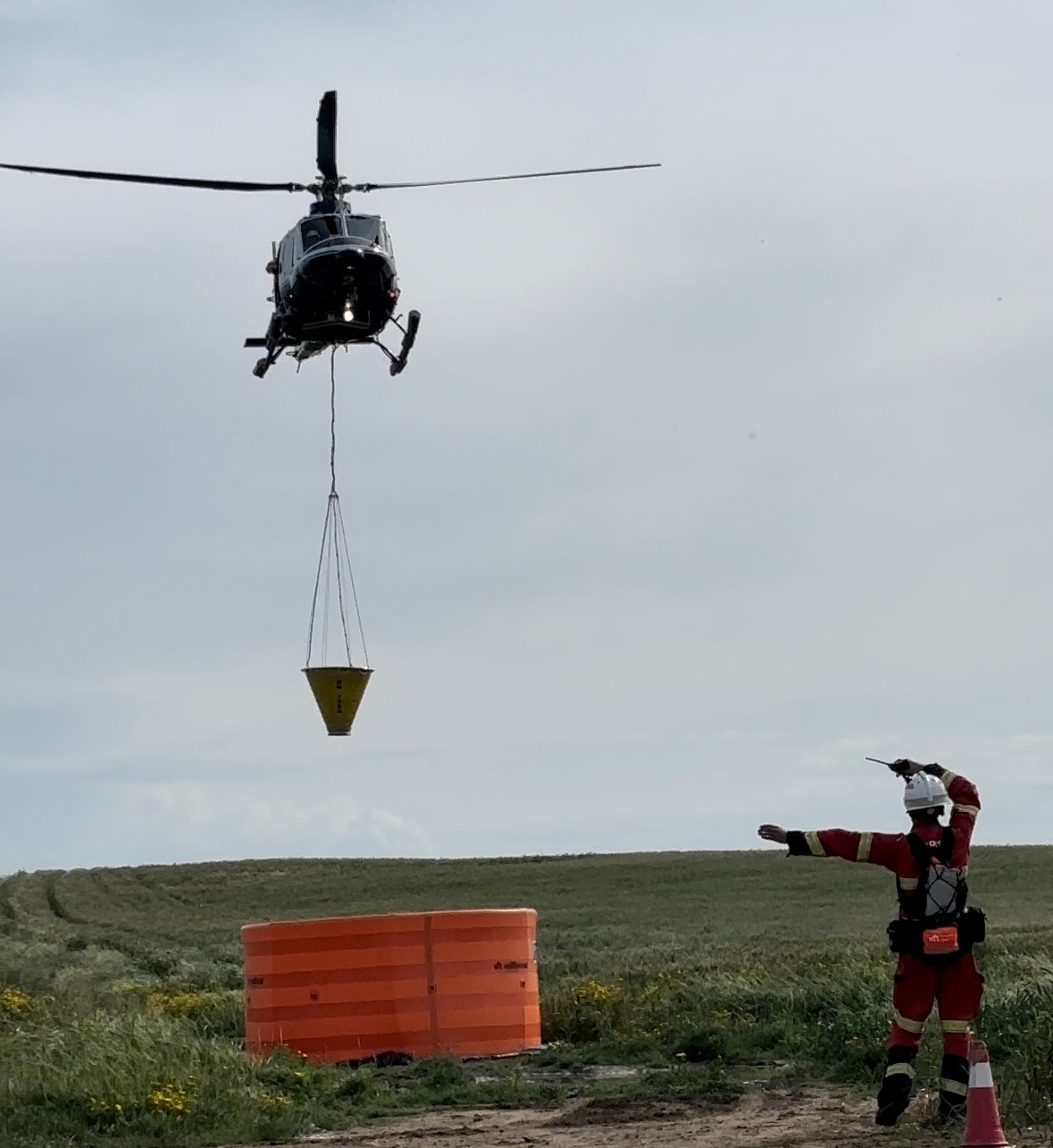
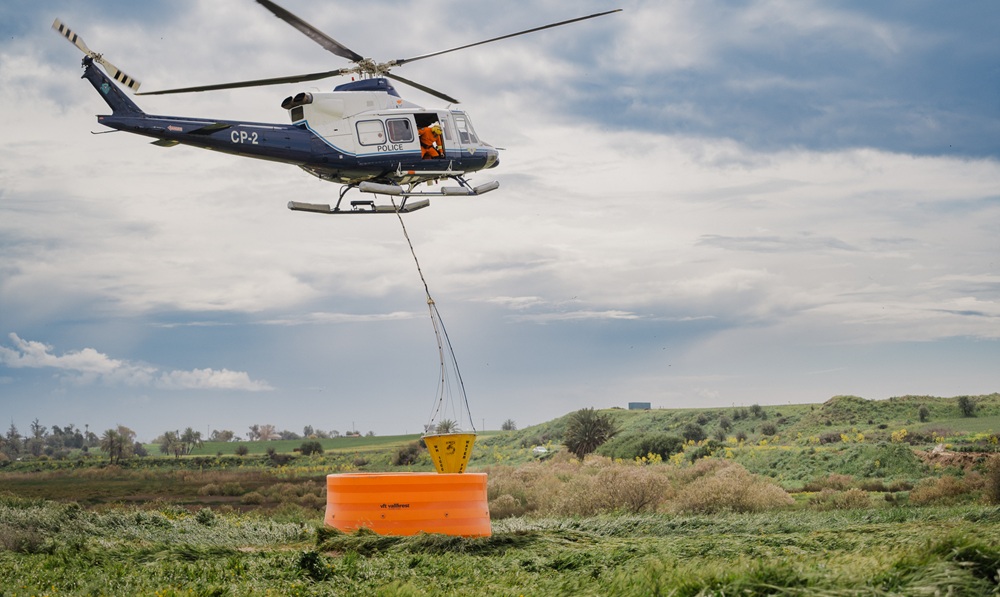
Last Monday, during a Fire Service exercise, a helicopter was refuelled using an inflatable water tank operated by the volunteer group SupportCY.
The legislative framework approved by parliament last Thursday for the use of specialised volunteer groups by state civil protection services is seen as the key condition for broader, upgraded and more organised operational action by volunteers in both man-made and natural disasters.
Broadly speaking, one could say this marked the culmination of the recognition of volunteer groups’ role within the space of just four days. Last Monday, they received praise from Justice Minister Costas Fytiris during their participation in a joint firefighting exercise in Larnaca with the Fire Service and the Police Air Operations Unit. In particular, SupportCY deployed a Firefighting Helicopter Support Unit by setting up an inflatable water tank, one of two it owns, each costing €25,000, and keeping it continuously supplied. In a statement, the minister stressed, among other things, the importance of cooperation between state services, volunteer groups and private actors, which, he added, substantially strengthens operational readiness, particularly ahead of the fire season.
The following day, Chief Fire Officer Nikos Longinos, in the context of his recent appointment as National Fire Coordinator, convened a meeting with the Fire Service leadership and members of the registered organised volunteer groups. During the meeting, issues related to fire prevention and response were discussed, with particular emphasis on the fire season, as well as the mechanisms, actions and coordination required in the event of fires. Mr Longinos said that strengthening cooperation and coordination with volunteers is a key objective for further upgrading operational preparedness.
Then, on Thursday, the House plenary approved the proposed law tabled by Nicosia MP Irene Charalambidou and shaped with the contribution of the Interior Ministry, regulating the actions and contribution of registered specialised volunteer groups to state civil protection services.
A strong “tool”
“The bill opens the door for state services to make lawful and technically sound use of volunteers. In essence, we have given them a strong ‘tool’ in their hands so that they can now use us without hesitation to the greatest possible extent,” Marios Spyrou of SupportCY told Politis.
As he explained, among other things the new law now regulates the certification process for groups and volunteers, operational matters, and how or when volunteers may be deployed. “It also now makes it legally possible for volunteer group vehicles to carry flashing lights of a specific colour, red and white, together with a siren, as well as a distinguishing emblem in the shape of Cyprus bearing the words ‘SPECIALISED VOLUNTEER GROUP’. At the same time, it defines the minimum safety measures that groups are obliged to provide for their members. It also covers liability issues if, God forbid, someone is harmed in the field, or if a volunteer enters the yard of a house to extinguish a fire and, for example, breaks the door. In that case, they bear no liability to a third party or to the Republic, because they were doing the job they were required to do,” he added.
As for volunteer training, state services will now be institutionally obliged to give it greater attention because, according to the volunteers, until now they had received only two hours of training at the outset.
Question marks over compliance by “unstructured” volunteers
Beyond the extent to which the state will make use of them, another major challenge at present is whether volunteer groups will be able to comply with the new legislative requirements. As Mr Spyrou explained, there are unregistered and uncertified volunteer groups which, he said, insist on doing what they themselves consider right, without complying with the instructions of state services.
“They usually appear at fires out of nowhere, with their members saying, ‘I came to help, but no one will tell me where I will operate.’ For example, they do not want to stay in the rear to secure the fire, but to be at the front line. But that is not our role as volunteers. Our role in an organised state is to be coordinated, organised and disciplined. Everyone cannot act as they please. And our great concern is whether, God forbid, we ‘lose’ a volunteer or any other citizen who enters the field to operate on a voluntary basis. Then the authorities may start having second thoughts and remove the registered volunteer groups from disaster response,” Mr Spyrou said.
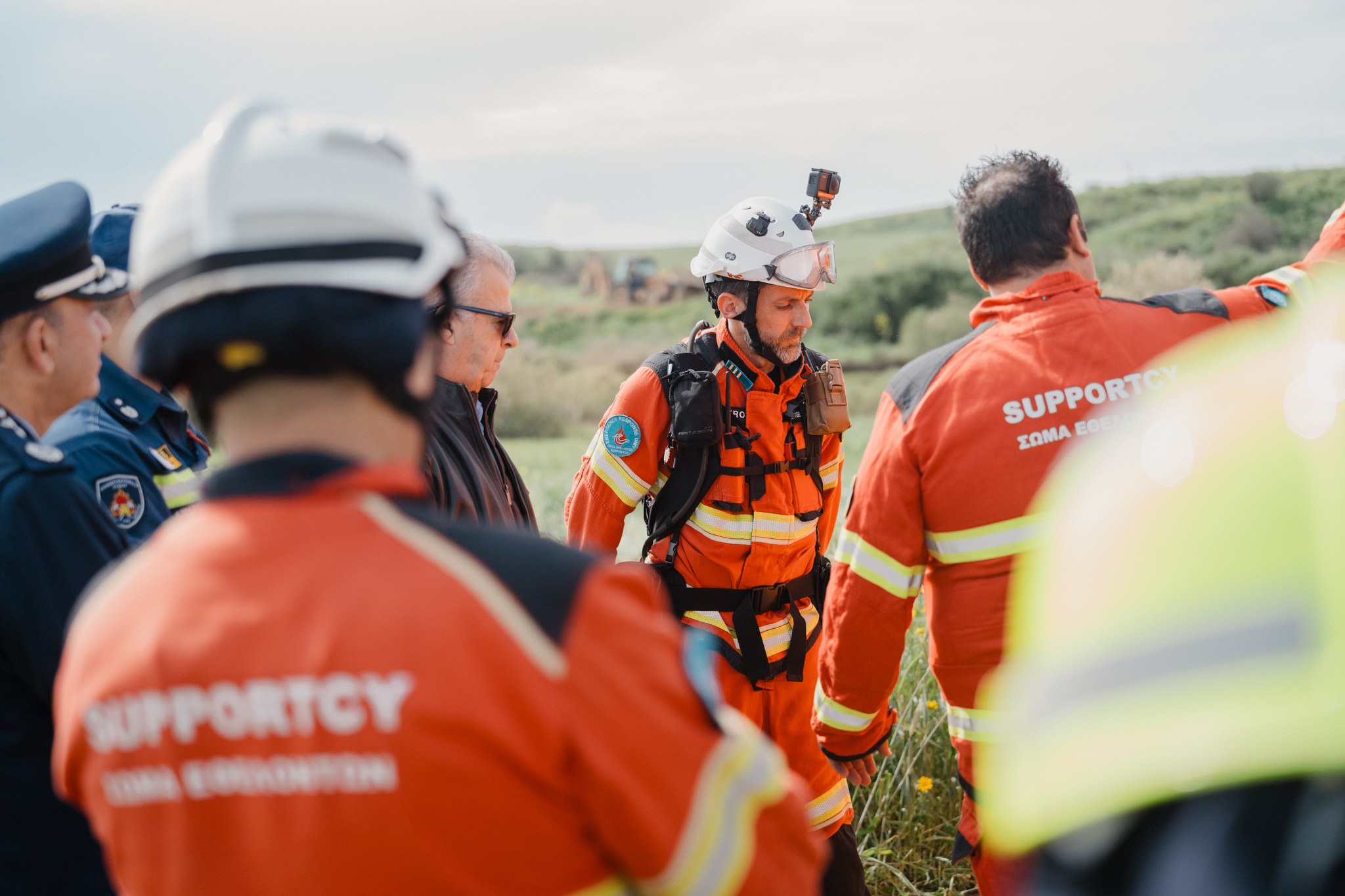
“The bill opens the door for state services so that they can now make lawful and technically sound use of volunteers. In essence, we have given them a strong ‘tool’, so that they can now use us without hesitation to the greatest possible extent,” Marios Spyrou of SupportCY told Politis.
The scope is widening
A notable aspect of the new regulation is the inclusion of additional state services under the term “State Service”, which will be able to grant someone the status of specialised volunteer and keep its own “Register of Specialised Volunteer Groups”. These are the Fire Service, the Forestry Department, the Ambulance Service, the Police, Civil Defence, and the Game and Fauna Service.
The addition of further state services opens the way for the creation of new volunteer groups. “For example, the Ambulance Service could request volunteers, leading to the creation of a specialised group focusing on pre-hospital care in major crises. I believe there is room for development, but what matters is not so much an increase in the number of volunteers as coordination and proper organisation,” Mr Spyrou said.
Inflatable tanks: “The Slovak pilots love them”
SupportCY offers the Republic of Cyprus an important alternative means of supplying water during fire emergencies through two inflatable water tanks costing €25,000 each. Abroad, they are widely used to supply water to firefighting helicopters, whether fitted with a bucket or with a suction hose, such as those rented by the Republic, for filling their internal tanks while hovering above the water surface.
“The aim is to set them up as close to fires as possible so that the helicopters’ operational cycle is as short as possible. This allows you, within a very short space of time, to drop water, refill, and then drop again. The other issue is safety. A helicopter, as the pilots explained to us, comes under strain when it suddenly takes on weight. At that point, its engine may malfunction, forcing it to make an emergency landing. If it is above a dam, both the helicopter and the crew may be lost. By contrast, it is much safer for pilots to hover above a tank, because they can easily make an emergency landing on the ground,” Marios Spyrou explained.
The tanks can be deployed very quickly and easily. So far, SupportCY has marked around 30 points across Cyprus on the map. These are empty points between dams. If there is a good water flow, the helicopters’ internal tanks can be filled in 25 minutes, while at night, when aircraft are not operating, these tanks can also provide water to firefighting service tankers.
In terms of support, he noted that they have so far received a positive response from the Fire Service, the Police Air Operations Unit and the National Guard’s Aerial Firefighting Squadron. Last year, during an exercise, the Slovak pilots of the rented firefighting helicopters told them that these tanks are widely used abroad and that they themselves are very keen to use them. For the moment, the issue of water supply in the field remains pending, either through a hydrant or with tankers.