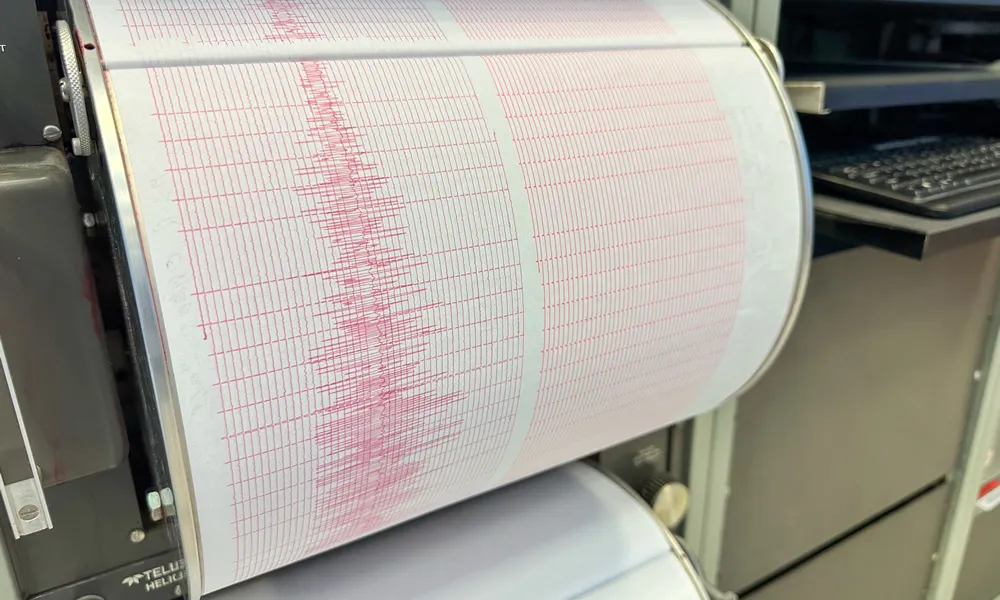

At least six people were injured after a strong earthquake struck northern Japan on Monday, prompting authorities to warn of a heightened risk of a much larger seismic event in the coming days.
According to Japan’s disaster management agency, two of the injured are in serious condition. No major damage to infrastructure or fires have been reported so far.
The earthquake hit at 16:53 local time in the Pacific Ocean, off the coast of Iwate prefecture on the island of Honshu, the Japan Meteorological Agency said. The agency measured the quake at magnitude 7.7, while the United States Geological Survey estimated it at 7.4.
A tsunami warning was issued shortly after the quake, with waves expected to reach up to three metres. The alert was later lifted after a wave of around 80 centimetres was recorded at Kuji port in Iwate, along with smaller waves in other northern coastal areas.
Elevated risk of a stronger quake
The JMA has since issued a special advisory warning of an increased likelihood of a much stronger earthquake, potentially exceeding magnitude 8.
“The likelihood of another major earthquake is considered higher than usual,” the agency said, cautioning that such an event could trigger a large tsunami and powerful aftershocks.
Officials have urged residents to remain vigilant, particularly over the next week, with the risk of significant aftershocks highest in the first two to three days following a major quake.
Buildings were reported to have swayed as far away as Tokyo, more than 500 kilometres from the epicentre.
Local authorities have issued non-binding evacuation advisories affecting more than 182,000 residents in the impacted regions.
Long-standing seismic threat
Japan remains highly vulnerable to seismic activity, sitting at the junction of four major tectonic plates along the Pacific “Ring of Fire”.
Memories of the 2011 disaster remain vivid, when a magnitude 9.0 earthquake and subsequent tsunami killed or left missing around 18,500 people.
The government has warned that a future quake along the Nankai Trough could result in up to 298,000 deaths and economic losses reaching $2 trillion.
Source: CNA