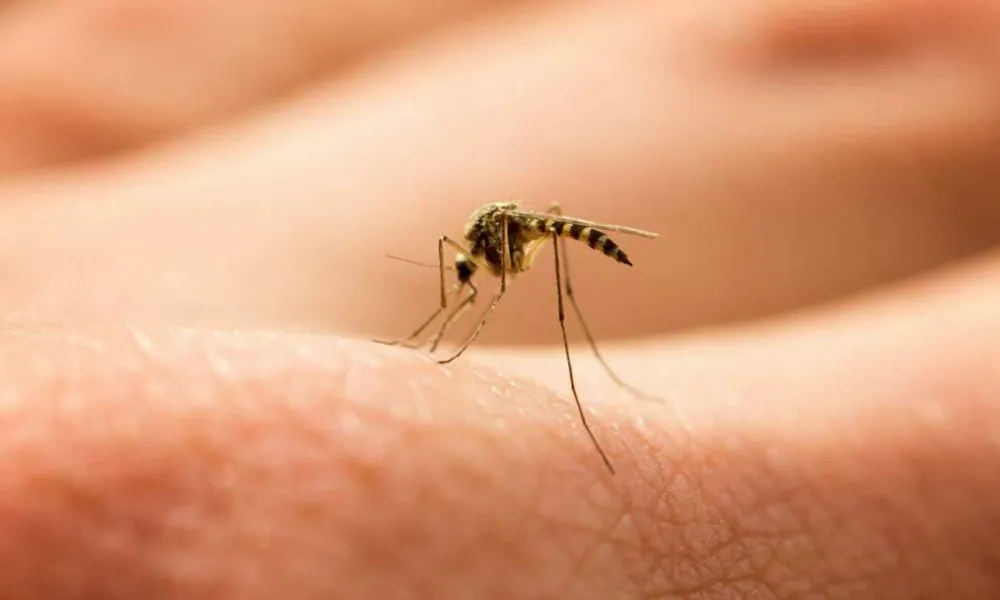

Nighttime in several areas of Cyprus does not always end quietly. For some residents, particularly in urban environments and areas close to water sources, summer brings not only heat but also a persistent buzzing, mosquitoes.
Behind this seemingly simple problem, however, lies a far more complex issue of public health, environmental management and human behaviour. Cyprus, like many Mediterranean countries, has in recent years been facing a new reality, the presence and spread of invasive mosquito species, which are not merely annoying but potentially dangerous.
From spraying to prevention
As Herodotos Herodotou, head of the Health Services at the Ministry of Health, told “P,” the approach to mosquito control has changed radically. Where broad spraying once prevailed, the model today is based on prevention and targeted intervention. The logic is simple but critical, there is little sense in combating the adult mosquito when its life cycle can be stopped much earlier.
The modern strategy focuses on larviciding, that is controlling mosquitoes at the larval stage, in water. This means that the real “battle” takes place in locations that often go unnoticed, such as stormwater drains, channels, streams, tanks and even small pools of water in urban environments.
Teams carry out regular inspections every two weeks, identifying and intervening in breeding sites. Spraying against adult mosquitoes is now limited to exceptional cases, where there is a documented need based on risk assessment and surveillance data.
Extensive surveillance system
Behind this strategy lies an extensive entomological surveillance system. Traps and monitoring mechanisms operate throughout Cyprus, collecting data on mosquito populations, their seasonality and their spread.
These data are not merely numbers. They form the basis on which interventions are designed. They allow the competent services to understand population levels, breeding sites and how the situation evolves over time.
Potentially dangerous mosquitoes
The greatest challenge in recent years has not been the “classic” mosquitoes, but invasive species such as Aedes aegypti (yellow fever mosquito) and Aedes albopictus (Asian tiger mosquito). These are species that have been internationally linked to serious diseases such as dengue fever, Zika virus and chikungunya.
Their presence in Cyprus does not automatically mean disease transmission exists. For that to occur, a combination of factors is required, such as the presence of the virus, appropriate environmental conditions and a chain of transmission.
However, the mere presence of these species changes the situation. It creates a new level of surveillance and increases the need for constant readiness.
Particular attention is paid to Larnaca district, where the presence of Aedes aegypti has been recorded, as well as to areas with increased human activity or points of entry into the country, such as ports and airports.
Imported cases
To date, no local transmission of diseases such as dengue fever or Zika has been recorded in Cyprus. Cases that do occur are imported, usually linked to travel.
There have, however, been cases in the past of West Nile virus, which are associated with different mosquito species and indicate that the risk, although low, is not theoretical.
For this reason, there is a specific rapid response plan in place. Following the detection of a case, the area is mapped, an entomological investigation is carried out and targeted interventions are implemented to prevent spread.
The burden of everyday life
Despite the scientific and state infrastructure, the most critical parameter remains the simplest and relates to human behaviour.
Municipalities and communities are responsible for public spaces, drain cleaning and infrastructure maintenance. However, a large part of the problem lies in private spaces, yards, balconies and gardens.
A plant saucer with water, a forgotten bucket or an uncovered barrel. These small details are enough to start a mosquito’s life cycle.
The phrase emphasised by experts is simple: without stagnant water, there are no mosquitoes.
Does the weather play a role
Weather conditions directly affect mosquito populations, but not always in an obvious way. Rainfall, which has been heavy this year, creates natural breeding sites, but in urban environments the greatest problem is not nature, but human constructions.
Especially for invasive species, the urban environment provides ideal conditions. Small, artificial collections of water are sufficient to support their life cycle.