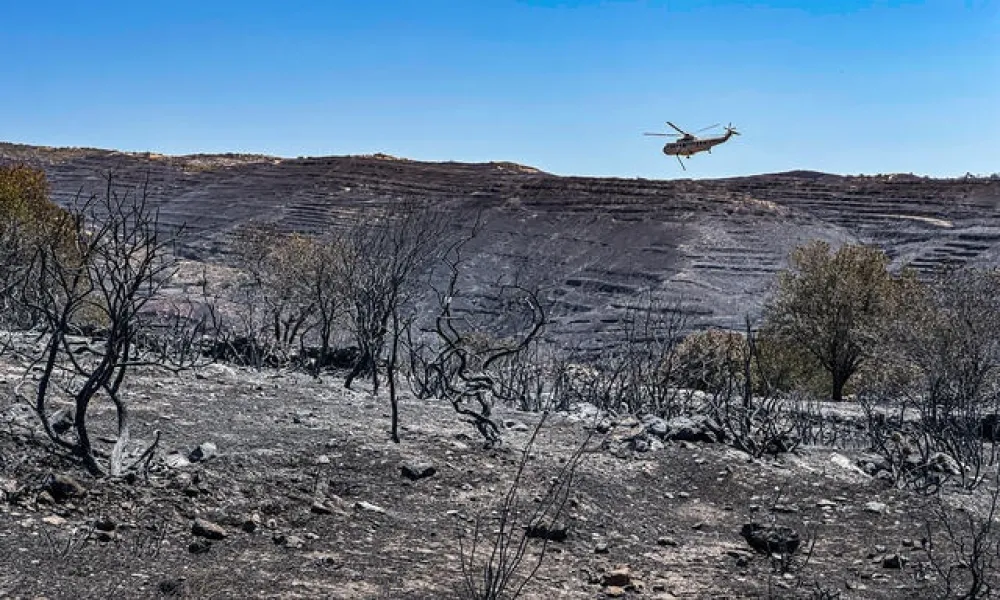
Nearly two months after the devastating wildfire in Limassol, critical questions remain unanswered about the state’s operational readiness and the attribution of responsibility, against the tragic toll of two deaths, destroyed property and environmental damage. At parliamentary level, expectations now rest on the third and final joint session of the Committees on Interior, Agriculture and Environment this Thursday, in the hope that issues left in the dark, whether deliberately or not, in previous sittings will finally be clarified. The aim is for the process to yield useful conclusions for transparency, accountability and meaningful prevention, rather than ending as a stack of more than 200 unanswered questions from MPs.
Police investigations
The police currently have before them two of the three investigations into the fire’s causes, those of the US Bureau of Alcohol, Tobacco, Firearms and Explosives (the ‘ATF’) and the Fire Service, while their own probe is still being completed. As a senior police source told Politis, once finished, “one set of eyes” will assess all three together to draw conclusions. The inquiry into the causes will run alongside a separate investigation into the deaths of the two elderly victims. Completion of the first awaits expert reports; for the second, police are still awaiting the results of forensic examinations and other scientific analyses.
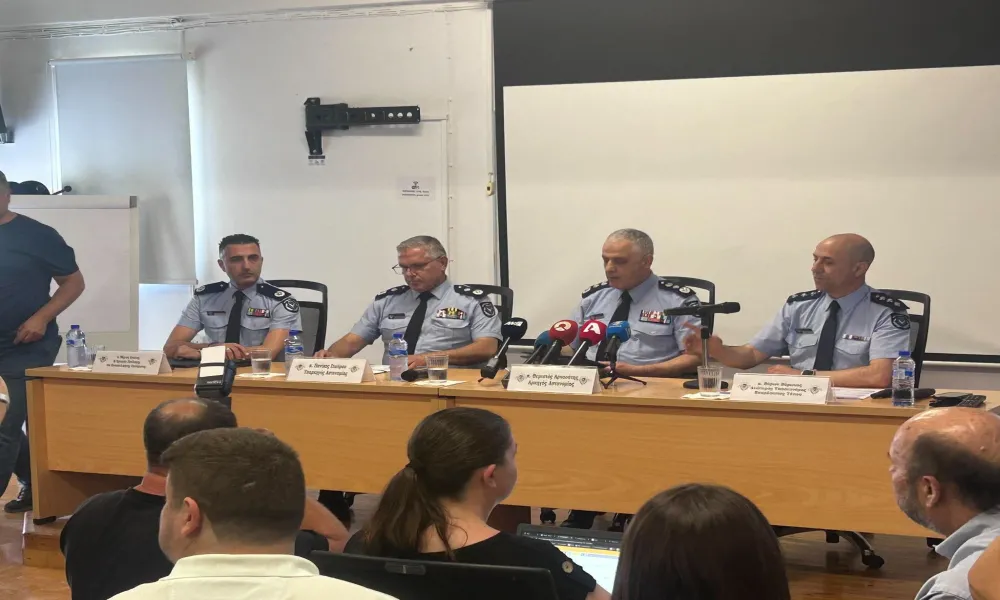
It is recalled that at the previous parliamentary sitting, Police Chief Themistos Arnaoutis ascribed indirect responsibility to the two victims for their deaths, saying the couple had been warned the road was dangerous but ignored the instructions. According to Mr Arnaoutis, this testimony will be submitted to the coroner’s inquest. Unanswered, however, remains the question of which competent authority should have ordered the timely closure of the road the couple used, a step that could have prevented their deaths. This was among the questions raised by MPs in the two earlier sittings that drew no answer.
The order on aircraft
Other unresolved questions include who decided to redeploy the two patrol aircraft to Anageia and what might have changed had they been sent immediately to Mallia. There was no comment on information relayed by DISY MP Demetris Demetriou that, upon the aircrafts’ arrival at the Anageia fire, it had already been extinguished. Who bears responsibility for the fact that, when they left for Anageia, no simultaneous instruction was sent to the base to scramble replacements?
New testimony
While Thursday’s session is expected to focus mainly on environmental impacts, area restoration and gaps in these domains, testimonies from people who took part in the response, uniformed personnel and volunteers, may help illuminate aspects not covered previously, when ministers, institutional representatives and the leadership of the firefighting services testified. The chair of the House Interior Committee, Aristos Damianou, does not rule this out, telling Politis that “some will feel more comfortable speaking,” potentially adding new elements. After the third session, he said, the three committees should have a full picture of witnesses’ views to proceed with a report.
On the many questions that MPs put to officials from institutions and firefighting services, and which went deliberately unanswered in previous sittings, Mr Damianou said the report will record that no answers were given. He also pledged that the report will reflect the issues of responsibility that preoccupied both the hearings and public opinion: who should have ordered closure of the road where the couple died; the evacuation of villages by ‘Civil Defence’; and the absence of the central coordinator, who was in Australia. “We will record issues of responsibility here, and others must assume theirs,” he stressed, noting that in the first session, following his own question, it was made clear that road closures fall under police responsibility.
“They are obliged”
From his side, the chair of the Environment Committee, Charalambos Theopemptou, underlined that ministers and firefighting leaderships are legally obliged to answer MPs’ questions. If they did not do so orally, they are obliged to submit written positions for the report, he added. He said he will also focus on prevention, so that the relevant ministries set out what they have done to protect communities, such as clearing vegetation and creating a protective ring around each village. However, based on his own review of the 2025 budget, he said he did not identify significant decisions on these fronts.