
Cyprus is in its fifth consecutive year of drought, a reality reflected not only in dam reserves, which this hydrological year have barely exceeded 13 percent, but also in the deteriorating condition of groundwater, both in quantity and quality, even if this is less visible to the public.
The picture is compounded by the pressure-driven emergency measures now being introduced, including cuts to irrigation and domestic supply. Local authorities have also warned of significant losses from leakage in parts of the network, even as restrictions expand.
A crisis years in the making
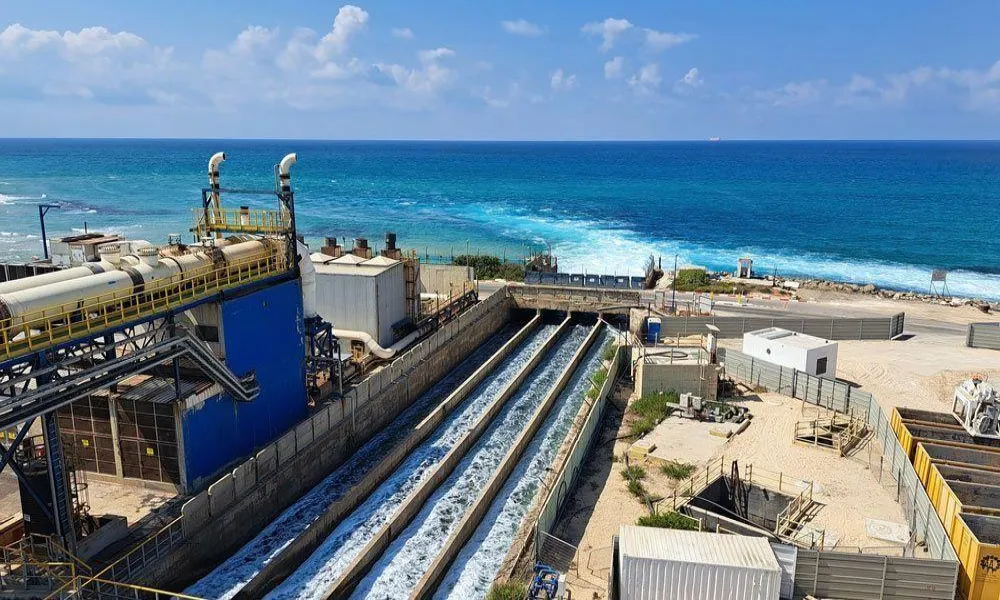
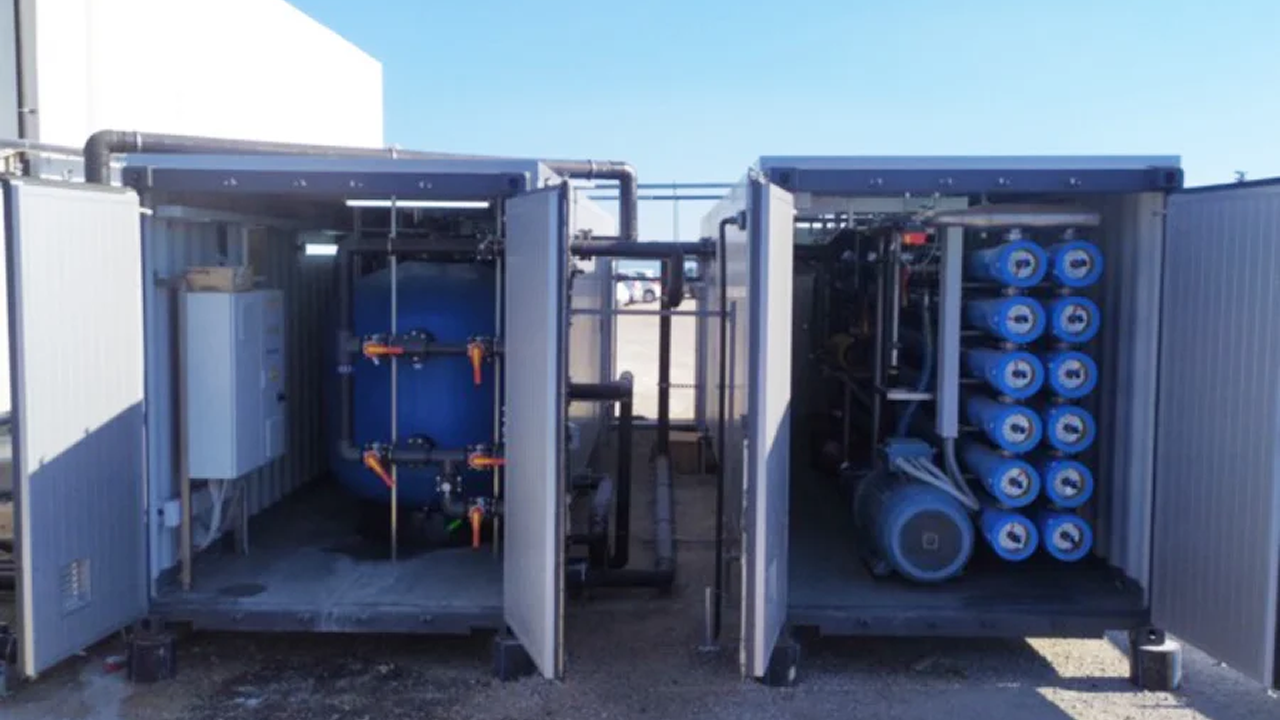
The alarm did not begin with last year’s rushed arrival of 14 mobile, energy-intensive desalination units from the United Arab Emirates, which have been operating since mid-summer and producing around 15,000 cubic metres per day. Nor did it begin with the looming prospect of alternating-day water cuts.
The argument advanced here is that neither climate change nor drought can be used as a blanket justification for the absence of long-term, realistic planning. Cyprus has lived with water anxiety for decades, yet policies have repeatedly been short-term and reactive. The result, the author argues, is that the country is now facing genuine scarcity at the very moment demand continues to rise.
Supply capacity versus demand
Cyprus’s desalination plants have a combined annual capacity of about 77 million cubic metres. Estimated annual demand for domestic and irrigation needs stands at around 270 million cubic metres, while more recent consumption trends point to demand exceeding 300 million cubic metres in 2025.
Against that backdrop, emergency additions may ease pressure but cannot close the structural gap on their own.
Rainfall is falling and becoming more episodic
Data analysed for Politis by the director of the Department of Meteorology, Filippos Tymvios, point to a long-term shift towards greater variability, with more frequent dry or borderline years and fewer wet years that are intense but insufficient to offset the overall trend.
He describes rainfall as increasingly episodic, with large totals concentrated in fewer years and extended stretches of low cumulative rainfall in between.
Decadal averages cited in the report show a downward drift over time. Average rainfall was 498.6 mm in 1975/76 to 1984/85, falling to 476.2 mm in 1985/86 to 1994/95, then to 459.5 mm in 1995/96 to 2004/05. A short-lived increase is recorded in 2005/06 to 2014/15 at 472.5 mm, followed by a decline to 461.2 mm in 2015/16 to 2024/25.
Earlier long-term averages are also lower over time, with 533 mm for 1941 to 1970, 515 mm for 1951 to 1980, 503 mm for 1961 to 1990, and 463 mm for 1971 to 2000.
Dams drained despite major infrastructure
A major shift in Cyprus’s water policy came in the early 1980s with the construction of large reservoirs, despite ecological impacts on river systems. Smaller dams existed from the 1950s, but the first major dam, Asprokremmos, was built in 1982. Kouris, the largest, followed in 1988, and the last major dam, Solea, was built in 2010.
Dam storage capacity now exceeds 300 million cubic metres. However, the average inflow between the 1987/88 and 2024/25 hydrological years did not exceed 84 million cubic metres.
Over that 38-year period, only 16 hydrological years surpassed the average inflow, while in 18 years inflow fell below 50 million cubic metres. Twelve of those years were recorded after 2003. The implication, as presented, is that periods when reservoirs run dry are becoming more frequent, reducing their reliability as a cornerstone of water security.
Groundwater over-extraction and quality decline
The article argues that the first failure was delay in taking timely measures despite early warning signs. The second, more enduring damage has been systematic over-pumping of aquifers to compensate for surface shortages.
Measurements cited from the Geological Survey Department indicate a long-term downward trend in groundwater levels. Christos Christofi, a senior officer at the department, is cited as noting that in 1970 annual groundwater recharge across Cyprus was estimated at 450 million cubic metres. By 2002 recharge in the government-controlled areas was estimated at 305 million cubic metres.
The Water Development Department is cited as estimating that natural recharge has now declined by around 40 to 60 percent compared with past decades, reflecting lower rainfall and greater variability.
Deficits of up to 70 percent in some aquifers
For groundwater use to be sustainable, extraction should not exceed average annual recharge. Where aquifers are already in deficit, pumping must fall below recharge if levels are to recover.
The Water Development Department is cited as estimating declines of 30 to 70 percent in several aquifers compared with the 1960s, with faster deterioration in recent decades driven by rising demand, extensive irrigation and climatic drought. It also estimates an annual deficit of 20 to 40 million cubic metres, reflecting the gap between consumption and natural replenishment.
A warning issued in 2002
A study conducted in 2002 by the Water Development Department in cooperation with the UN Food and Agriculture Organization is cited as having found that Cyprus’s groundwater resources were being pumped around 40 percent beyond allowable limits at the time.
It warned of continuing level declines, depletion of reserves and the expansion of aquifer zones damaged by seawater intrusion, with serious impacts on domestic supply and agriculture. It also warned that without allowing aquifers to recover, damage could become irreversible, calling for the negative conditions not only to be controlled but reversed.
Only eight of 22 groundwater systems in good condition
The article also points to the quality dimension. Of 22 groundwater systems in the government-controlled areas, only eight were in good chemical condition based on 2018 data cited. The rest were classified as poor, largely due to salinisation, agricultural nitrate pollution and contaminant loads from livestock or other activities.
Christofi is cited as saying impacts tend to be more acute in unconfined aquifers and Troodos springs, which depend more directly on rainfall and recharge, while deeper confined aquifers are more resistant in the short term, with longer-term effects. Coastal aquifers have experienced seawater intrusion, limiting their use for drinking water and irrigation.
Older, saltier water and higher costs
As groundwater levels fall, pumping from greater depths requires more energy and increases costs. Christofi is cited as warning that falling levels also affect water chemistry, with older water typically being extracted. Longer water-rock contact time can increase concentrations of salts and trace elements under certain conditions.
The article notes that sulphates, sodium, chlorides, boron and other constituents tend to rise during summer when levels are lowest, easing after recharge. For drinking water, this implies additional treatment requirements.
Artificial recharge using recycled water is cited as being implemented only in the alluvial aquifers of Ezousa and Akrotiri, aimed at balancing extraction and recharge and countering seawater intrusion.
The Water Development Department is cited as estimating annual demand in the government-controlled areas at 270 million cubic metres, with 2025 demand appearing to exceed 300 million.
- 59.1 percent for agriculture
- 29.6 percent for domestic supply
- 3 percent for industry
- 4.9 percent for tourism
- 3.3 percent for livestock
Domestic supply moving towards full desalination
According to Water Development Department director Iliana Tofa, irrigation relies on available dam reserves, monitored groundwater and, where feasible, reuse of treated wastewater either directly or via artificial recharge and abstraction. She says desalination covers around 70 percent, expected to reach 80 percent from 2025 through the summer, with a stated goal of 100 percent by 2029 through two additional permanent plants.
Five permanent desalination plants are currently operating in Paphos, Episkopi, Vasiliko, Larnaca and Dhekelia, with a combined annual capacity of 77 million cubic metres. Seven mobile desalination units have been advanced through expedited procedures, three of which are already operating. Full operation is expected to increase total desalinated water production by about 32 percent.
Boreholes supplied 6.8 million cubic metres in 2025, with 3.8 million used for Limassol and 3 million for Paphos. Dams, despite low reserves, are cited as contributing 36 million cubic metres.
Savings and leakage control
Tofa links the demand rise partly to tourism and population growth, citing 4.4 million tourist arrivals in 2025 compared with 3.9 million in 2019, alongside a population increase of about 100,000 towards one million.
She argues that a roughly 5 percent annual increase in water needs is also driven by weak water-saving culture, saying Cyprus does not simply consume water but overconsumes, worsening the national water balance.
A 10 percent reduction in supply decided by the government translates into 10 million cubic metres less water. Tofa says that if savings are achieved, unplanned cuts may be avoided. The department plans to provide households with tap nozzles to reduce consumption and to subsidise local authority crews for rapid leak response.
Irrigation, reuse and the push for smarter systems
On irrigation, Tofa says the state has prepared a package of measures to support farmers facing income losses, describing it as relief rather than a solution. She highlights investment schemes for smart irrigation systems that collect and use rainwater.
She also calls for a reassessment of treated wastewater use. Recycled water is fully utilised for irrigation in Limassol and Paphos, while in Larnaca storage and transfer works to Tersefanou dam lag behind, meaning that when demand is absent, water is discharged to the sea. In Nicosia, the network at Anthoupoli has been completed and water has begun to be supplied for irrigation. The article notes there remains significant scope to expand use.
Tofa: the alarm should have sounded in 2006
Tofa, who has led the Water Development Department for the past two and a half years, argues that scientific evidence has been published since 2006 and should have elevated water infrastructure to the priority level it holds today.
She attributes policy shortfalls to fragmented licensing and decision-making, saying technocrats flagged trends early but political decisions lay elsewhere. She cites the example of mobile desalination units that previously came to Cyprus on three-year contracts and were removed despite departmental pressure to retain them for future reuse.
She also points to delays in implementation and planning, staff shortages, and the need to align agricultural, tourism and wider economic policy with water policy through a cost-benefit lens.
At the same time, she argues that significant infrastructure has been built, including pipelines and permanent desalination plants, and notes that Cyprus experienced two years with the worst inflows since records began in 1901. She says 2025 was exceptionally difficult and that avoiding cuts last summer required extraordinary efforts. She warns that 2026 will be particularly challenging, prompting the measures now being taken.
Is desalination the only answer?
Tofa presents desalination as a central, but not exclusive, pillar of water policy. It must be complemented by demand savings, reuse of treated wastewater for irrigation, artificial recharge, optimisation of irrigation methods such as drip systems and soil sensors, and reductions in network losses.
Tofa also says the Water Development Department has asked the Ministry of Agriculture to seek an extension for the 14 mobile desalination units provided free of charge last summer by the United Arab Emirates, for an additional two years. The units were due to remain in Cyprus until this summer.
A climate hotspot, but not a blank cheque for past errors
Tymvios is cited as saying the 2015/16 to 2024/25 decade is marked by increased variability, dominance of dry and below-normal years and the absence of consecutive wet periods. Even with an exceptionally wet year in 2018/19, the decade as a whole shows a clear hydrological deficit, worsening water-resource sustainability.
He argues the period aligns with the long-term trend for Cyprus and the eastern Mediterranean as a climate change hotspot. He links the trend to declining winter rainfall, northward shifts of storm systems, more frequent anticyclonic conditions, increased evaporation due to higher temperatures, and shorter wet seasons. The result, he says, is that even years with moderate or elevated rainfall may not substantially replenish dams and aquifers, especially when surrounded by dry years.
He concludes that the decade confirms a long-term decline in rainfall and rising variability, with isolated wet years insufficient to reverse a cumulative hydrological deficit, making water management increasingly critical.