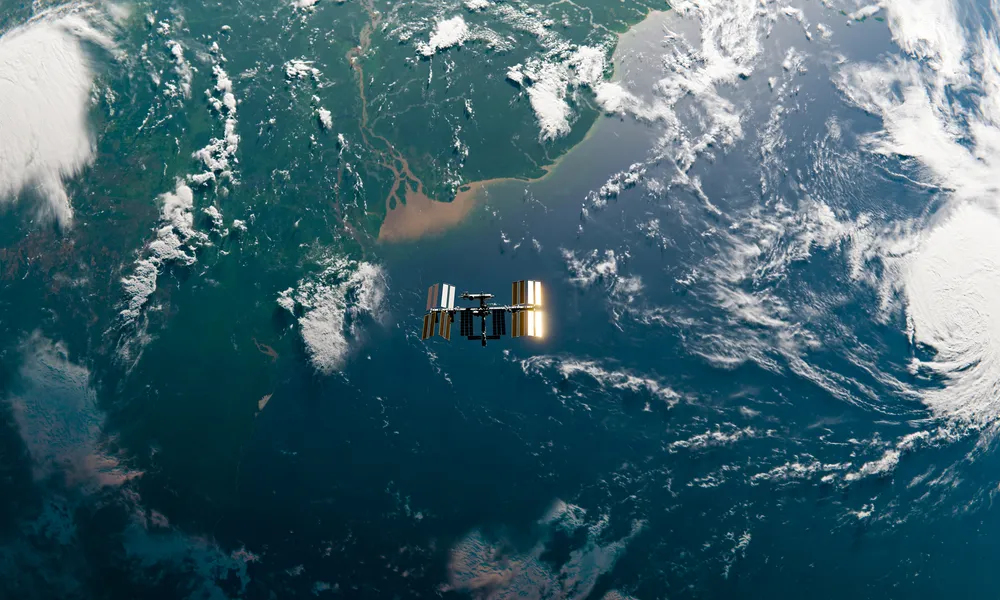

Advanced satellite technology powered by artificial intelligence has been piloted in Cyprus to detect hidden leaks in water distribution networks, with results now presented to the Ministry of Agriculture, Rural Development and Environment.
According to a report by levantintel.net, the system was tested in Paralimni and demonstrated that rapid data delivery can support targeted repairs, reduce unnecessary excavation works and contribute to more reliable decision-making in water supply, wastewater and irrigation management.
The technology was introduced by the Greek company SESILINK. Discussions with the ministry explored the possibility of coordinated implementation across Cyprus, covering both urban water networks and irrigation infrastructure, as part of long-term strategic planning at national level.
The report argues that the key question for Cyprus is not whether AI-based leak detection will eventually be integrated into water management strategies, but whether it will be adopted early and proactively, delivering faster results, or later under greater pressure and at higher cost. “In water and irrigation infrastructure, what remains invisible underground can quietly shape the sustainability of what stands above,” it notes.
AI And Remote Sensing
SESILINK has in recent years promoted in Cyprus an AI-driven, satellite-based methodology for leak detection in drinking water, wastewater and irrigation networks. According to levantintel.net, the approach is already being applied internationally.
The system relies on artificial intelligence and remote sensing to analyse soil moisture patterns, enabling utilities and irrigation authorities to quickly and accurately identify high-risk areas without disruptive on-site works.
Unlike conventional methods, which often depend on excavation and trial-and-error inspections, this technology is non-invasive. It does not require digging or blind searches for leaks. Instead, it allows for fast, targeted interventions based on data-derived insights, significantly reducing the time between detection and repair.
The same methodology has reportedly been used with measurable success in demanding markets including the United States, the United Kingdom, France, Italy, Japan and Portugal.
From Space Science To Water Infrastructure
The underlying technology was developed by ASTERRA and originated from satellite research designed to detect water in planetary environments.
That scientific capability was later adapted to address one of Earth’s most pressing infrastructure challenges: identifying invisible water losses beneath the surface.
Today, the AI-based method enables rapid and actionable leak detection across potable water, sewage and irrigation networks, providing operational results to water and agricultural authorities within short timeframes.
Experience Beyond Cyprus
Beyond Cyprus, the approach has also been applied in Greece, including in island regions facing acute water scarcity, as well as within the networks of major urban water providers.
Applications include large-scale systems managed by EYDAP and EYATH, demonstrating the suitability of satellite-based, AI-driven leak detection for metropolitan, island and agricultural environments.
Sustainability Goals
According to the report, reducing non-revenue water in supply, wastewater and irrigation systems is not only an operational objective. It is directly linked to climate resilience, food security, cost containment and environmental responsibility.
Early detection of hidden leaks helps conserve scarce water resources, reduce energy consumption associated with water production, transport and treatment, and extend the lifespan of ageing infrastructure.
These outcomes, the article notes, align closely with the United Nations Sustainable Development Goals, particularly those related to clean water, resilient infrastructure, sustainable agriculture and climate action.